How the Water-Only Cleaning Rule Makes Magic Eraser Sponges a Smarter Choice for Daily Cleaning
2026-06-18
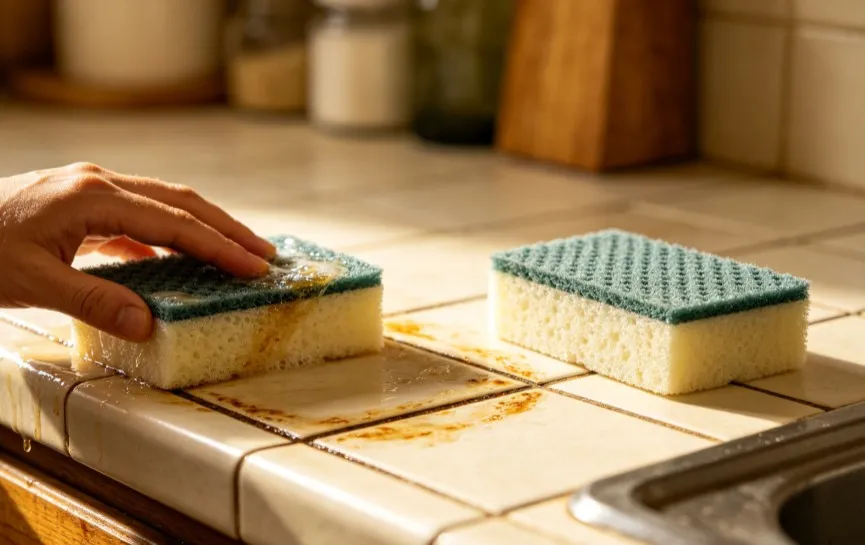
FoamTech focuses on melamine foam cleaning sponges, sponge sheets, scrub tools, floor pads, and private label cleaning products for homes, retailers, distributors, and cleaning teams. Its manufacturer background shows a high-tech foam producer founded in 2014, with more than ten years of industry experience, patented foaming technology, three foaming lines, large production sites, and service reach across more than 100 countries.
That background is important since daily cleaning buyers do not just want another sponge. Looking for a cleaner with fewer chemicals, less residue and that removes stains quickly? This melamine cleaning sponge is your perfect cleaning tool. It can be used to clean your kitchen sink as well as your bathroom tiles, appliance doors, shoes, desks and any other plastic item that needs to be cleaned. The water-only rule makes melamine cleaning sponges more practical for everyday use.
Why the Water-Only Rule Matters for Daily Cleaning
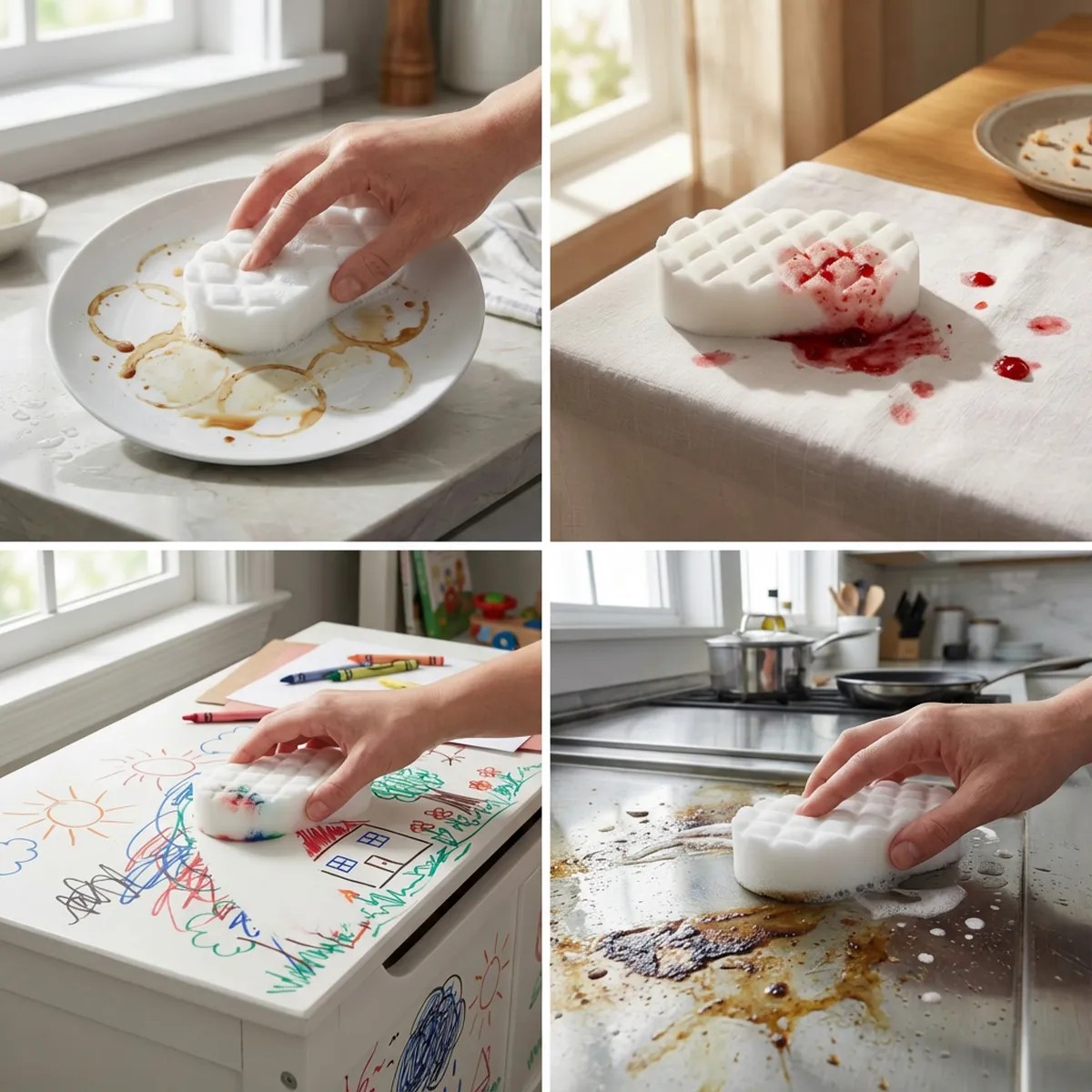
The water-only rule is simple: wet the sponge, squeeze out extra water, wipe the dirty area, then rinse and reuse. This short process removes extra steps and cuts the need for strong cleaners on many routine stains.
Less Residue on High-Touch Surfaces
For most of the other kitchen areas where we come into contact with daily like work surfaces, refrigerator door handles, taps, switch and appliance doors and shelves etc. when using a normal detergent for wiping over said surface it can in some cases leave a sticky residue or strong smell of the cleaner. This requires further cleaning to remove said residue or smell. A second wipe is needed. A damp melamine sponge is perfect for wiping down tea marks, light grease marks, soap marks and scuff marks on most of the kitchen surfaces and all can be removed using just water and are ideal for the non food-contact areas and the food-contact surface marks are removed perfectly by the melamine but it’s always best to give them a good rinse to ensure they are spotlessly clean and hygienic for next use.
Faster Work for Small Messes
Not every mark deserves a full cleaning routine. Pencil marks on a desk, dust on a printer shell, scuffs on a plastic bin, and dull spots near a basin can often be handled in seconds. The knowledge base lists ceramic products, plastic products, office supplies, electric appliances, glasswork, leatherware, hardware, and floor cleaning pads as common use areas. One small sponge can cover many daily jobs, which is exactly why it suits quick home cleaning.
Lower Chemical Load in Kitchens and Bathrooms
Kitchens and bathrooms already have many cleaners.Some of them smell very sharp, have to be rinsed thoroughly after use, do not mix with other cleaners, etc.Using water-only cleaning first reduces the number of cleaners.For soap scum, tea rings, light grease, and hard water marks, start by using the sponge first the sponge to clean the surface, and if the stain remains, then choose a cleaner suitable for that surface. This order is safer than reaching for strong chemicals every time.
How Melamine Foam Cleans with Only Water
Melamine foam is not the same as a soft cellulose sponge. It has a fine open-cell structure that becomes softer after wetting. When damp, it creates strong surface contact and lifts dirt through physical friction.
Micro-Friction Instead of Chemical Soaking
The cleaning action comes mainly from the sponge’s fine internal structure. It does not need soap to start working. It rubs, catches, and removes surface marks. That is why light pressure often works better than force. If you press too hard, the sponge wears faster and may be too rough for delicate finishes. Slow, even wiping is usually enough.
Soak, Squeeze, Wipe, and Rinse
A good method is short and easy. Wet the sponge fully with clean water. Squeeze it until damp, not dripping. Wipe the stain with light pressure. Rinse the sponge during use. Let it dry after cleaning. Many users skip the squeeze step. Too much water makes the sponge messy and weaker in the hand. Too little water makes it feel rough. Damp is the best middle point.
Gentle Pressure Beats Hard Scrubbing
Melamine foam is powerful, but it is not a metal brush. For stubborn marks, clean in short rounds. Wet, wipe, rinse, and check. This rhythm works well around taps, sink edges, tile corners, and appliance handles. A small detail from real cleaning work: tap corners usually need patience more than strength.
Which Surfaces Gain the Most from Water-Only Cleaning?
The best surfaces are hard, sealed, and stain-prone. Melamine sponge works well on many home materials, but it is still smart to test a hidden area first when the surface is glossy, coated, painted, or delicate.
Stainless Steel Sinks and Faucets
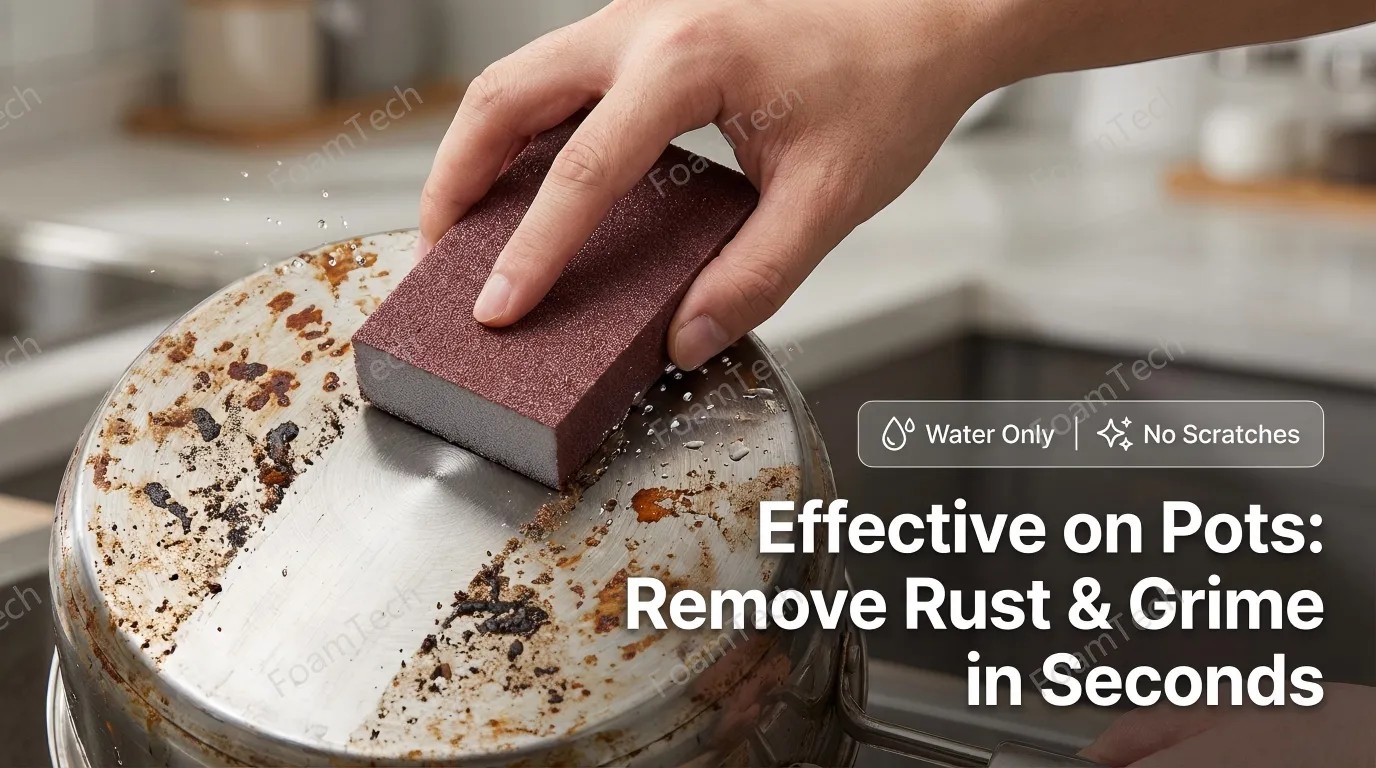
Stainless steel sinks are great at first but soon they collect every bit of food, every tea stain, every water spot and dull mark.Rinse the sink sink before you wipe it down to remove any loose grit and prevent it from scratching the sink.Wipe the sink down with a damp sponge in the stainless steel’s natural grain.Use a sponge corner to get into the corners of your sink’s taps and drain.After you have given your sink a good clean give it a rinse and then dry it with a soft cloth.Drying your sink may seem like an extra task but it will stop water spots from reappearing to quickly.
Ceramic Tiles, Tubs, and Tea Stains
Ceramic surfaces are a natural fit for water-only cleaning. The knowledge base mentions dishware, tea sets, flowerpots, bathtubs, tiles, floor tiles, swimming pools, toilets, and basin areas. For a mug or tea set, wipe the stained ring with light pressure. For tiles or tubs, work in small sections and rinse the sponge often. Dirty water left in the sponge can spread residue, so rinsing matters.
Plastic Items, Office Tools, and Appliances
Plastic tables, chairs, window frames, slippers, trash cans, children’s toys, and shower room parts can pick up dark scuffs that normal sponges only smear. Office tools also benefit. Desk edges, phone shells, printer covers, and keyboard outer frames collect fingerprints and ink marks. Keep the sponge lightly damp around electronics, and avoid vents, ports, and openings.
What Should You Check Before Buying?
A sponge may look simple, but density, size, structure, packing, and durability affect real use. Home users usually care about stain removal and hand feel. Business buyers also care about supply stability, retail packing, samples, and custom options.
Strength, Density, and Reuse Value
The knowledge base lists common melamine sponge densities such as 8 kg/m³ ±1 for normal cleaning models, 12 kg/m³ ±1 for compressed models, and 16 kg/m³ ±1 for stronger forms and floor pads. Normal density works well for daily marks. Compressed or layered types can last longer when cleaning is frequent. Common sizes include 10 × 7 × 3 cm, 9 × 6 × 3 cm, and 12 × 6 × 2.5 cm. Smaller pieces fit corners better, while thicker blocks give a better grip.
Multi-Layer Structure for Better Hand Feel
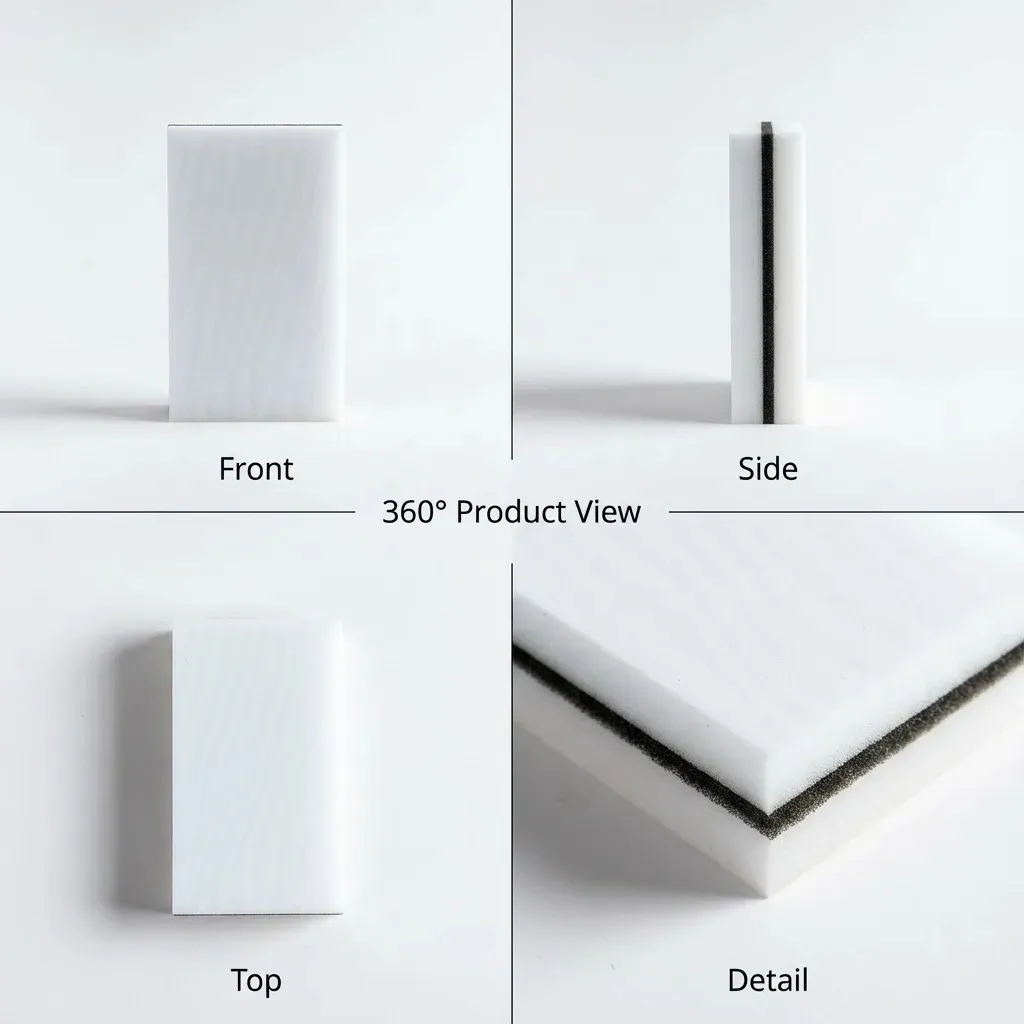
A plain white sponge is useful, but a layered design can feel better during repeated cleaning. The Tri-Layer “Sandwich” Melamine Sponge uses high-polymer melamine foam on the top and bottom with a PU sponge core in the middle. Its listed melamine foam layer density is 8 kg/m³ ±2, with a typical size of 100 × 70 × 30 mm and custom options for size, thickness, shape, embossing, color, and packaging. The outer layers remove stains, while the middle PU layer adds cushioning and support. That means better grip, less hand fatigue, and a sponge that feels less flimsy.
Packing Flexibility for Business Orders
Retail and wholesale buyers need more than a useful sponge. The knowledge base mentions individual packs, 3-piece packs, 10-piece packs, 21-piece packs, display boxes, heat shrink film, cardboard sleeves, glossy laminated color printing, matte laminated packing, and corrugated boxes. This helps online stores, supermarkets, cleaning service kits, hotel supply channels, and bulk wholesale buyers. Good packaging protects the sponge and makes the product easier to sell.
How to Clean Smarter Without Surface Damage?
Water-only cleaning is easy, but smart use still matters. Melamine foam has fine abrasive action, so it should be treated as a cleaning sponge, not a soft polishing cloth.
Remove Loose Dirt Before Wiping
Clear food scraps, sand, metal dust, or hard particles before using the sponge. On stainless steel, plastic, and glass, loose grit can cause scratches if it is dragged under the sponge. A quick rinse or soft cloth wipe is enough. Then use the damp sponge on the actual stain.
Match Pressure to Surface Finish
For Stainless Steel, Glass, Painted, Appliances & Plastic surfaces – Light pressure is OK. Test first on – Glossy Paint, Coated Leather, Acrylic, Lacquered Wood, Non-Stick, Decorative Finishes – Very Sensitive. Some products may require Aftercare Cleaning for Leather seats, bags & white shoes. Removes dirt from surfaces but some require conditioning afterwards or specific Care Product for cleaning.
Rinse Often and Let the Sponge Dry
A dirty sponge does not clean well. Rinse it during use, especially after grease, ink, or dark scuffs. After cleaning, rinse again and let it air dry. Melamine foam slowly wears down during use. That is normal. If it breaks into small pieces or loses its edge, replace it. Cutting a large sponge into smaller pieces can reduce waste for small stains.
Why Supplier Support Matters for Buyers
Daily users care about stain removal. Business buyers care about stain removal, cost, packing, delivery, and repeat quality. The water-only rule helps sell the product, but supply support keeps buyers coming back.
Private Label Service and Clear Specs
The custom service page highlights private label support, label design, logos, barcodes, QR codes, product videos, social media graphics, product specification sheets, line cards, and SDS support. Before bulk orders, confirm density, size, material, packing method, quantity per pack, and sample availability. A sample check before mass production is not a delay. It prevents mistakes.
Quality Background and Application Range
The knowledge base notes ISO system certification, BSCI factory inspection, high-tech enterprise recognition, SGS inspection reports, and other production-related qualifications in the broader foam material background. The application range is also broad: ceramics, glasswork, plastic items, leatherware, office supplies, hardware, appliances, and floor cleaning pads. This makes it easier for buyers to build different SKUs from one material family.
Contact Support for Bulk Orders
For custom sizes, OEM packing, sample checks, or distributor support, the contact page gives a direct route for product questions and bulk order discussion. Ask about size tolerance, density options, artwork requirements, lead time, and target use. Good buying is not just about the lowest unit price. It is about matching the sponge to the surface, customer, pack count, and reorder plan.
FAQ
Q1: Can You Use a Magic Eraser Sponge with Only Water?
A: Yes. Wet it, squeeze out extra water, wipe the stain, rinse the sponge, and reuse it. Many daily stains do not need detergent.
Q2: Is a Water-Only Sponge Safe for Stainless Steel Sinks?
A: Yes, with care. Rinse away loose grit first, wipe gently along the grain, then rinse and dry the sink.
Q3: Why Does the Sponge Wear Down During Cleaning?
A: Melamine foam removes stains through physical friction. As it cleans, the foam slowly wears away. That is normal.
FoamTech focuses on melamine foam cleaning sponges, sponge sheets, scrub tools, floor pads, and private label cleaning products for homes, retailers, distributors, and cleaning teams. Its manufacturer background shows a high-tech foam producer founded in 2014, with more than ten years of industry experience, patented foaming technology, three foaming lines, large production sites, and service reach across more than 100 countries.
That background is important since daily cleaning buyers do not just want another sponge. Looking for a cleaner with fewer chemicals, less residue and that removes stains quickly? This melamine cleaning sponge is your perfect cleaning tool. It can be used to clean your kitchen sink as well as your bathroom tiles, appliance doors, shoes, desks and any other plastic item that needs to be cleaned. The water-only rule makes melamine cleaning sponges more practical for everyday use.
Why the Water-Only Rule Matters for Daily Cleaning
The water-only rule is simple: wet the sponge, squeeze out extra water, wipe the dirty area, then rinse and reuse. This short process removes extra steps and cuts the need for strong cleaners on many routine stains.
Less Residue on High-Touch Surfaces
For most of the other kitchen areas where we come into contact with daily like work surfaces, refrigerator door handles, taps, switch and appliance doors and shelves etc. when using a normal detergent for wiping over said surface it can in some cases leave a sticky residue or strong smell of the cleaner. This requires further cleaning to remove said residue or smell. A second wipe is needed. A damp melamine sponge is perfect for wiping down tea marks, light grease marks, soap marks and scuff marks on most of the kitchen surfaces and all can be removed using just water and are ideal for the non food-contact areas and the food-contact surface marks are removed perfectly by the melamine but it’s always best to give them a good rinse to ensure they are spotlessly clean and hygienic for next use.
Faster Work for Small Messes
Not every mark deserves a full cleaning routine. Pencil marks on a desk, dust on a printer shell, scuffs on a plastic bin, and dull spots near a basin can often be handled in seconds. The knowledge base lists ceramic products, plastic products, office supplies, electric appliances, glasswork, leatherware, hardware, and floor cleaning pads as common use areas. One small sponge can cover many daily jobs, which is exactly why it suits quick home cleaning.
Lower Chemical Load in Kitchens and Bathrooms
Kitchens and bathrooms already have many cleaners.Some of them smell very sharp, have to be rinsed thoroughly after use, do not mix with other cleaners, etc.Using water-only cleaning first reduces the number of cleaners.For soap scum, tea rings, light grease, and hard water marks, start by using the sponge first the sponge to clean the surface, and if the stain remains, then choose a cleaner suitable for that surface. This order is safer than reaching for strong chemicals every time.
How Melamine Foam Cleans with Only Water
Melamine foam is not the same as a soft cellulose sponge. It has a fine open-cell structure that becomes softer after wetting. When damp, it creates strong surface contact and lifts dirt through physical friction.
Micro-Friction Instead of Chemical Soaking
The cleaning action comes mainly from the sponge’s fine internal structure. It does not need soap to start working. It rubs, catches, and removes surface marks. That is why light pressure often works better than force. If you press too hard, the sponge wears faster and may be too rough for delicate finishes. Slow, even wiping is usually enough.
Soak, Squeeze, Wipe, and Rinse
A good method is short and easy. Wet the sponge fully with clean water. Squeeze it until damp, not dripping. Wipe the stain with light pressure. Rinse the sponge during use. Let it dry after cleaning. Many users skip the squeeze step. Too much water makes the sponge messy and weaker in the hand. Too little water makes it feel rough. Damp is the best middle point.
Gentle Pressure Beats Hard Scrubbing
Melamine foam is powerful, but it is not a metal brush. For stubborn marks, clean in short rounds. Wet, wipe, rinse, and check. This rhythm works well around taps, sink edges, tile corners, and appliance handles. A small detail from real cleaning work: tap corners usually need patience more than strength.
Which Surfaces Gain the Most from Water-Only Cleaning?
The best surfaces are hard, sealed, and stain-prone. Melamine sponge works well on many home materials, but it is still smart to test a hidden area first when the surface is glossy, coated, painted, or delicate.
Stainless Steel Sinks and Faucets
Stainless steel sinks are great at first but soon they collect every bit of food, every tea stain, every water spot and dull mark.Rinse the sink sink before you wipe it down to remove any loose grit and prevent it from scratching the sink.Wipe the sink down with a damp sponge in the stainless steel’s natural grain.Use a sponge corner to get into the corners of your sink’s taps and drain.After you have given your sink a good clean give it a rinse and then dry it with a soft cloth.Drying your sink may seem like an extra task but it will stop water spots from reappearing to quickly.
Ceramic Tiles, Tubs, and Tea Stains
Ceramic surfaces are a natural fit for water-only cleaning. The knowledge base mentions dishware, tea sets, flowerpots, bathtubs, tiles, floor tiles, swimming pools, toilets, and basin areas. For a mug or tea set, wipe the stained ring with light pressure. For tiles or tubs, work in small sections and rinse the sponge often. Dirty water left in the sponge can spread residue, so rinsing matters.
Plastic Items, Office Tools, and Appliances
Plastic tables, chairs, window frames, slippers, trash cans, children’s toys, and shower room parts can pick up dark scuffs that normal sponges only smear. Office tools also benefit. Desk edges, phone shells, printer covers, and keyboard outer frames collect fingerprints and ink marks. Keep the sponge lightly damp around electronics, and avoid vents, ports, and openings.
What Should You Check Before Buying?
A sponge may look simple, but density, size, structure, packing, and durability affect real use. Home users usually care about stain removal and hand feel. Business buyers also care about supply stability, retail packing, samples, and custom options.
Strength, Density, and Reuse Value
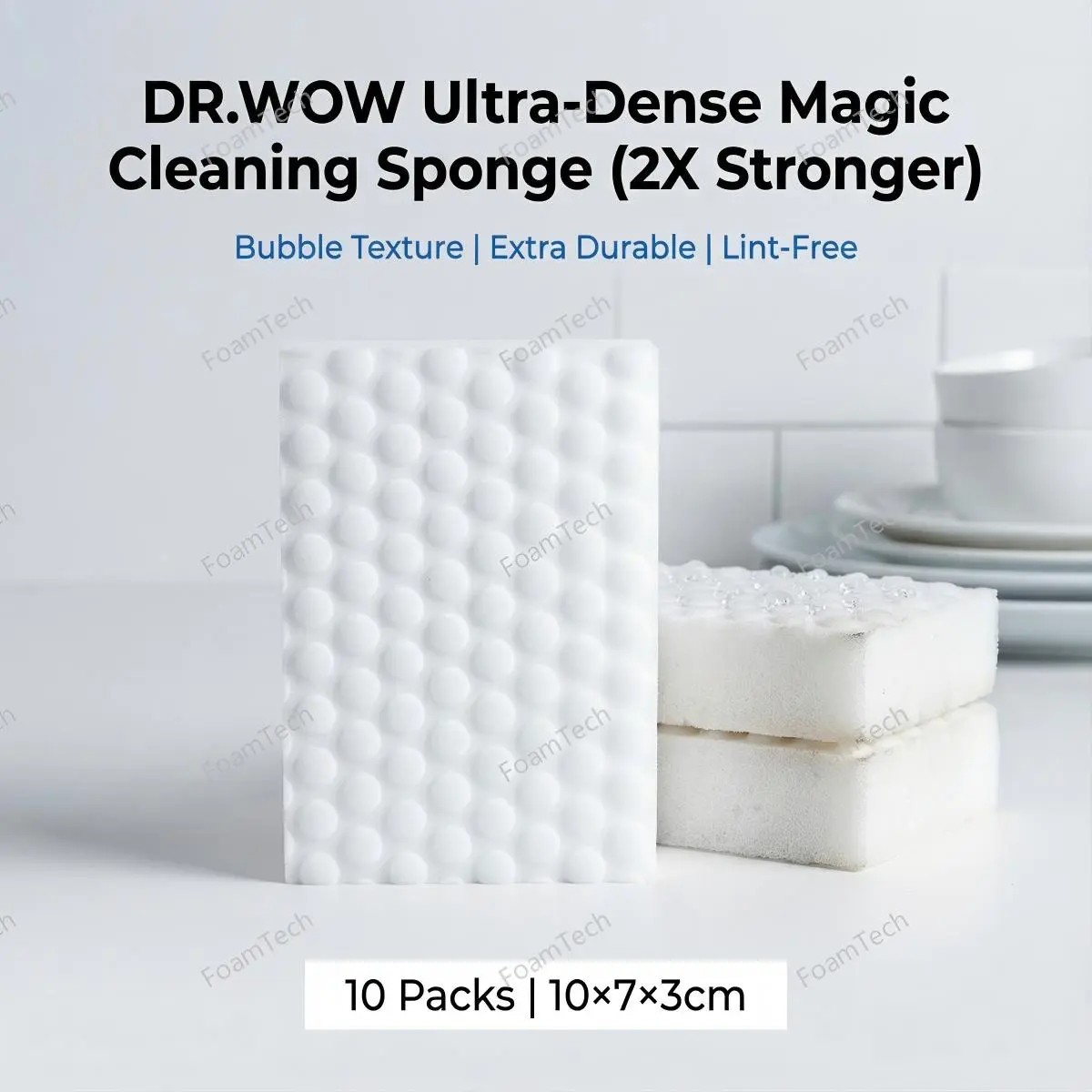
The knowledge base lists common melamine sponge densities such as 8 kg/m³ ±1 for normal cleaning models, 12 kg/m³ ±1 for compressed models, and 16 kg/m³ ±1 for stronger forms and floor pads. Normal density works well for daily marks. Compressed or layered types can last longer when cleaning is frequent. Common sizes include 10 × 7 × 3 cm, 9 × 6 × 3 cm, and 12 × 6 × 2.5 cm. Smaller pieces fit corners better, while thicker blocks give a better grip.
Multi-Layer Structure for Better Hand Feel
A plain white sponge is useful, but a layered design can feel better during repeated cleaning. The Tri-Layer “Sandwich” Melamine Sponge uses high-polymer melamine foam on the top and bottom with a PU sponge core in the middle. Its listed melamine foam layer density is 8 kg/m³ ±2, with a typical size of 100 × 70 × 30 mm and custom options for size, thickness, shape, embossing, color, and packaging. The outer layers remove stains, while the middle PU layer adds cushioning and support. That means better grip, less hand fatigue, and a sponge that feels less flimsy.
Packing Flexibility for Business Orders
Retail and wholesale buyers need more than a useful sponge. The knowledge base mentions individual packs, 3-piece packs, 10-piece packs, 21-piece packs, display boxes, heat shrink film, cardboard sleeves, glossy laminated color printing, matte laminated packing, and corrugated boxes. This helps online stores, supermarkets, cleaning service kits, hotel supply channels, and bulk wholesale buyers. Good packaging protects the sponge and makes the product easier to sell.
How to Clean Smarter Without Surface Damage?
Water-only cleaning is easy, but smart use still matters. Melamine foam has fine abrasive action, so it should be treated as a cleaning sponge, not a soft polishing cloth.
Remove Loose Dirt Before Wiping
Clear food scraps, sand, metal dust, or hard particles before using the sponge. On stainless steel, plastic, and glass, loose grit can cause scratches if it is dragged under the sponge. A quick rinse or soft cloth wipe is enough. Then use the damp sponge on the actual stain.
Match Pressure to Surface Finish
For Stainless Steel, Glass, Painted, Appliances & Plastic surfaces – Light pressure is OK. Test first on – Glossy Paint, Coated Leather, Acrylic, Lacquered Wood, Non-Stick, Decorative Finishes – Very Sensitive. Some products may require Aftercare Cleaning for Leather seats, bags & white shoes. Removes dirt from surfaces but some require conditioning afterwards or specific Care Product for cleaning.
Rinse Often and Let the Sponge Dry
A dirty sponge does not clean well. Rinse it during use, especially after grease, ink, or dark scuffs. After cleaning, rinse again and let it air dry. Melamine foam slowly wears down during use. That is normal. If it breaks into small pieces or loses its edge, replace it. Cutting a large sponge into smaller pieces can reduce waste for small stains.
Why Supplier Support Matters for Buyers
Daily users care about stain removal. Business buyers care about stain removal, cost, packing, delivery, and repeat quality. The water-only rule helps sell the product, but supply support keeps buyers coming back.
Private Label Service and Clear Specs
The custom service page highlights private label support, label design, logos, barcodes, QR codes, product videos, social media graphics, product specification sheets, line cards, and SDS support. Before bulk orders, confirm density, size, material, packing method, quantity per pack, and sample availability. A sample check before mass production is not a delay. It prevents mistakes.
Quality Background and Application Range
The knowledge base notes ISO system certification, BSCI factory inspection, high-tech enterprise recognition, SGS inspection reports, and other production-related qualifications in the broader foam material background. The application range is also broad: ceramics, glasswork, plastic items, leatherware, office supplies, hardware, appliances, and floor cleaning pads. This makes it easier for buyers to build different SKUs from one material family.
Contact Support for Bulk Orders
For custom sizes, OEM packing, sample checks, or distributor support, the contact page gives a direct route for product questions and bulk order discussion. Ask about size tolerance, density options, artwork requirements, lead time, and target use. Good buying is not just about the lowest unit price. It is about matching the sponge to the surface, customer, pack count, and reorder plan.
FAQ
Q1: Can You Use a Magic Eraser Sponge with Only Water?
A: Yes. Wet it, squeeze out extra water, wipe the stain, rinse the sponge, and reuse it. Many daily stains do not need detergent.
Q2: Is a Water-Only Sponge Safe for Stainless Steel Sinks?
A: Yes, with care. Rinse away loose grit first, wipe gently along the grain, then rinse and dry the sink.
Q3: Why Does the Sponge Wear Down During Cleaning?
A: Melamine foam removes stains through physical friction. As it cleans, the foam slowly wears away. That is normal.
Related Recommendations

Family owned company, globalleader in development andmanufacturing of home careproducts for private label andcontract manufacturing
Copyright © 2026 FoamTech (Zhejiang) New Materials Co., Ltd.