What Is the Best Non-Scratch Scrub Sponge for Grease, Burnt Food, and Delicate Surfaces?
2026-07-30
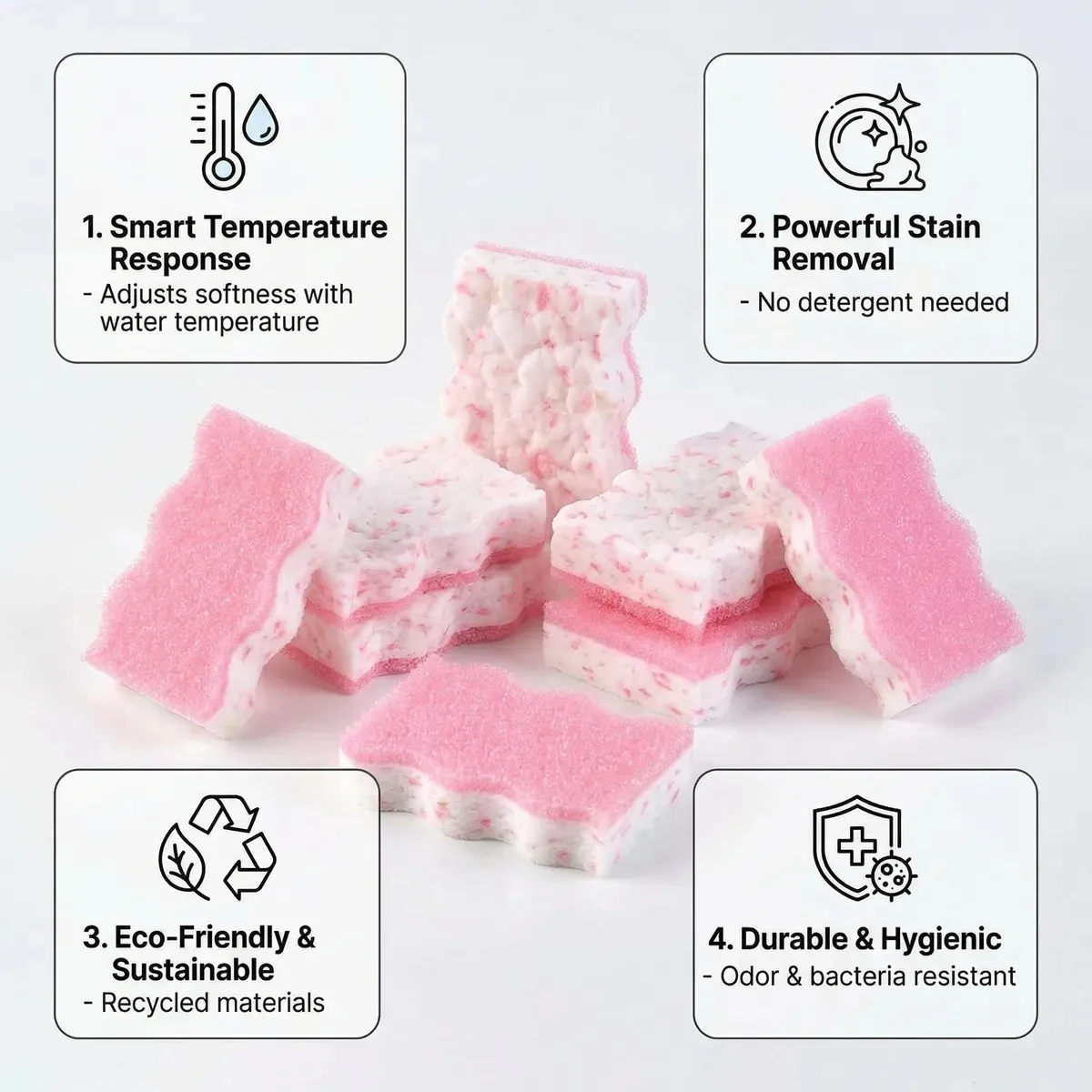
The best non-scratch scrubber is more than a gentle scrubber. It must first remove oily film, and scrape off food. The tool must also grip surfaces such as glass, ceramics, stainless steel and non-stick surfaces. It is not a matter of applying more pressure, but of the right material.
A useful option is a Dual-Layer Temperature-Sensitive Scrub Sponge. This cleaning pad is made of a mix of high-polymer thermo-sensitive foam and recycled melamine foam. The first layer of the foam changes in softness with the water temperature. FoamTech’s Melamine layer removes grease, marks and stubborn dirt with little or no detergent. Available in standard size 100 x 100 x 40mm however can be made to any size, color, shape or packaging required.
What Makes a Scrub Sponge Safe for Delicate Surfaces?
“Non-scratch” depends on the sponge material, the surface finish, and the pressure used. A soft tool can still leave marks if grit is trapped inside it. A strong cleaning layer may suit one surface but not another. Buyers should treat non-scratch performance as a tested use condition, not a blanket claim.
Match the Texture to the Cleaning Task
Grease usually needs absorption and repeated wiping. Burnt food needs a firmer texture plus dwell time. Fine glassware and glossy coatings need a softer contact surface and light pressure.
A temperature-responsive sponge lets you change cleaning force without changing tools. Cooler water keeps the material firmer for stuck residue. Warmer water makes it softer for cups, plates, glass, and final wiping.
Test Before Cleaning a Full Surface
As with all unknown areas particularly those painted ie metal, acrylic, polished stone, high gloss plastic & non stick surfaces test in secret first using a sponge & apply light pressure for 10-15 seconds & view in good light for any marks or residue – ensure no crumbs or metal particles are trapped in the sponge.
Most scratching problems come from the wrong material, excess force, or debris caught between the sponge and the surface.
How Does a Dual-Layer Temperature-Sensitive Scrub Sponge Work?
The temperature-sensitive cleaning sponge uses two layers with different jobs. One controls feel and handling. The other provides physical stain removal. Together, they cover more tasks than a basic single-density foam.
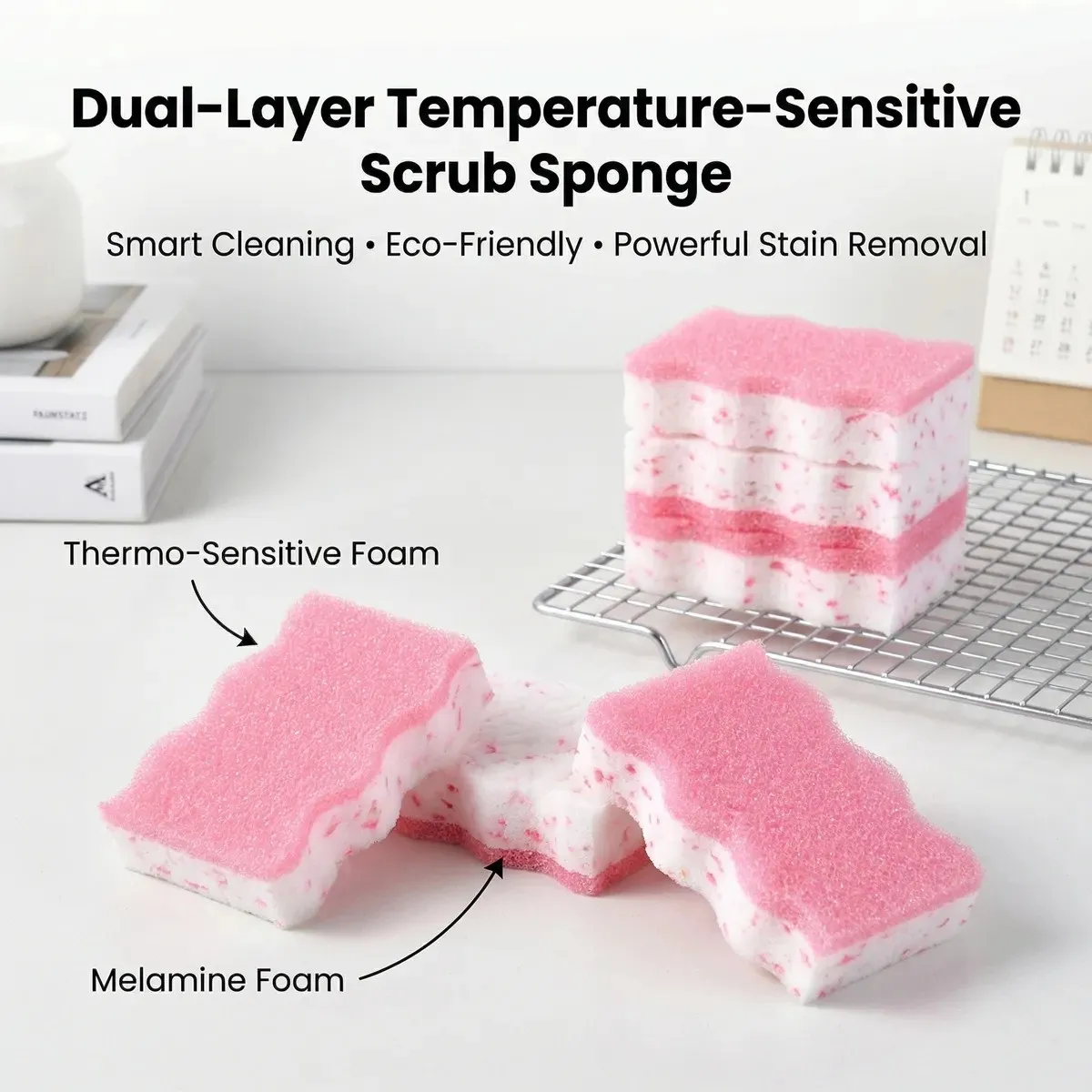
Temperature-Sensitive Foam Changes the Scrubbing Feel
The density of the thermo-sensitive layer is specified as 50 kg/m³ ± 10. In cold water the layer is firm, ideal for greasy pots and pans, stove tops as well as for removing dry residue. In warm water the layer becomes soft and flexible, thus ideally suited for cleaning up of curved shaped objects and sensitive items that require less concentrated cleaning.
Recycled Melamine Foam Lifts Marks Physically
Melamine foam is a scrubbing aid with an open cellular structure to remove surface dirt by light physical action. The knowledge-base says to first soak it, then squeeze out as much water as possible, wipe, rinse and then re-use the scrubbing aid. The same material family is used for cleaning ceramics, glass, plastics, appliances and hardware.
Melamine foam wears down as it cleans. Gentle passes usually work better than aggressive circular scrubbing. Rinse it often. A dirty sponge only moves grease around, which is not very helpful for such a small cleaning tool.
How Should You Remove Grease and Burnt Food Without Scratching?
Start with the least aggressive method. Water temperature, soaking time, and repeated light passes should do most of the work. Heavy pressure should not be your first move.
Step 1 Loosen the Grease
Remove loose crumbs, then wet the surface with warm water. For thick grease, add a small amount of suitable dish detergent and leave it for two to five minutes. Use the softened side to spread the solution and lift oily film.
Rinse the sponge once it feels slick. Grease trapped in the pores reduces grip and may leave streaks.
Step 2 Work on Burnt Food
Use cooler water to gage the temperature-sensitive layer to make it firmer. Hold the sponge flat and scrub in short controlled strokes. Only use the edge to reach into corners as the pressure is less even than with the sponge surface.
For severe residue, repeat the soak instead of forcing the stain off in one pass. Another minute or two is cheaper than replacing damaged cookware.
Step 3 Finish With Warm Water
Once all debris has been loosened, allow the sponge to return to its soft state and use it to wipe the debris off the surface. Rinse the item and inspect for cleanliness. On brushed stainless steel work within the lines of the brush, never across as this can cause uneven polishing and streaks.
After use, rinse the sponge, squeeze it gently, and leave it where air can circulate. Do not store it wet in a closed container.
Which Surfaces Need Extra Care?
A non-scratch sponge is most useful when its limits are clear. Surface labels, coating age, heat damage, and prior wear can change the result. Instructions should name approved and restricted surfaces.
Stainless Steel, Glass, and Ceramics
Nonstick and Painted Finishes
Use warm water and the softer side of the scrubber with very light pressure. Do not use this scrubber to scrub long on areas that have been damaged, are peeling or overheated. Test on painted appliances and very glossy cabinet panels before using and stop immediately if finish becomes dull.
Natural Stone and Special Coatings
Do not assume one sponge fits every sealed stone, polished stone, screen coating, or acrylic surface. Check the surface supplier’s cleaning guidance. A spot test is still required, even when the packaging says multi-surface.
What Should B2B Buyers Check Before Ordering?
A buyer needs more than a strong cleaning claim. You also need repeatable density, secure layer bonding, clear surface guidance, stable packaging, and samples that match bulk production.
Review the Core Specification
For the dual-layer scrub sponge, confirm the 100 × 100 × 40 mm reference size, thermo-sensitive layer density, material composition, color tolerance, and packed dimensions. Ask how softness is checked at different water temperatures and how bonding is tested after repeated soaking.
Confirm Customization and Quality Documents
The available private-label and customization service covers packaging selection, product design, label work, specification sheets, safety documents, and pre-production sample confirmation. Buyers can also request customized size, color, shape, and packaging.
Ask for reports tied to the exact finished product, not only raw foam. The knowledge base includes a melamine foam sample that passed extractives testing under US FDA 21 CFR 177.1460, but you should confirm the report scope, model, date, and intended market for your order.
Before mass production, test grease removal, burnt food, glass, stainless steel, ceramic, and coated cookware. Record water temperature, pressure, cycle count, odor after drying, layer separation, and visible surface change. For samples or project details, use the bulk-order inquiry page.
FAQ
Q1: Can a Non-Scratch Scrub Sponge Remove Burnt Food?
A: Yes, if the residue is softened first and the sponge provides controlled friction. Use cooler water for a firmer texture, short strokes, and repeated soaking rather than heavy pressure.
Q2: Is Melamine Foam Safe for Every Delicate Surface?
A: No. It can clean many hard surfaces, but polished, painted, acrylic, coated, or high-gloss finishes should be spot-tested. Use light pressure and stop if the finish changes.
Q3: Should You Use Hot or Cold Water With a Temperature-Sensitive Sponge?
A: Use cooler water for a firmer scrub on grease and cooked-on food. Use warm water for a softer feel on glassware, ceramics, coated cookware, or final wiping.
Q4: Can the Sponge Clean Without Detergent?
A: The melamine layer can remove many marks and surface soils with water alone. A small amount of suitable detergent may still help with thick oil or food residue.
Q5: What Should Importers Test Before Placing a Bulk Order?
A: Test stain removal, scratch risk, temperature response, layer bonding, odor, drying time, sponge wear, packed size, and consistency between pre-production samples and bulk goods.
The best non-scratch scrubber is more than a gentle scrubber. It must first remove oily film, and scrape off food. The tool must also grip surfaces such as glass, ceramics, stainless steel and non-stick surfaces. It is not a matter of applying more pressure, but of the right material.
A useful option is a Dual-Layer Temperature-Sensitive Scrub Sponge. This cleaning pad is made of a mix of high-polymer thermo-sensitive foam and recycled melamine foam. The first layer of the foam changes in softness with the water temperature. FoamTech’s Melamine layer removes grease, marks and stubborn dirt with little or no detergent. Available in standard size 100 x 100 x 40mm however can be made to any size, color, shape or packaging required.
What Makes a Scrub Sponge Safe for Delicate Surfaces?
“Non-scratch” depends on the sponge material, the surface finish, and the pressure used. A soft tool can still leave marks if grit is trapped inside it. A strong cleaning layer may suit one surface but not another. Buyers should treat non-scratch performance as a tested use condition, not a blanket claim.
Match the Texture to the Cleaning Task
Grease usually needs absorption and repeated wiping. Burnt food needs a firmer texture plus dwell time. Fine glassware and glossy coatings need a softer contact surface and light pressure.
A temperature-responsive sponge lets you change cleaning force without changing tools. Cooler water keeps the material firmer for stuck residue. Warmer water makes it softer for cups, plates, glass, and final wiping.
Test Before Cleaning a Full Surface
As with all unknown areas particularly those painted ie metal, acrylic, polished stone, high gloss plastic & non stick surfaces test in secret first using a sponge & apply light pressure for 10-15 seconds & view in good light for any marks or residue – ensure no crumbs or metal particles are trapped in the sponge.
Most scratching problems come from the wrong material, excess force, or debris caught between the sponge and the surface.
How Does a Dual-Layer Temperature-Sensitive Scrub Sponge Work?
The temperature-sensitive cleaning sponge uses two layers with different jobs. One controls feel and handling. The other provides physical stain removal. Together, they cover more tasks than a basic single-density foam.
Temperature-Sensitive Foam Changes the Scrubbing Feel
The density of the thermo-sensitive layer is specified as 50 kg/m³ ± 10. In cold water the layer is firm, ideal for greasy pots and pans, stove tops as well as for removing dry residue. In warm water the layer becomes soft and flexible, thus ideally suited for cleaning up of curved shaped objects and sensitive items that require less concentrated cleaning.
Recycled Melamine Foam Lifts Marks Physically
Melamine foam is a scrubbing aid with an open cellular structure to remove surface dirt by light physical action. The knowledge-base says to first soak it, then squeeze out as much water as possible, wipe, rinse and then re-use the scrubbing aid. The same material family is used for cleaning ceramics, glass, plastics, appliances and hardware.
Melamine foam wears down as it cleans. Gentle passes usually work better than aggressive circular scrubbing. Rinse it often. A dirty sponge only moves grease around, which is not very helpful for such a small cleaning tool.
How Should You Remove Grease and Burnt Food Without Scratching?
Start with the least aggressive method. Water temperature, soaking time, and repeated light passes should do most of the work. Heavy pressure should not be your first move.
Step 1 Loosen the Grease
Remove loose crumbs, then wet the surface with warm water. For thick grease, add a small amount of suitable dish detergent and leave it for two to five minutes. Use the softened side to spread the solution and lift oily film.
Rinse the sponge once it feels slick. Grease trapped in the pores reduces grip and may leave streaks.
Step 2 Work on Burnt Food
Use cooler water to gage the temperature-sensitive layer to make it firmer. Hold the sponge flat and scrub in short controlled strokes. Only use the edge to reach into corners as the pressure is less even than with the sponge surface.
For severe residue, repeat the soak instead of forcing the stain off in one pass. Another minute or two is cheaper than replacing damaged cookware.
Step 3 Finish With Warm Water
Once all debris has been loosened, allow the sponge to return to its soft state and use it to wipe the debris off the surface. Rinse the item and inspect for cleanliness. On brushed stainless steel work within the lines of the brush, never across as this can cause uneven polishing and streaks.
After use, rinse the sponge, squeeze it gently, and leave it where air can circulate. Do not store it wet in a closed container.
Which Surfaces Need Extra Care?
A non-scratch sponge is most useful when its limits are clear. Surface labels, coating age, heat damage, and prior wear can change the result. Instructions should name approved and restricted surfaces.
Stainless Steel, Glass, and Ceramics
Nonstick and Painted Finishes
Use warm water and the softer side of the scrubber with very light pressure. Do not use this scrubber to scrub long on areas that have been damaged, are peeling or overheated. Test on painted appliances and very glossy cabinet panels before using and stop immediately if finish becomes dull.
Natural Stone and Special Coatings
Do not assume one sponge fits every sealed stone, polished stone, screen coating, or acrylic surface. Check the surface supplier’s cleaning guidance. A spot test is still required, even when the packaging says multi-surface.
What Should B2B Buyers Check Before Ordering?
A buyer needs more than a strong cleaning claim. You also need repeatable density, secure layer bonding, clear surface guidance, stable packaging, and samples that match bulk production.
Review the Core Specification
For the dual-layer scrub sponge, confirm the 100 × 100 × 40 mm reference size, thermo-sensitive layer density, material composition, color tolerance, and packed dimensions. Ask how softness is checked at different water temperatures and how bonding is tested after repeated soaking.
Confirm Customization and Quality Documents
The available private-label and customization service covers packaging selection, product design, label work, specification sheets, safety documents, and pre-production sample confirmation. Buyers can also request customized size, color, shape, and packaging.
Ask for reports tied to the exact finished product, not only raw foam. The knowledge base includes a melamine foam sample that passed extractives testing under US FDA 21 CFR 177.1460, but you should confirm the report scope, model, date, and intended market for your order.
Before mass production, test grease removal, burnt food, glass, stainless steel, ceramic, and coated cookware. Record water temperature, pressure, cycle count, odor after drying, layer separation, and visible surface change. For samples or project details, use the bulk-order inquiry page.
FAQ
Q1: Can a Non-Scratch Scrub Sponge Remove Burnt Food?
A: Yes, if the residue is softened first and the sponge provides controlled friction. Use cooler water for a firmer texture, short strokes, and repeated soaking rather than heavy pressure.
Q2: Is Melamine Foam Safe for Every Delicate Surface?
A: No. It can clean many hard surfaces, but polished, painted, acrylic, coated, or high-gloss finishes should be spot-tested. Use light pressure and stop if the finish changes.
Q3: Should You Use Hot or Cold Water With a Temperature-Sensitive Sponge?
A: Use cooler water for a firmer scrub on grease and cooked-on food. Use warm water for a softer feel on glassware, ceramics, coated cookware, or final wiping.
Q4: Can the Sponge Clean Without Detergent?
A: The melamine layer can remove many marks and surface soils with water alone. A small amount of suitable detergent may still help with thick oil or food residue.
Q5: What Should Importers Test Before Placing a Bulk Order?
A: Test stain removal, scratch risk, temperature response, layer bonding, odor, drying time, sponge wear, packed size, and consistency between pre-production samples and bulk goods.
Related Recommendations

Family owned company, globalleader in development andmanufacturing of home careproducts for private label andcontract manufacturing
Copyright © 2026 FoamTech (Zhejiang) New Materials Co., Ltd.