Why Are High Density Rectangular Cleaning Sponges Becoming a Better Wholesale Product in 2026
2026-07-13
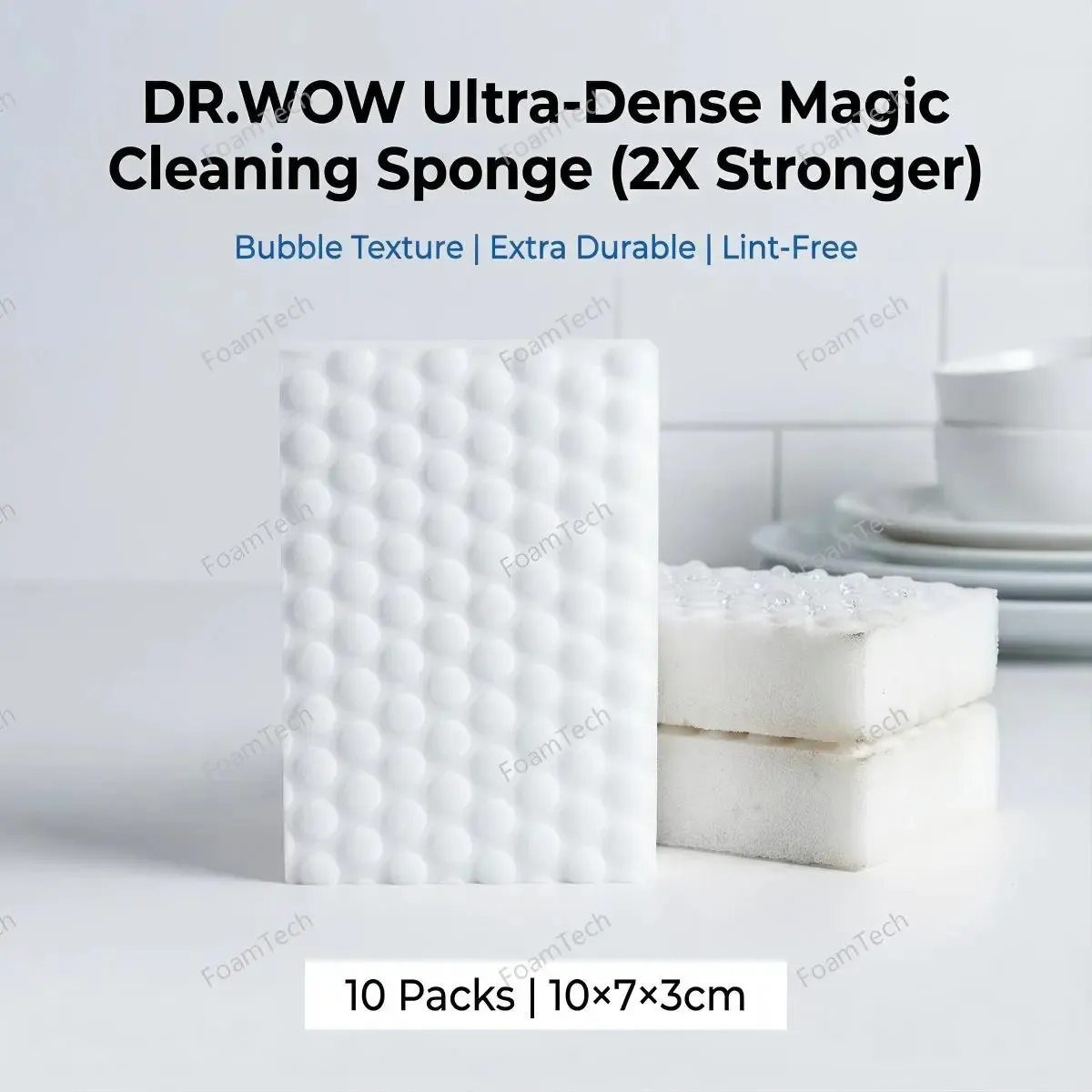
In 2026, wholesale cleaning product buyers are paying closer attention to one simple question: will this sponge sell again after the first trial order? At first sight, a very cheap sponge of a conventional shape made of sponge cells may win once in a price comparison. However, a high density rectangular cleaning sponge is winning in the long run on durability, shipping value, shelf clearance and number of uses. A product like this is of interest to distributors, online sellers, buyers of supermarkets and of cleaning services as well as suppliers for private labels. All of them are looking for a product which causes less complaints of crumbling than others, which has a better carton utilization and a better product story which can be brought on one line.
Why Are High Density Sponges Gaining More Wholesale Attention
High density cleaning sponges are becoming more attractive because the market is tired of low-cost products that break too fast. In household cleaning, a sponge is still a small item, but in bulk trade, small defects become large problems. A product that tears after a few uses can lead to refunds, poor reviews, and weak reorder rates.
Durability Matters More Than the Lowest Unit Price
Standard melamine sponges are often light, airy, and easy to ship in bulk, but they can also crumble quickly during heavy scrubbing. The 2x Hot-Pressed, Polka Dot, Rectangular High Density Sponges use hot-pressed technology with 2x density compared with standard sponges, helping improve tear resistance and service life. The product page also positions this type as a professional choice for commercial cleaning and high-frequency use.
For B2B buyers, durability means fewer returns. It also gives your sales team a clearer reason to quote a better price. “Lasts longer” is easier to sell than “slightly cheaper,” especially when customers use sponges every day in kitchens, bathrooms, rental homes, restaurants, and cleaning carts.
Rectangular Shape Feels Practical, Not Gimmicky
A rectangular sponge is simple, but that is the point. It stacks well, packs well, fits labels neatly, and gives users straight edges for sink corners, faucet bases, pot rims, and tile lines. The polka dot surface also helps the product look more retail-ready without making the design too strange for B2B channels.
Some buyers chase odd shapes because they look fresh online. That can work. Still, rectangular blocks usually make more sense for wholesale because they are easier to count, pack, display, and cut into sets. Boring? Maybe a little. But boring often sells well in cleaning aisles.
How Does Hot-Pressed Technology Change Sponge Performance
Hot pressing is not only a design detail. It changes how the sponge feels, ships, and survives repeated scrubbing. When buyers compare samples, the difference is usually clear in hand feel and edge strength.
Higher Density Reduces Crumbling During Heavy Use
The product FAQ explains that standard melamine sponges are commonly around 8 kg/m³, while high density versions can be available in 16 kg/m³, 24 kg/m³, and 32 kg/m³. Through physical high-temperature micro-compression, the open-cell fiber structure becomes more tightly packed, giving the sponge better flexibility, less tearing, and longer use life. The page states that high density sponges can last 3 to 5 times longer than standard blocks.
That matters for buyers selling into:
l Janitorial supply channels
l Restaurant cleaning kits
l Supermarket private label lines
l E-commerce refill packs
l Hotel and property cleaning use
l Automotive detailing bundles
A sponge that breaks too fast damages the whole listing, even if the first price looked nice.
Physical Compression Avoids Extra Glue Concerns
A useful detail for importers: the product page states that high density sponges are made through a pure physical compression process without synthetic glues or post-chemical stabilizers. It also notes that the products are odorless, non-toxic, and suitable for food-contact use.
For cleaning product buyers, this gives the sponge a cleaner sales angle. You can talk about water-activated cleaning, less reliance on harsh detergents, and physical stain removal. The knowledge base also lists “clean with water alone,” “powerful cleaning,” “high tensile strength,” “soak with water and reuse,” and “environmental-friendly” as key melamine sponge characteristics.
Why Does High Density Help with Shipping and Storage Costs
Freight has become a real decision point for low-ticket cleaning products. A sponge may cost little per piece, but a carton full of air is still expensive to move. High density compressed products answer this problem better than loose, bulky foam blocks.
Compressed Profiles Save Carton Space
The product page notes that traditional uncompressed sponges consist largely of air, while compressed high density blocks and custom vacuum-sealed packaging can reduce cargo volume by 60% to 70%. It also says this can allow 3 to 4 times more stock per container, helping cut per-piece shipping and storage fees.
For wholesalers, this is not a small detail. Shipping cost can decide whether a low-margin cleaning product is worth importing. A more compact sponge pack can help you place larger orders without increasing warehouse pressure too much.
Better Packing Supports More Sales Channels
The knowledge base lists several OEM packing options, including individual packs, 3-piece packs, 10-piece packs, 21-piece packs, heat shrink film, color printing cardboard sleeves, OPP+PET glossy laminated color printing, PET/CPP laminated packing, corrugated boxes, and display boxes made with 300g paperboard.
That gives you room to build different product versions:
l Bulk loose pack for cleaning companies
l 4-piece retail pack for supermarkets
l 10-piece value pack for online shops
l Display box for counter sales
l Private label pack for regional distributors
One product family can serve several channels. That makes inventory planning easier. Not perfect, but much cleaner than managing too many unrelated SKUs.
Which Cleaning Jobs Make This Product Easier to Sell
A high density rectangular sponge sells best when the buyer can quickly match it with real cleaning jobs. The product page lists kitchen, bathroom, living space, and personal item use cases, including greasy range hoods, burnt-on pot stains, soap scum, limescale, faucet water spots, baseboard scuffs, white sneaker midsoles, crayon marks on walls, and keyboard grime.
Kitchen and Bathroom Use Make the Strongest Retail Story
Kitchen and bathroom cleaning are high-frequency use areas. Grease, soap scum, limescale, tea stains, and faucet marks return again and again. That is why a durable sponge fits repeat sales better than a one-time novelty item.
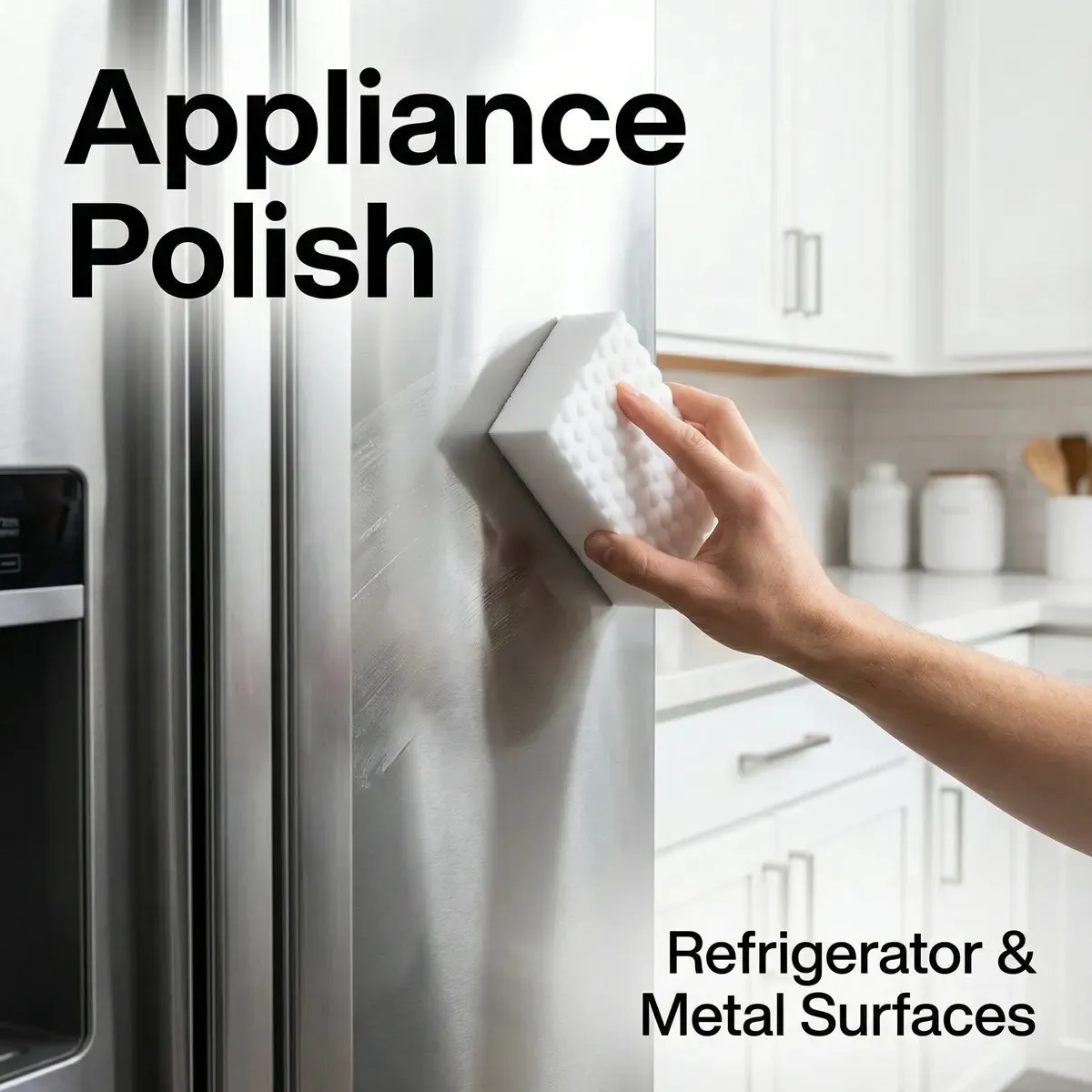
The broader knowledge base also lists ceramics, dishware, tea sets, bathtubs, tiles, glasswork, hardware, refrigerators, washing machines, coffee machines, dishwashers, office desks, keyboards, printers, telephones, leather goods, and barbecue tools as common melamine sponge application areas.
For product pages and packaging, you do not need to list every surface. Pick the strongest six or eight. Too many claims can feel messy.
Water-Activated Cleaning Fits the Low-Chemical Trend
The cleaning market keeps moving toward simpler routines: less chemical smell, fewer residues, and easier rinse steps. High density melamine sponges fit that trend because they clean through physical friction after being dampened with water.
The standard use method from the knowledge base is direct and easy to print on packaging: soak thoroughly, squeeze out excess water, wipe in one direction, and rinse after use.
For stainless steel sinks and faucets, a good retail instruction would be: rinse away loose grit first, wipe gently along the grain, then rinse and dry. This small instruction can reduce scratch complaints. It also sounds like real product care, not just sales talk.
How Can Private Label Buyers Build a Better 2026 Sponge Line
Private label buyers should not only ask for price. You need to check density, size, compression level, pack format, compliance documents, sample quality, and artwork support. A good sponge line starts with a stable product, then adds the right retail wrapper.
Customization Should Cover More Than Logo Printing
FoamTech’s private label service includes label support with logos, barcodes, QR codes, high-gloss and high-resolution labels, product videos, social media graphics, custom product specification sheets, line cards, and SDS support. The service page also mentions label design, marketing assistance, low order minimums for stocked products, and typical shipment within 5 business days after label approval.
For high density sponge buyers, this support can help you prepare:
l Retail labels
l Carton marks
l Marketplace images
l Product specification sheets
l Safety data sheets
l Barcode and QR code placement
l Shelf-ready display wording
Small note: barcode position seems minor until a retailer rejects a carton layout. Better to fix it before mass production.
Factory Background Helps Lower Sourcing Risk
FoamTech was established in 2014 and specializes in foam for disinfection and cleaning. Its manufacturer background states that it has two factory sites covering 200,000 square meters, three foaming lines, 33 invention patents, 75 utility model patents, and annual production capacity of 500,000 cubic meters. It also offers private label and OEM production.
For buyers, this matters because high density sponge orders often need stable cutting, compression, packaging, and repeat density control. A supplier that can provide pre-production samples before bulk orders also helps reduce risk. The about page clearly states that pre-production samples are available for quality verification before bulk orders.
What Should Buyers Check Before Placing a Wholesale Order
A high density rectangular sponge can be a strong 2026 product, but only if it matches your channel. Before ordering, check real use, real packing, and real cost per sale.
Build a Practical Sample Test List
Before bulk buying the 2x Hot-Pressed, Polka Dot, Rectangular High Density Sponges, test samples on:
l Greasy range hood residue
l Burnt-on pot marks
l Faucet water spots
l Soap scum and limescale
l White sneaker midsoles
l Baseboard scuffs
l Ceramic cups with tea marks
l Keyboard outer shells
Also test how the sponge feels after repeated rinse and squeeze cycles. The first scrub is useful, but the fifth and tenth scrub tell you more.
Confirm the Commercial Details Early
Ask for density options, block size, pack count, compression method, MOQ, carton dimensions, artwork rules, barcode placement, certification documents, sample timing, and shipment terms. The product page lists MOQ ranges from 2,000 to 5,000 pieces for standard bulk blocks and 10,000 to 20,000 pieces for full private label orders with custom shapes, packaging, or printing.
For product discussion, custom samples, and bulk order details, the contact page lists email, phone, WhatsApp, and a message form for inquiries.
FAQ
Q1: Why Are High Density Rectangular Cleaning Sponges Better for Wholesale Buyers?
A: They offer better tear resistance, longer use life, more compact packing, and a clearer sales story than many standard low-density sponges. This helps reduce returns and improve repeat orders.
Q2: What Is the Difference Between Standard Melamine Sponges and Hot-Pressed High Density Sponges?
A: Standard melamine sponges are lighter and more brittle. Hot-pressed high density sponges use physical compression to pack the fiber structure tighter, so they resist crumbling better during heavy cleaning.
Q3: Are 2x Hot-Pressed, Polka Dot, Rectangular High Density Sponges Suitable for Commercial Cleaning?
A: Yes. They are designed for professional grade cleaning, high-frequency use, and tough stains such as grease, burnt residue, soap scum, limescale, water spots, scuffs, and shoe marks.
Q4: Can These Sponges Help Reduce Shipping Costs?
A: Yes. Compressed high density sponge formats can reduce cargo volume, improve carton loading, and help you ship more pieces per container compared with bulky uncompressed sponge blocks.
Q5: What Should You Check Before Ordering Private Label High Density Sponges?
A: Check density, sample durability, surface compatibility, pack count, packaging style, carton size, MOQ, certification documents, barcode placement, and artwork requirements before confirming a bulk order.
In 2026, wholesale cleaning product buyers are paying closer attention to one simple question: will this sponge sell again after the first trial order? At first sight, a very cheap sponge of a conventional shape made of sponge cells may win once in a price comparison. However, a high density rectangular cleaning sponge is winning in the long run on durability, shipping value, shelf clearance and number of uses. A product like this is of interest to distributors, online sellers, buyers of supermarkets and of cleaning services as well as suppliers for private labels. All of them are looking for a product which causes less complaints of crumbling than others, which has a better carton utilization and a better product story which can be brought on one line.
Why Are High Density Sponges Gaining More Wholesale Attention
High density cleaning sponges are becoming more attractive because the market is tired of low-cost products that break too fast. In household cleaning, a sponge is still a small item, but in bulk trade, small defects become large problems. A product that tears after a few uses can lead to refunds, poor reviews, and weak reorder rates.
Durability Matters More Than the Lowest Unit Price
Standard melamine sponges are often light, airy, and easy to ship in bulk, but they can also crumble quickly during heavy scrubbing. The 2x Hot-Pressed, Polka Dot, Rectangular High Density Sponges use hot-pressed technology with 2x density compared with standard sponges, helping improve tear resistance and service life. The product page also positions this type as a professional choice for commercial cleaning and high-frequency use.
For B2B buyers, durability means fewer returns. It also gives your sales team a clearer reason to quote a better price. “Lasts longer” is easier to sell than “slightly cheaper,” especially when customers use sponges every day in kitchens, bathrooms, rental homes, restaurants, and cleaning carts.
Rectangular Shape Feels Practical, Not Gimmicky
A rectangular sponge is simple, but that is the point. It stacks well, packs well, fits labels neatly, and gives users straight edges for sink corners, faucet bases, pot rims, and tile lines. The polka dot surface also helps the product look more retail-ready without making the design too strange for B2B channels.
Some buyers chase odd shapes because they look fresh online. That can work. Still, rectangular blocks usually make more sense for wholesale because they are easier to count, pack, display, and cut into sets. Boring? Maybe a little. But boring often sells well in cleaning aisles.
How Does Hot-Pressed Technology Change Sponge Performance
Hot pressing is not only a design detail. It changes how the sponge feels, ships, and survives repeated scrubbing. When buyers compare samples, the difference is usually clear in hand feel and edge strength.
Higher Density Reduces Crumbling During Heavy Use
The product FAQ explains that standard melamine sponges are commonly around 8 kg/m³, while high density versions can be available in 16 kg/m³, 24 kg/m³, and 32 kg/m³. Through physical high-temperature micro-compression, the open-cell fiber structure becomes more tightly packed, giving the sponge better flexibility, less tearing, and longer use life. The page states that high density sponges can last 3 to 5 times longer than standard blocks.
That matters for buyers selling into:
l Janitorial supply channels
l Restaurant cleaning kits
l Supermarket private label lines
l E-commerce refill packs
l Hotel and property cleaning use
l Automotive detailing bundles
A sponge that breaks too fast damages the whole listing, even if the first price looked nice.
Physical Compression Avoids Extra Glue Concerns
A useful detail for importers: the product page states that high density sponges are made through a pure physical compression process without synthetic glues or post-chemical stabilizers. It also notes that the products are odorless, non-toxic, and suitable for food-contact use.
For cleaning product buyers, this gives the sponge a cleaner sales angle. You can talk about water-activated cleaning, less reliance on harsh detergents, and physical stain removal. The knowledge base also lists “clean with water alone,” “powerful cleaning,” “high tensile strength,” “soak with water and reuse,” and “environmental-friendly” as key melamine sponge characteristics.
Why Does High Density Help with Shipping and Storage Costs
Freight has become a real decision point for low-ticket cleaning products. A sponge may cost little per piece, but a carton full of air is still expensive to move. High density compressed products answer this problem better than loose, bulky foam blocks.
Compressed Profiles Save Carton Space
The product page notes that traditional uncompressed sponges consist largely of air, while compressed high density blocks and custom vacuum-sealed packaging can reduce cargo volume by 60% to 70%. It also says this can allow 3 to 4 times more stock per container, helping cut per-piece shipping and storage fees.
For wholesalers, this is not a small detail. Shipping cost can decide whether a low-margin cleaning product is worth importing. A more compact sponge pack can help you place larger orders without increasing warehouse pressure too much.
Better Packing Supports More Sales Channels
The knowledge base lists several OEM packing options, including individual packs, 3-piece packs, 10-piece packs, 21-piece packs, heat shrink film, color printing cardboard sleeves, OPP+PET glossy laminated color printing, PET/CPP laminated packing, corrugated boxes, and display boxes made with 300g paperboard.
That gives you room to build different product versions:
l Bulk loose pack for cleaning companies
l 4-piece retail pack for supermarkets
l 10-piece value pack for online shops
l Display box for counter sales
l Private label pack for regional distributors
One product family can serve several channels. That makes inventory planning easier. Not perfect, but much cleaner than managing too many unrelated SKUs.
Which Cleaning Jobs Make This Product Easier to Sell
A high density rectangular sponge sells best when the buyer can quickly match it with real cleaning jobs. The product page lists kitchen, bathroom, living space, and personal item use cases, including greasy range hoods, burnt-on pot stains, soap scum, limescale, faucet water spots, baseboard scuffs, white sneaker midsoles, crayon marks on walls, and keyboard grime.
Kitchen and Bathroom Use Make the Strongest Retail Story
Kitchen and bathroom cleaning are high-frequency use areas. Grease, soap scum, limescale, tea stains, and faucet marks return again and again. That is why a durable sponge fits repeat sales better than a one-time novelty item.
The broader knowledge base also lists ceramics, dishware, tea sets, bathtubs, tiles, glasswork, hardware, refrigerators, washing machines, coffee machines, dishwashers, office desks, keyboards, printers, telephones, leather goods, and barbecue tools as common melamine sponge application areas.
For product pages and packaging, you do not need to list every surface. Pick the strongest six or eight. Too many claims can feel messy.
Water-Activated Cleaning Fits the Low-Chemical Trend
The cleaning market keeps moving toward simpler routines: less chemical smell, fewer residues, and easier rinse steps. High density melamine sponges fit that trend because they clean through physical friction after being dampened with water.
The standard use method from the knowledge base is direct and easy to print on packaging: soak thoroughly, squeeze out excess water, wipe in one direction, and rinse after use.
For stainless steel sinks and faucets, a good retail instruction would be: rinse away loose grit first, wipe gently along the grain, then rinse and dry. This small instruction can reduce scratch complaints. It also sounds like real product care, not just sales talk.
How Can Private Label Buyers Build a Better 2026 Sponge Line
Private label buyers should not only ask for price. You need to check density, size, compression level, pack format, compliance documents, sample quality, and artwork support. A good sponge line starts with a stable product, then adds the right retail wrapper.
Customization Should Cover More Than Logo Printing
FoamTech’s private label service includes label support with logos, barcodes, QR codes, high-gloss and high-resolution labels, product videos, social media graphics, custom product specification sheets, line cards, and SDS support. The service page also mentions label design, marketing assistance, low order minimums for stocked products, and typical shipment within 5 business days after label approval.
For high density sponge buyers, this support can help you prepare:
l Retail labels
l Carton marks
l Marketplace images
l Product specification sheets
l Safety data sheets
l Barcode and QR code placement
l Shelf-ready display wording
Small note: barcode position seems minor until a retailer rejects a carton layout. Better to fix it before mass production.
Factory Background Helps Lower Sourcing Risk
FoamTech was established in 2014 and specializes in foam for disinfection and cleaning. Its manufacturer background states that it has two factory sites covering 200,000 square meters, three foaming lines, 33 invention patents, 75 utility model patents, and annual production capacity of 500,000 cubic meters. It also offers private label and OEM production.
For buyers, this matters because high density sponge orders often need stable cutting, compression, packaging, and repeat density control. A supplier that can provide pre-production samples before bulk orders also helps reduce risk. The about page clearly states that pre-production samples are available for quality verification before bulk orders.
What Should Buyers Check Before Placing a Wholesale Order
A high density rectangular sponge can be a strong 2026 product, but only if it matches your channel. Before ordering, check real use, real packing, and real cost per sale.
Build a Practical Sample Test List
Before bulk buying the 2x Hot-Pressed, Polka Dot, Rectangular High Density Sponges, test samples on:
l Greasy range hood residue
l Burnt-on pot marks
l Faucet water spots
l Soap scum and limescale
l White sneaker midsoles
l Baseboard scuffs
l Ceramic cups with tea marks
l Keyboard outer shells
Also test how the sponge feels after repeated rinse and squeeze cycles. The first scrub is useful, but the fifth and tenth scrub tell you more.
Confirm the Commercial Details Early
Ask for density options, block size, pack count, compression method, MOQ, carton dimensions, artwork rules, barcode placement, certification documents, sample timing, and shipment terms. The product page lists MOQ ranges from 2,000 to 5,000 pieces for standard bulk blocks and 10,000 to 20,000 pieces for full private label orders with custom shapes, packaging, or printing.
For product discussion, custom samples, and bulk order details, the contact page lists email, phone, WhatsApp, and a message form for inquiries.
FAQ
Q1: Why Are High Density Rectangular Cleaning Sponges Better for Wholesale Buyers?
A: They offer better tear resistance, longer use life, more compact packing, and a clearer sales story than many standard low-density sponges. This helps reduce returns and improve repeat orders.
Q2: What Is the Difference Between Standard Melamine Sponges and Hot-Pressed High Density Sponges?
A: Standard melamine sponges are lighter and more brittle. Hot-pressed high density sponges use physical compression to pack the fiber structure tighter, so they resist crumbling better during heavy cleaning.
Q3: Are 2x Hot-Pressed, Polka Dot, Rectangular High Density Sponges Suitable for Commercial Cleaning?
A: Yes. They are designed for professional grade cleaning, high-frequency use, and tough stains such as grease, burnt residue, soap scum, limescale, water spots, scuffs, and shoe marks.
Q4: Can These Sponges Help Reduce Shipping Costs?
A: Yes. Compressed high density sponge formats can reduce cargo volume, improve carton loading, and help you ship more pieces per container compared with bulky uncompressed sponge blocks.
Q5: What Should You Check Before Ordering Private Label High Density Sponges?
A: Check density, sample durability, surface compatibility, pack count, packaging style, carton size, MOQ, certification documents, barcode placement, and artwork requirements before confirming a bulk order.
Related Recommendations


Family owned company, globalleader in development andmanufacturing of home careproducts for private label andcontract manufacturing
Copyright © 2026 FoamTech (Zhejiang) New Materials Co., Ltd.