How to Choose the Right Grit Rating for a Heavy Duty Emery Cleaning Sponge
2026-07-20
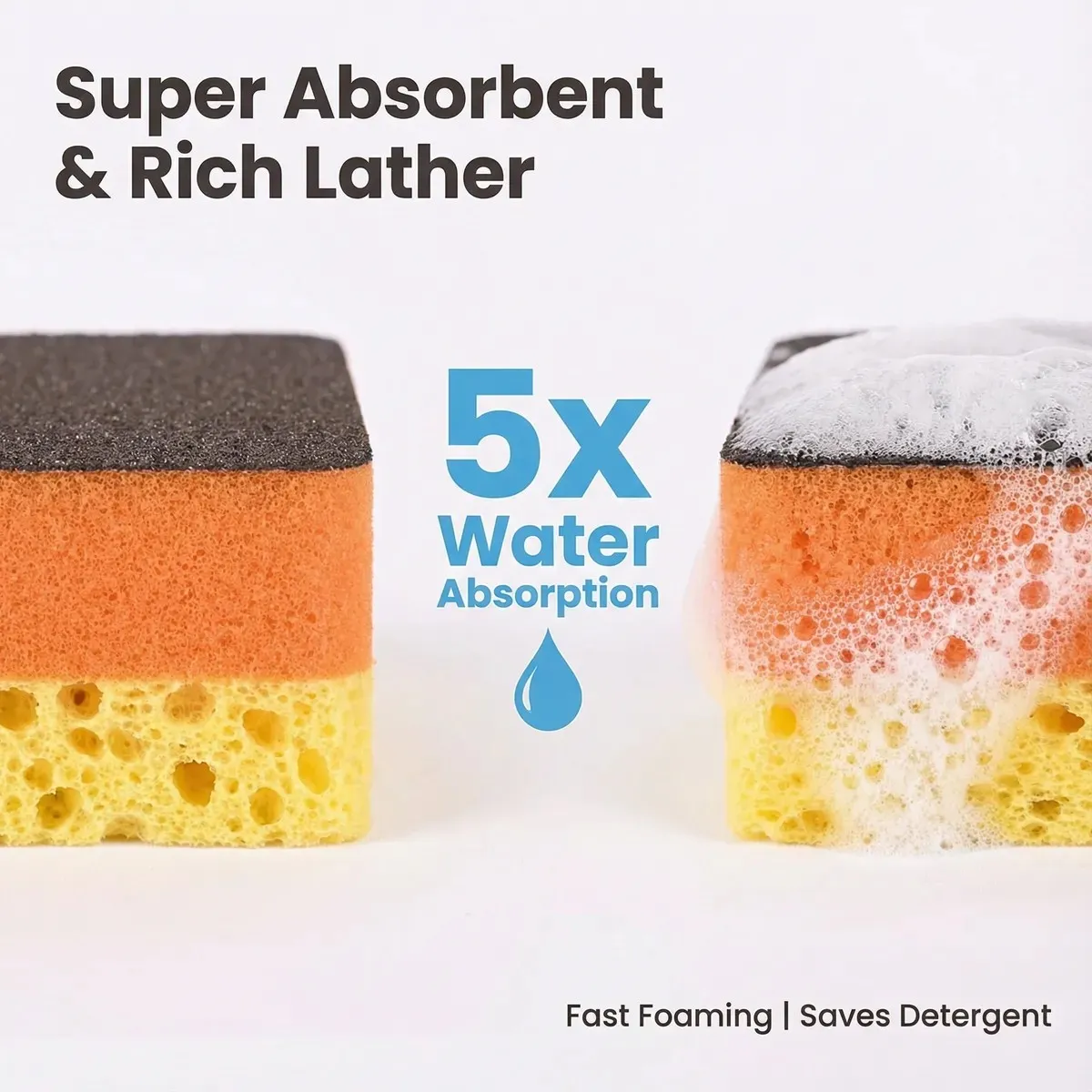
When choosing a heavy duty emery cleaning sponge, size and color are not the only criteria and price is not everything. The most important factor is the grit rating of the sponge. This is the measure of how fast the sponge will cut through burnt grease, rust, oxidation, soap scum and other hard kitchen residue. A grit that is too coarse will scratch surfaces and result in customer complaints whereas a grit that is too fine will feel weak on carbon stains. For B2B buyers the choice of the right grit rating is important in relation to reviews, repeat orders, private label positioning and even return rates. This guide will assist you in choosing the right abrasive for your kitchen, bathroom, household and commercial cleaning products.
What Does Grit Rating Mean for a Heavy Duty Emery Sponge?
The grit rating measures how aggressive the surface of an abrasive scrubber is. Lower numbers equal more aggressive scrubbers with coarse abrasive surfaces that are tougher to clean with but are able to remove hard residues quickly and easily. Higher numbers mean finer abrasive surfaces that are best to use for lighter cleaning or even for detailing and finishing tasks. But when it comes to sponge shopping, there are many other factors to consider besides the grit of a scrubber, including how the layers are bonded together, how well the scrubber holds up in the foam, how fast the abrasive grit wears off, how much water a scrubber uses, and the safety of the scrubber’s surface.
Lower Grit Cuts Faster
For heavy grease, burnt carbon, thick rust, and metallic grime, a lower grit gives stronger bite. It removes hard residue by physical friction, not by soaking the stain in detergent. This fits the current cleaning market where many buyers want fewer chemical cleaners and more direct scrubbing power.
The New 3-Layer Composite Product uses high-density emery particles for durability and abrasive power. The product page also lists heavy duty performance for both industrial and home use, making it a practical SKU for retailers, foodservice suppliers, and cleaning brands.
Higher Grit Gives More Control
A finer grit, such as 180 grit, is usually better when the stain is lighter or when the surface needs a cleaner finish. It may not remove old rust as fast as 80 grit, but it gives better control. That matters for stainless steel sinks, faucets, tile edges, and household surfaces where users may press too hard.
A small buyer note: many end users do not read long instructions. If your sponge feels too aggressive for daily dishwashing, the package must say where to use it and where not to use it.
Which Grit Rating Should You Choose for Different Cleaning Jobs?
Different markets need different cleaning strengths. A restaurant supply buyer may ask for fast rust and burnt grease removal. A supermarket buyer may prefer a safer, easier daily-use product. A hardware channel may accept a rougher abrasive because customers expect stronger stripping power.
Use 80 Grit for Hard Rust and Burnt Carbon
80 grit is suitable for tough cleaning jobs. It is the right choice when the product must remove:
• Thick burnt-on pot stains
• Heavy rust on metal tools
• Old carbon on grills
• Oxidized stove parts
• Hard grime on outdoor cooking tools
This grit is not for delicate cookware. Do not position it as a universal kitchen sponge. It is closer to a hand cleaning tool for heavy residue.
Use 120 Grit for Balanced Kitchen Cleaning
120 grit is often the most balanced option for wholesale cleaning sponge lines. It can handle grease, stove stains, light rust, range hood residue, and general heavy scrubbing. It feels strong, but not as harsh as 80 grit.
For many private label buyers, 120 grit is a good first test because it covers more everyday cleaning tasks. The New 3-Layer Composite Product page states that standard grit options usually range from 80 to 120 and 180 grit for different stripping needs.
Use 180 Grit for Lighter Stains and Finishing
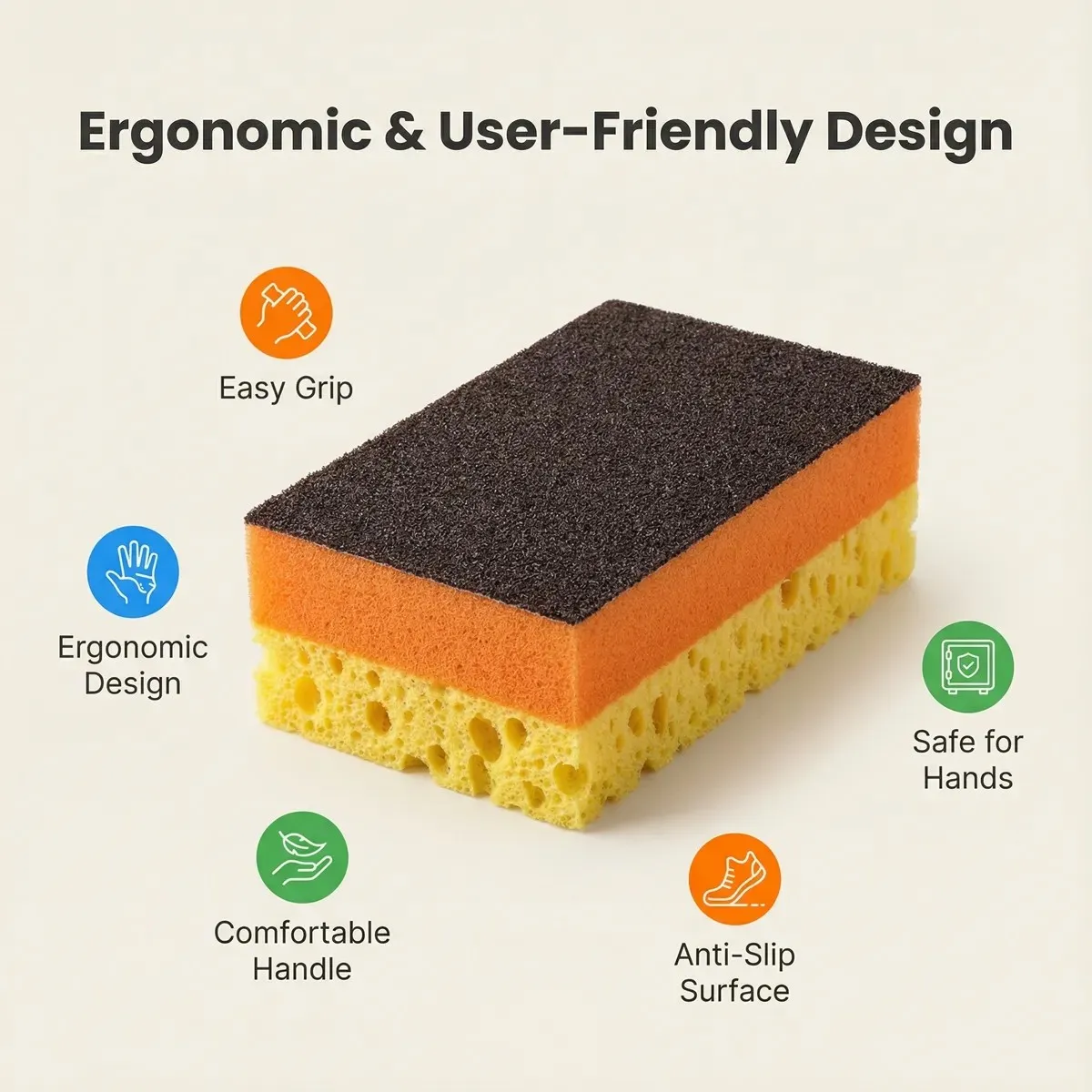
180 grit is better for lighter oxidation, water spots, soap scum, and finishing after coarse cleaning. It is useful for bathroom faucets, sink edges, and surfaces where users need less bite.
It is not the fastest choice for black carbon or deep rust. Still, it can be a smart retail SKU when buyers want a softer “heavy duty but not too rough” cleaning sponge.
Why Does a 3-Layer Composite Structure Matter?
Grit rating does not work alone. A rough surface needs a stable sponge body behind it. If the abrasive layer peels off, sheds grit, or loses shape after several uses, the grit rating becomes almost meaningless. This is where composite construction matters.
Layer Bonding Affects Real Cleaning Life
A 3-layer composite emery sponge should hold together under water, hand pressure, wringing, and repeated friction. FoamTech’s knowledge base shows that cleaning sponge products can be designed for powerful cleaning, water-only use, reusability, free cutting, and eco-friendly cleaning. It also lists multiple sponge densities, sizes, and OEM packing formats for different product lines.
The official product page explains that the outer emery layer and internal foam core are joined through a flame-free thermo-bonding lamination process. This process is designed to reduce peeling, warping, and splitting during hot-water use and manual wringing.
For B2B buyers, this solves a common problem. A cheap sponge may look fine in a sample photo, but after wet scrubbing, the edge opens. Then the customer sees layers splitting apart. That complaint is small, but it hurts repeat sales.
How Can You Reduce Grit Shedding Complaints?
Grit shedding is one of the quickest ways to damage product trust. When abrasive particles fall off during first use, the sponge feels cheap. It also leaves residue on the cleaned surface, which is annoying in kitchens and bathrooms.
Electrostatic Embedding Helps Hold the Abrasive Layer
The New 3-Layer Composite Product uses industrial-grade electrostatic embedding technology to lock alumina carborundum grit particles into the fiber network. The product page states that this helps create uniform grit density and a long service life under commercial scrubbing.
This is important if your buyers supply:
Restaurant kitchens
Hotel maintenance teams
Cleaning contractors
Hardware stores
Online household cleaning shops
Private label cleaning brands
A sponge that keeps its grit longer can reduce replacement frequency and improve margins for resellers. The official product page also highlights cost efficiency, bulk supply, and stable production capacity for high-volume wholesale demand.
What Surface Safety Rules Should B2B Buyers Add?
A strong emery sponge needs honest instructions. Overpromising is risky. The product may remove rust very well, but it should not be used on every surface. Good packaging protects both the end user and your brand.
Match Grit to Surface Type
The product page clearly states that emery carborundum sponges are aggressive abrasives. They are made for heavy burnt carbon, thick oxidation rust, and stubborn metallic grime. They should not be used on non-stick coatings, polished mirror finishes, delicate plastics, or premium glassware because visible scratches may happen.
A simple label can say:
• Test on a small hidden area first
• Use 80 grit for hard rust and carbon
• Use 120 grit for general heavy cleaning
• Use 180 grit for lighter stains
• Do not use on non-stick coatings
• Rinse and air dry after use
This kind of wording feels plain, but it works. Customers want clear rules, not a paragraph full of technical talk.
How Should You Test Samples Before Bulk Orders?
Before buying emery sponges in bulk, sample testing should cover more than stain removal. A good sample test checks cleaning speed, grit shedding, layer bonding, smell, hand grip, size accuracy, and packaging fit.
Build a Simple Buyer Test
Use the same cleaning tasks your end customers will care about. Test greasy range hoods, burnt-on pot stains, soap scum, faucet water spots, and stove stains. The product page lists these as practical application scenarios across kitchen, bathroom, living space, and personal item cleaning.
A useful sample checklist:
• Scrub wet for 3 minutes and check grit shedding
• Wring 10 times and check layer edges
• Clean burnt pot residue with 80 or 120 grit
• Clean faucet water spots with 180 grit
• Let the sponge dry overnight and test again
• Check whether the block size fits your retail pack
• Add warning text before approving artwork
FoamTech’s broader product data includes emery sponge features such as sustainable, lightweight, antibacterial, multi-purpose, eco-friendly, scrub, decontamination, and rust remover. It also lists 25 mm thickness, brown color, customized size, customized packing, MOQ of 3000 pieces, OEM and ODM support, and free samples.
Why Does Supplier Background Matter for Emery Sponge Sourcing?
A cleaning sponge is a low-ticket product, but sourcing mistakes still cost money. Bad bonding, unstable grit, late delivery, unclear packaging, and missing compliance documents can slow down a launch. That is why factory background matters for importers and private label buyers.
Production and Custom Support Reduce Sourcing Risk
FoamTech was established in 2014 as a high-tech enterprise focused on melamine foam production and R&D. Its knowledge base mentions 55 invention patents, factory development in advanced foam materials, and support for OEM packing across multiple sponge product formats.
The product page states that FoamTech supports B2B customization, including block cutting, multi-layer colored composite styles, ergonomic side grooves, and custom branded retail packaging. It also lists material compliance references such as REACH, RoHS, and MSDS.
How Should You Position the Product for Wholesale Markets?
A 3-layer composite emery sponge should not compete with soft dishwashing sponges. It should sit in the heavy cleaning category. That makes the sales message cleaner and easier to understand.
Use Clear Product Segmentation
For retail and wholesale lines, you can build a simple ladder:
• Soft cellulose sponge for daily dishes
• Melamine sponge for water-based stain removal
• 120 grit emery sponge for heavy kitchen cleaning
• 80 grit emery sponge for rust, carbon, and grill tools
• 180 grit emery sponge for lighter hard-surface finishing
The New 3-Layer Composite Product fits buyers who need a tough, reusable, factory-grade emery sponge with customizable packaging. It is especially suitable for distributors, cleaning brands, restaurant supply channels, and retailers that want a heavy-duty SKU with a clear job.
FAQ
Q1: What Grit Rating Is Best for a Heavy Duty Emery Cleaning Sponge?
A: 120 grit is often the safest first choice for B2B buyers because it balances strong scrubbing with wider household use. For thick rust and burnt carbon, 80 grit is stronger. For lighter stains and finishing, 180 grit works better.
Q2: Can an Emery Sponge Be Used on Non-Stick Cookware?
A: No. Emery sponges are aggressive abrasives. They should not be used on non-stick coatings, mirror-polished surfaces, delicate plastics, or premium glassware. Add this warning to packaging to reduce customer complaints.
Q3: Why Does Grit Shedding Happen in Cheap Emery Sponges?
A: Grit shedding often happens when abrasive particles are only attached with weak glue or poor surface bonding. Electrostatic embedding helps hold abrasive particles more firmly in the fiber network.
Q4: What Is the Benefit of a 3-Layer Composite Cleaning Sponge?
A: A 3-layer composite structure gives the sponge better support, stronger grip, and longer working life. When the abrasive layer and foam core stay bonded, the sponge feels more reliable during wet scrubbing and wringing.
Q5: Is This Product Suitable for Private Label Cleaning Brands?
A: Yes. The New 3-Layer Composite Product supports custom size, custom shape, colored composite styles, ergonomic options, and custom branded retail packaging, making it suitable for distributors, retailers, and private label cleaning brands.
When choosing a heavy duty emery cleaning sponge, size and color are not the only criteria and price is not everything. The most important factor is the grit rating of the sponge. This is the measure of how fast the sponge will cut through burnt grease, rust, oxidation, soap scum and other hard kitchen residue. A grit that is too coarse will scratch surfaces and result in customer complaints whereas a grit that is too fine will feel weak on carbon stains. For B2B buyers the choice of the right grit rating is important in relation to reviews, repeat orders, private label positioning and even return rates. This guide will assist you in choosing the right abrasive for your kitchen, bathroom, household and commercial cleaning products.
What Does Grit Rating Mean for a Heavy Duty Emery Sponge?
The grit rating measures how aggressive the surface of an abrasive scrubber is. Lower numbers equal more aggressive scrubbers with coarse abrasive surfaces that are tougher to clean with but are able to remove hard residues quickly and easily. Higher numbers mean finer abrasive surfaces that are best to use for lighter cleaning or even for detailing and finishing tasks. But when it comes to sponge shopping, there are many other factors to consider besides the grit of a scrubber, including how the layers are bonded together, how well the scrubber holds up in the foam, how fast the abrasive grit wears off, how much water a scrubber uses, and the safety of the scrubber’s surface.
Lower Grit Cuts Faster
For heavy grease, burnt carbon, thick rust, and metallic grime, a lower grit gives stronger bite. It removes hard residue by physical friction, not by soaking the stain in detergent. This fits the current cleaning market where many buyers want fewer chemical cleaners and more direct scrubbing power.
The New 3-Layer Composite Product uses high-density emery particles for durability and abrasive power. The product page also lists heavy duty performance for both industrial and home use, making it a practical SKU for retailers, foodservice suppliers, and cleaning brands.
Higher Grit Gives More Control
A finer grit, such as 180 grit, is usually better when the stain is lighter or when the surface needs a cleaner finish. It may not remove old rust as fast as 80 grit, but it gives better control. That matters for stainless steel sinks, faucets, tile edges, and household surfaces where users may press too hard.
A small buyer note: many end users do not read long instructions. If your sponge feels too aggressive for daily dishwashing, the package must say where to use it and where not to use it.
Which Grit Rating Should You Choose for Different Cleaning Jobs?
Different markets need different cleaning strengths. A restaurant supply buyer may ask for fast rust and burnt grease removal. A supermarket buyer may prefer a safer, easier daily-use product. A hardware channel may accept a rougher abrasive because customers expect stronger stripping power.
Use 80 Grit for Hard Rust and Burnt Carbon
80 grit is suitable for tough cleaning jobs. It is the right choice when the product must remove:
• Thick burnt-on pot stains
• Heavy rust on metal tools
• Old carbon on grills
• Oxidized stove parts
• Hard grime on outdoor cooking tools
This grit is not for delicate cookware. Do not position it as a universal kitchen sponge. It is closer to a hand cleaning tool for heavy residue.
Use 120 Grit for Balanced Kitchen Cleaning
120 grit is often the most balanced option for wholesale cleaning sponge lines. It can handle grease, stove stains, light rust, range hood residue, and general heavy scrubbing. It feels strong, but not as harsh as 80 grit.
For many private label buyers, 120 grit is a good first test because it covers more everyday cleaning tasks. The New 3-Layer Composite Product page states that standard grit options usually range from 80 to 120 and 180 grit for different stripping needs.
Use 180 Grit for Lighter Stains and Finishing
180 grit is better for lighter oxidation, water spots, soap scum, and finishing after coarse cleaning. It is useful for bathroom faucets, sink edges, and surfaces where users need less bite.
It is not the fastest choice for black carbon or deep rust. Still, it can be a smart retail SKU when buyers want a softer “heavy duty but not too rough” cleaning sponge.
Why Does a 3-Layer Composite Structure Matter?
Grit rating does not work alone. A rough surface needs a stable sponge body behind it. If the abrasive layer peels off, sheds grit, or loses shape after several uses, the grit rating becomes almost meaningless. This is where composite construction matters.
Layer Bonding Affects Real Cleaning Life
A 3-layer composite emery sponge should hold together under water, hand pressure, wringing, and repeated friction. FoamTech’s knowledge base shows that cleaning sponge products can be designed for powerful cleaning, water-only use, reusability, free cutting, and eco-friendly cleaning. It also lists multiple sponge densities, sizes, and OEM packing formats for different product lines.
The official product page explains that the outer emery layer and internal foam core are joined through a flame-free thermo-bonding lamination process. This process is designed to reduce peeling, warping, and splitting during hot-water use and manual wringing.
For B2B buyers, this solves a common problem. A cheap sponge may look fine in a sample photo, but after wet scrubbing, the edge opens. Then the customer sees layers splitting apart. That complaint is small, but it hurts repeat sales.
How Can You Reduce Grit Shedding Complaints?
Grit shedding is one of the quickest ways to damage product trust. When abrasive particles fall off during first use, the sponge feels cheap. It also leaves residue on the cleaned surface, which is annoying in kitchens and bathrooms.
Electrostatic Embedding Helps Hold the Abrasive Layer
The New 3-Layer Composite Product uses industrial-grade electrostatic embedding technology to lock alumina carborundum grit particles into the fiber network. The product page states that this helps create uniform grit density and a long service life under commercial scrubbing.
This is important if your buyers supply:
Restaurant kitchens
Hotel maintenance teams
Cleaning contractors
Hardware stores
Online household cleaning shops
Private label cleaning brands
A sponge that keeps its grit longer can reduce replacement frequency and improve margins for resellers. The official product page also highlights cost efficiency, bulk supply, and stable production capacity for high-volume wholesale demand.
What Surface Safety Rules Should B2B Buyers Add?
A strong emery sponge needs honest instructions. Overpromising is risky. The product may remove rust very well, but it should not be used on every surface. Good packaging protects both the end user and your brand.
Match Grit to Surface Type
The product page clearly states that emery carborundum sponges are aggressive abrasives. They are made for heavy burnt carbon, thick oxidation rust, and stubborn metallic grime. They should not be used on non-stick coatings, polished mirror finishes, delicate plastics, or premium glassware because visible scratches may happen.
A simple label can say:
• Test on a small hidden area first
• Use 80 grit for hard rust and carbon
• Use 120 grit for general heavy cleaning
• Use 180 grit for lighter stains
• Do not use on non-stick coatings
• Rinse and air dry after use
This kind of wording feels plain, but it works. Customers want clear rules, not a paragraph full of technical talk.
How Should You Test Samples Before Bulk Orders?
Before buying emery sponges in bulk, sample testing should cover more than stain removal. A good sample test checks cleaning speed, grit shedding, layer bonding, smell, hand grip, size accuracy, and packaging fit.
Build a Simple Buyer Test
Use the same cleaning tasks your end customers will care about. Test greasy range hoods, burnt-on pot stains, soap scum, faucet water spots, and stove stains. The product page lists these as practical application scenarios across kitchen, bathroom, living space, and personal item cleaning.
A useful sample checklist:
• Scrub wet for 3 minutes and check grit shedding
• Wring 10 times and check layer edges
• Clean burnt pot residue with 80 or 120 grit
• Clean faucet water spots with 180 grit
• Let the sponge dry overnight and test again
• Check whether the block size fits your retail pack
• Add warning text before approving artwork
FoamTech’s broader product data includes emery sponge features such as sustainable, lightweight, antibacterial, multi-purpose, eco-friendly, scrub, decontamination, and rust remover. It also lists 25 mm thickness, brown color, customized size, customized packing, MOQ of 3000 pieces, OEM and ODM support, and free samples.
Why Does Supplier Background Matter for Emery Sponge Sourcing?
A cleaning sponge is a low-ticket product, but sourcing mistakes still cost money. Bad bonding, unstable grit, late delivery, unclear packaging, and missing compliance documents can slow down a launch. That is why factory background matters for importers and private label buyers.
Production and Custom Support Reduce Sourcing Risk
FoamTech was established in 2014 as a high-tech enterprise focused on melamine foam production and R&D. Its knowledge base mentions 55 invention patents, factory development in advanced foam materials, and support for OEM packing across multiple sponge product formats.
The product page states that FoamTech supports B2B customization, including block cutting, multi-layer colored composite styles, ergonomic side grooves, and custom branded retail packaging. It also lists material compliance references such as REACH, RoHS, and MSDS.
How Should You Position the Product for Wholesale Markets?
A 3-layer composite emery sponge should not compete with soft dishwashing sponges. It should sit in the heavy cleaning category. That makes the sales message cleaner and easier to understand.
Use Clear Product Segmentation
For retail and wholesale lines, you can build a simple ladder:
• Soft cellulose sponge for daily dishes
• Melamine sponge for water-based stain removal
• 120 grit emery sponge for heavy kitchen cleaning
• 80 grit emery sponge for rust, carbon, and grill tools
• 180 grit emery sponge for lighter hard-surface finishing
The New 3-Layer Composite Product fits buyers who need a tough, reusable, factory-grade emery sponge with customizable packaging. It is especially suitable for distributors, cleaning brands, restaurant supply channels, and retailers that want a heavy-duty SKU with a clear job.
FAQ
Q1: What Grit Rating Is Best for a Heavy Duty Emery Cleaning Sponge?
A: 120 grit is often the safest first choice for B2B buyers because it balances strong scrubbing with wider household use. For thick rust and burnt carbon, 80 grit is stronger. For lighter stains and finishing, 180 grit works better.
Q2: Can an Emery Sponge Be Used on Non-Stick Cookware?
A: No. Emery sponges are aggressive abrasives. They should not be used on non-stick coatings, mirror-polished surfaces, delicate plastics, or premium glassware. Add this warning to packaging to reduce customer complaints.
Q3: Why Does Grit Shedding Happen in Cheap Emery Sponges?
A: Grit shedding often happens when abrasive particles are only attached with weak glue or poor surface bonding. Electrostatic embedding helps hold abrasive particles more firmly in the fiber network.
Q4: What Is the Benefit of a 3-Layer Composite Cleaning Sponge?
A: A 3-layer composite structure gives the sponge better support, stronger grip, and longer working life. When the abrasive layer and foam core stay bonded, the sponge feels more reliable during wet scrubbing and wringing.
Q5: Is This Product Suitable for Private Label Cleaning Brands?
A: Yes. The New 3-Layer Composite Product supports custom size, custom shape, colored composite styles, ergonomic options, and custom branded retail packaging, making it suitable for distributors, retailers, and private label cleaning brands.
Related Recommendations


Family owned company, globalleader in development andmanufacturing of home careproducts for private label andcontract manufacturing
Copyright © 2026 FoamTech (Zhejiang) New Materials Co., Ltd.