How Does BFA Diamond Sand Help a Heavy Duty Kitchen Sponge Remove Rust and Oxidation
2026-07-24
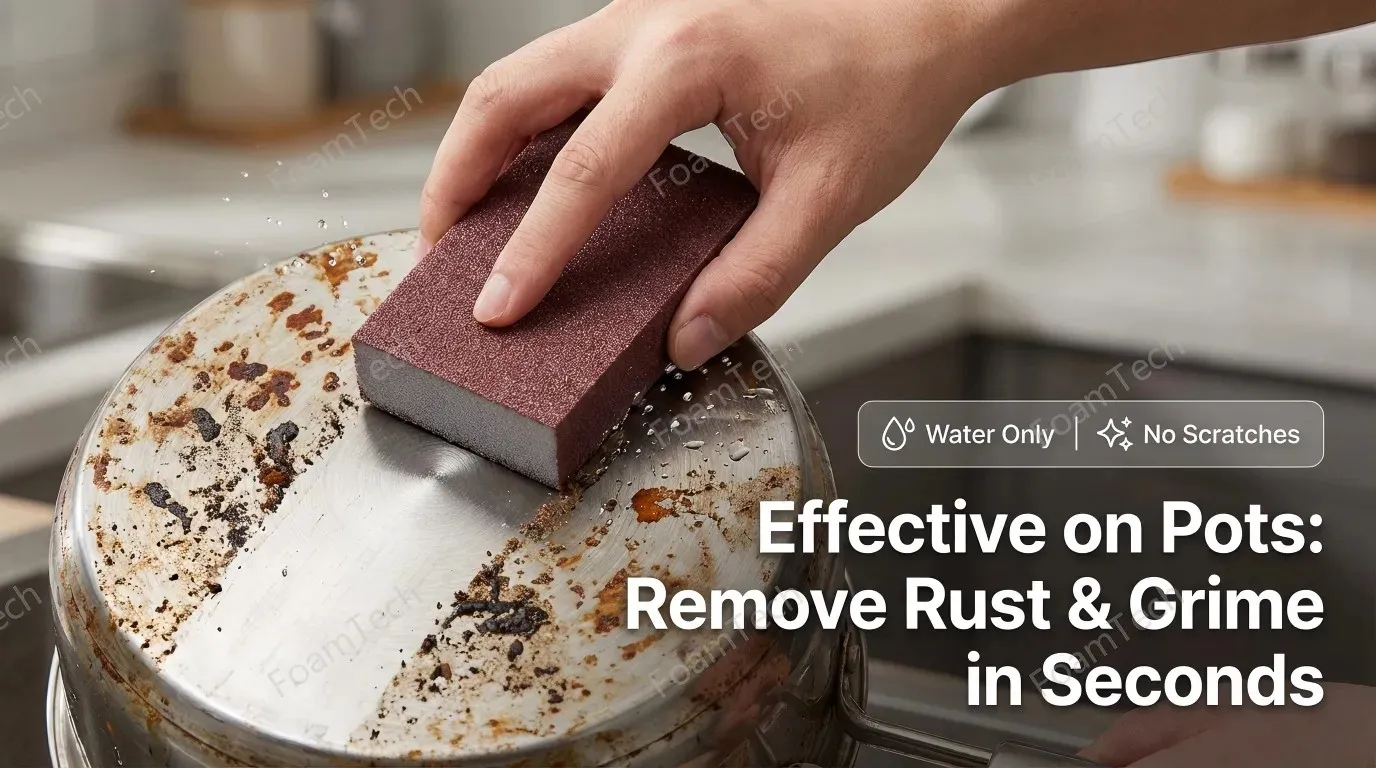
Rust, burnt grease, blackened carbon, and stubborn oxidation are not just small cleaning problems. These features matter for kitchenware retailers, catering suppliers, hotel buyers and private label cleaning products. They affect the product or service reviews and repurchases. A light sponge is okay for normal washing up of dishes, but does not perform well enough when dealing with stubborn stains on cookware, stove rings, oven trays, knives and other grills and kitchen tools that have already stuck to surfaces.
That is why more buyers are looking at abrasive sponge materials that clean with water, reduce the need for harsh detergent, and still remain practical for daily handling. The key is not simply making a sponge “rougher.” A useful heavy duty kitchen sponge needs the right abrasive layer, stable bonding, good grip, enough thickness, and clear surface-use guidance. The Diamond Sand Magic Eraser Sponge is designed around this exact need, using Sponge + BFA diamond sand material for heavy kitchen stain and rust removal.
Why Does Rust and Oxidation Need More than a Normal Sponge?
Rust and oxidation sit differently from fresh oil. Grease can often be softened by warm water or detergent, but rust and burnt carbon usually form a harder surface layer. A normal soft sponge may glide over the stain, spread residue around, or wear out before the job is done.
Hard Stains Need Micro Abrasion
BFA diamond sand helps because it gives the sponge a controlled abrasive surface. The product uses a high-density emery dish sponge structure with Sponge + BFA diamond sand particles. In simple words, the abrasive grains help break the contact between rust, oxidation, burnt food, and the surface below.
This matters for B2B buyers because the customer does not judge a cleaning product only by softness. They judge whether it removes the problem fast enough. For heavy stains, a sponge must do three things well:
Cut into rust and oxidation without collapsing too quickly
Hold enough water during scrubbing
Keep the abrasive layer stable after repeated use
From the product page we can see the following features of the scrubber. antibacterial, eco-friendly, thick, high absorbent, reusable, decontamination, and rust remover. It is 25 mm thick and comes in the standard size of 100 × 70 × 25 mm. This means that the scrubber is small enough to hold in your hand but has the required thickness to apply pressure when cleaning cookware.
How Does BFA Diamond Sand Work During Kitchen Cleaning?
A heavy duty sponge works best when the abrasive layer and sponge body do different jobs. The abrasive side attacks the hard stain. The sponge body carries water, supports grip, and helps remove loose residue. This is one reason material pairing matters so much.
Sponge Plus BFA Is a Practical Structure
BFA diamond sand is used as the cutting part of the sponge. It works like fine grinding particles on the cleaning surface. When the sponge is wet, the abrasive layer gets enough contact with the stain while water helps carry away loosened grime. The product is water-activated, so no detergent is needed for many rust and heavy stain jobs. That fits the current cleaning market trend toward lower chemical use and simpler cleaning routines.
FoamTech’s knowledge base also describes magic eraser sponge characteristics such as cleaning with water alone, powerful cleaning, reusability after soaking, free cutting, and environmentally friendly use. Those points are useful when you are building a retail or wholesale product line where buyers want fewer chemical claims and more visible performance.
A small industry note here: buyers often ask for the “strongest” sponge, but strongest is not always the safest choice. The better question is whether the abrasive level matches the cleaning target. Rust on a knife or oven tray is different from a polished decorative surface. Good product pages should say this clearly, and good packaging should do the same.
What Kitchen Problems Can This Heavy Duty Sponge Solve?
Before placing a bulk order, you need to match the sponge to real cleaning tasks. Heavy duty sponges should not be sold as a universal answer for every delicate surface. They perform best when the stain itself is hard, dry, burnt, oxidized, or metallic.
Common Use Areas for Buyers
The Diamond Sand Magic Eraser Sponge is positioned for pots, pans, stoves, knives, cutting boards, grease, stubborn stains, and rust. The product page also lists catering, hospitality, household cleaning, and retail as suitable sectors.
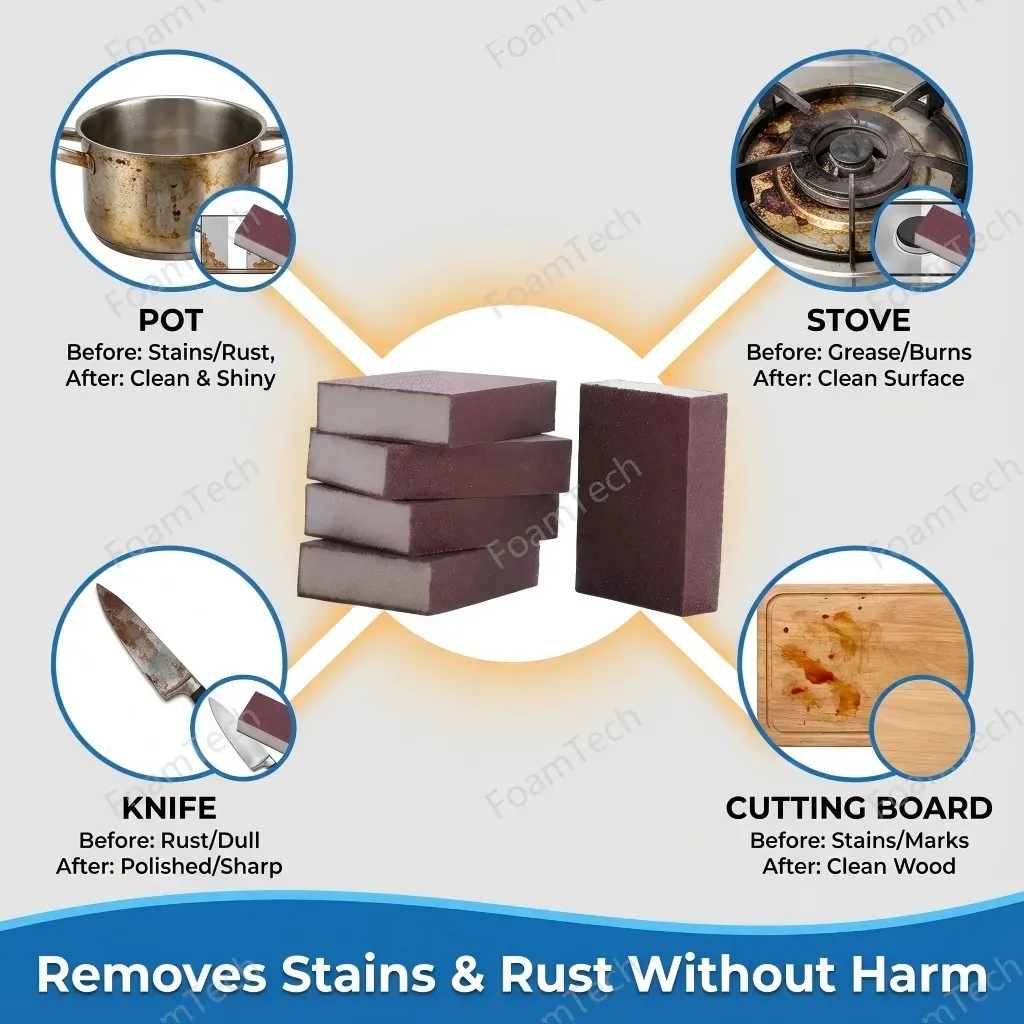
For buyers, that creates several clear sales angles:
• Home kitchen deep cleaning packs
• Restaurant back-of-house cleaning supplies
• Hotel kitchen and maintenance kits
• Outdoor grill cleaning products
• Retail multipacks for cookware care
• Private label rust remover sponge lines
FoamTech’s wider application information also covers ceramics, glasswork, plastic products, hardware, electric appliances, and floor polishing pads, but a BFA diamond sand sponge should still be positioned mainly for hard, heavy-duty cleaning tasks. The more precise the use case, the fewer after-sale complaints you usually get.
Is Diamond Sand Sponge Better than Steel Wool?
Steel wool has been used for decades, but it has weaknesses. It can rust, shed metal fibers, feel messy in retail packaging, and may leave small fragments during use. In export markets, a sponge format can be easier to pack, brand, explain, and sell.
Better Handling for Retail and Foodservice
A diamond sand sponge gives buyers a cleaner product format. It does not feel like a loose metal scrubber. It can be cut to a fixed shape, packed in a branded bag or box, and sold with simple instructions. FoamTech’s product data mentions customized logo, customized packing, OEM/ODM support, free samples, and a MOQ of 3000 pieces for emery sponge.
That makes it easier for importers and distributors to build a clear product SKU. The shape is rectangular. The color is brown, with customization available. The standard thickness is 25 mm. These small details matter when shelves, carton loading, and online listing images need consistency.
The service support page is also worth checking if you need custom logo, packaging, product matching, or private label supply. A practical product is good; a product that can be packed and delivered in your own sales format is better.
Will It Scratch Surfaces?
This is the question that serious buyers should ask early. Any sponge strong enough to remove rust and oxidation must be used with care. The product page describes the sponge as suitable for diverse hard surfaces, but its FAQ also makes an important point: emery carborundum sponges are aggressive abrasives and should not be used on non-stick coatings, polished mirror finishes, delicate plastics, or premium glassware.
Surface Matching Is the Real Safety Rule
For B2B sales, do not market an abrasive rust remover sponge as a soft daily dish sponge. That creates the wrong expectation. A better rule is:
Use it for rust, burnt carbon, heavy grease, oven trays, grills, hard cookware, and metal tools
Test first on a small area when the surface is coated, glossy, polished, or expensive
Avoid non-stick coating, delicate glassware, mirror-polished finishes, and soft plastics
Wet the sponge before use and let the grit work without extreme pressure
Rinse and air dry after cleaning
This kind of honest guidance does not weaken the product. It makes it more professional. In commercial kitchens, nobody wants a sponge that damages the wrong item because the label oversold it.
Why Does Manufacturing Background Matter for B2B Buyers?
For household customers, one sponge is just one sponge. For importers, distributors, and cleaning brands, the factory behind the sponge affects supply stability, customization, test documents, packaging quality, and repeat order confidence.
Factory Strength Helps Product Consistency
FoamTech was established in 2014 and focuses on the production and R&D of melamine foam. Its knowledge base notes 55 invention patents, recognition as a national-level specialized and sophisticated enterprise, AS9100D aviation standard certification, ISO three-system certification, ISO/IATF16949 automotive industry quality system certification, and BSCI certification.
For a cleaning sponge buyer, those details are not just decoration. They suggest a supplier that is used to material control, production process management, and documentation. The product page also lists UL, ROHS, IATF 16949, BSCI, and REACH certifications for the diamond sand sponge, along with free samples, custom logo, custom packaging, and OEM/ODM service.
You can also review the company background through the about us page and contact the team through the contact page when sample testing, carton packing, or private label details need to be confirmed.
How Should Buyers Test a BFA Diamond Sand Sponge Before Bulk Orders?
A sample test should be simple, but not careless. Many buyers only test whether the sponge removes one stain. That is too narrow. For a heavy duty kitchen cleaning product, test cleaning power, shedding, hand feel, water retention, layer bonding, surface risk, and packaging fit.
A Simple B2B Sample Checklist
Before you approve a bulk order, test the sponge in a way that matches your sales market:
• Test on rusted metal tools, burnt pot bottoms, stove rings, and oven trays
• Check whether grit sheds after 3 to 5 minutes of wet scrubbing
• Rinse and squeeze the sponge several times to check layer stability
• Let the sponge dry overnight and test again
• Test one coated or glossy surface in a hidden area, then decide whether to add warning text
• Check retail pack size, barcode space, warning labels, and user instructions
• Compare cleaning time against steel wool or normal scouring pads
For the Diamond Sand Magic Eraser Sponge, the listed use method is simple: wet the sponge, scrub gently on stained or rusty areas, rinse clean, reuse, and air dry between uses. That is easy for end users to follow, and easy for private label brands to translate into packaging copy.
Why Is This Product Worth Considering for Cleaning Brands?
The market is moving toward products that are direct, low-chemical, reusable, and easy to explain in one sentence. “A water-activated sponge for rust, burnt grease, and oxidation” is much clearer than a general cleaning sponge with vague claims.
Strong Niche Positioning Brings Better Buyer Fit
The biggest advantage of BFA diamond sand is not that it replaces every sponge. It does not. Its strength is narrow and valuable: heavy kitchen stain removal where normal sponges feel too weak and steel wool feels too messy.
For cleaning product distributors, this gives a cleaner product ladder:
• Cellulose sponge for light dishwashing
• Wood pulp sponge for absorbent daily cleaning
• Melamine sponge for water-based stain removal
• Emery or diamond sand sponge for rust, oxidation, and burnt carbon
That product ladder is easier to sell to supermarkets, restaurant suppliers, online retailers, and private label buyers. It also reduces confusion. Each sponge has a job. That sounds basic, but in real sourcing work, basic clarity saves time.
FAQ
Q1: How Does BFA Diamond Sand Help Remove Rust?
A: BFA diamond sand works as a controlled abrasive layer. When the sponge is wet, the grit rubs against rust, oxidation, and burnt residue, helping loosen the hard layer from pots, pans, stoves, knives, and other hard kitchen surfaces.
Q2: Can This Sponge Clean Without Detergent?
A: Yes, the sponge is water-activated and designed for physical dirt removal. For many rust and heavy stain tasks, you can wet the sponge, scrub gently, rinse, and reuse. For oily commercial kitchens, detergent may still be used when hygiene rules require it.
Q3: Is the Diamond Sand Magic Eraser Sponge Safe for Non-Stick Pans?
A: No. This is a heavy duty abrasive sponge, so it should not be used on non-stick coatings, polished mirror finishes, delicate plastics, or premium glassware. It is better suited for rust, burnt carbon, oxidation, grills, oven trays, and hard metal surfaces.
Q4: What Size and Custom Options Are Available?
A: The standard product size is 100 × 70 × 25 mm, with 25 mm thickness. Custom size, color, logo, packing, and OEM/ODM service are available, which makes it suitable for distributors, retailers, and private label cleaning brands.
Q5: Who Should Buy This Heavy Duty Kitchen Sponge?
A: It is a good fit for cleaning product importers, restaurant supply distributors, hotel cleaning suppliers, cookware care brands, online retailers, and private label companies that need a clear rust remover and heavy stain cleaning product.
Rust, burnt grease, blackened carbon, and stubborn oxidation are not just small cleaning problems. These features matter for kitchenware retailers, catering suppliers, hotel buyers and private label cleaning products. They affect the product or service reviews and repurchases. A light sponge is okay for normal washing up of dishes, but does not perform well enough when dealing with stubborn stains on cookware, stove rings, oven trays, knives and other grills and kitchen tools that have already stuck to surfaces.
That is why more buyers are looking at abrasive sponge materials that clean with water, reduce the need for harsh detergent, and still remain practical for daily handling. The key is not simply making a sponge “rougher.” A useful heavy duty kitchen sponge needs the right abrasive layer, stable bonding, good grip, enough thickness, and clear surface-use guidance. The Diamond Sand Magic Eraser Sponge is designed around this exact need, using Sponge + BFA diamond sand material for heavy kitchen stain and rust removal.
Why Does Rust and Oxidation Need More than a Normal Sponge?
Rust and oxidation sit differently from fresh oil. Grease can often be softened by warm water or detergent, but rust and burnt carbon usually form a harder surface layer. A normal soft sponge may glide over the stain, spread residue around, or wear out before the job is done.
Hard Stains Need Micro Abrasion
BFA diamond sand helps because it gives the sponge a controlled abrasive surface. The product uses a high-density emery dish sponge structure with Sponge + BFA diamond sand particles. In simple words, the abrasive grains help break the contact between rust, oxidation, burnt food, and the surface below.
This matters for B2B buyers because the customer does not judge a cleaning product only by softness. They judge whether it removes the problem fast enough. For heavy stains, a sponge must do three things well:
Cut into rust and oxidation without collapsing too quickly
Hold enough water during scrubbing
Keep the abrasive layer stable after repeated use
From the product page we can see the following features of the scrubber. antibacterial, eco-friendly, thick, high absorbent, reusable, decontamination, and rust remover. It is 25 mm thick and comes in the standard size of 100 × 70 × 25 mm. This means that the scrubber is small enough to hold in your hand but has the required thickness to apply pressure when cleaning cookware.
How Does BFA Diamond Sand Work During Kitchen Cleaning?
A heavy duty sponge works best when the abrasive layer and sponge body do different jobs. The abrasive side attacks the hard stain. The sponge body carries water, supports grip, and helps remove loose residue. This is one reason material pairing matters so much.
Sponge Plus BFA Is a Practical Structure
BFA diamond sand is used as the cutting part of the sponge. It works like fine grinding particles on the cleaning surface. When the sponge is wet, the abrasive layer gets enough contact with the stain while water helps carry away loosened grime. The product is water-activated, so no detergent is needed for many rust and heavy stain jobs. That fits the current cleaning market trend toward lower chemical use and simpler cleaning routines.
FoamTech’s knowledge base also describes magic eraser sponge characteristics such as cleaning with water alone, powerful cleaning, reusability after soaking, free cutting, and environmentally friendly use. Those points are useful when you are building a retail or wholesale product line where buyers want fewer chemical claims and more visible performance.
A small industry note here: buyers often ask for the “strongest” sponge, but strongest is not always the safest choice. The better question is whether the abrasive level matches the cleaning target. Rust on a knife or oven tray is different from a polished decorative surface. Good product pages should say this clearly, and good packaging should do the same.
What Kitchen Problems Can This Heavy Duty Sponge Solve?
Before placing a bulk order, you need to match the sponge to real cleaning tasks. Heavy duty sponges should not be sold as a universal answer for every delicate surface. They perform best when the stain itself is hard, dry, burnt, oxidized, or metallic.
Common Use Areas for Buyers
The Diamond Sand Magic Eraser Sponge is positioned for pots, pans, stoves, knives, cutting boards, grease, stubborn stains, and rust. The product page also lists catering, hospitality, household cleaning, and retail as suitable sectors.
For buyers, that creates several clear sales angles:
• Home kitchen deep cleaning packs
• Restaurant back-of-house cleaning supplies
• Hotel kitchen and maintenance kits
• Outdoor grill cleaning products
• Retail multipacks for cookware care
• Private label rust remover sponge lines
FoamTech’s wider application information also covers ceramics, glasswork, plastic products, hardware, electric appliances, and floor polishing pads, but a BFA diamond sand sponge should still be positioned mainly for hard, heavy-duty cleaning tasks. The more precise the use case, the fewer after-sale complaints you usually get.
Is Diamond Sand Sponge Better than Steel Wool?
Steel wool has been used for decades, but it has weaknesses. It can rust, shed metal fibers, feel messy in retail packaging, and may leave small fragments during use. In export markets, a sponge format can be easier to pack, brand, explain, and sell.
Better Handling for Retail and Foodservice
A diamond sand sponge gives buyers a cleaner product format. It does not feel like a loose metal scrubber. It can be cut to a fixed shape, packed in a branded bag or box, and sold with simple instructions. FoamTech’s product data mentions customized logo, customized packing, OEM/ODM support, free samples, and a MOQ of 3000 pieces for emery sponge.
That makes it easier for importers and distributors to build a clear product SKU. The shape is rectangular. The color is brown, with customization available. The standard thickness is 25 mm. These small details matter when shelves, carton loading, and online listing images need consistency.
The service support page is also worth checking if you need custom logo, packaging, product matching, or private label supply. A practical product is good; a product that can be packed and delivered in your own sales format is better.
Will It Scratch Surfaces?
This is the question that serious buyers should ask early. Any sponge strong enough to remove rust and oxidation must be used with care. The product page describes the sponge as suitable for diverse hard surfaces, but its FAQ also makes an important point: emery carborundum sponges are aggressive abrasives and should not be used on non-stick coatings, polished mirror finishes, delicate plastics, or premium glassware.
Surface Matching Is the Real Safety Rule
For B2B sales, do not market an abrasive rust remover sponge as a soft daily dish sponge. That creates the wrong expectation. A better rule is:
Use it for rust, burnt carbon, heavy grease, oven trays, grills, hard cookware, and metal tools
Test first on a small area when the surface is coated, glossy, polished, or expensive
Avoid non-stick coating, delicate glassware, mirror-polished finishes, and soft plastics
Wet the sponge before use and let the grit work without extreme pressure
Rinse and air dry after cleaning
This kind of honest guidance does not weaken the product. It makes it more professional. In commercial kitchens, nobody wants a sponge that damages the wrong item because the label oversold it.
Why Does Manufacturing Background Matter for B2B Buyers?
For household customers, one sponge is just one sponge. For importers, distributors, and cleaning brands, the factory behind the sponge affects supply stability, customization, test documents, packaging quality, and repeat order confidence.
Factory Strength Helps Product Consistency
FoamTech was established in 2014 and focuses on the production and R&D of melamine foam. Its knowledge base notes 55 invention patents, recognition as a national-level specialized and sophisticated enterprise, AS9100D aviation standard certification, ISO three-system certification, ISO/IATF16949 automotive industry quality system certification, and BSCI certification.
For a cleaning sponge buyer, those details are not just decoration. They suggest a supplier that is used to material control, production process management, and documentation. The product page also lists UL, ROHS, IATF 16949, BSCI, and REACH certifications for the diamond sand sponge, along with free samples, custom logo, custom packaging, and OEM/ODM service.
You can also review the company background through the about us page and contact the team through the contact page when sample testing, carton packing, or private label details need to be confirmed.
How Should Buyers Test a BFA Diamond Sand Sponge Before Bulk Orders?
A sample test should be simple, but not careless. Many buyers only test whether the sponge removes one stain. That is too narrow. For a heavy duty kitchen cleaning product, test cleaning power, shedding, hand feel, water retention, layer bonding, surface risk, and packaging fit.
A Simple B2B Sample Checklist
Before you approve a bulk order, test the sponge in a way that matches your sales market:
• Test on rusted metal tools, burnt pot bottoms, stove rings, and oven trays
• Check whether grit sheds after 3 to 5 minutes of wet scrubbing
• Rinse and squeeze the sponge several times to check layer stability
• Let the sponge dry overnight and test again
• Test one coated or glossy surface in a hidden area, then decide whether to add warning text
• Check retail pack size, barcode space, warning labels, and user instructions
• Compare cleaning time against steel wool or normal scouring pads
For the Diamond Sand Magic Eraser Sponge, the listed use method is simple: wet the sponge, scrub gently on stained or rusty areas, rinse clean, reuse, and air dry between uses. That is easy for end users to follow, and easy for private label brands to translate into packaging copy.
Why Is This Product Worth Considering for Cleaning Brands?
The market is moving toward products that are direct, low-chemical, reusable, and easy to explain in one sentence. “A water-activated sponge for rust, burnt grease, and oxidation” is much clearer than a general cleaning sponge with vague claims.
Strong Niche Positioning Brings Better Buyer Fit
The biggest advantage of BFA diamond sand is not that it replaces every sponge. It does not. Its strength is narrow and valuable: heavy kitchen stain removal where normal sponges feel too weak and steel wool feels too messy.
For cleaning product distributors, this gives a cleaner product ladder:
• Cellulose sponge for light dishwashing
• Wood pulp sponge for absorbent daily cleaning
• Melamine sponge for water-based stain removal
• Emery or diamond sand sponge for rust, oxidation, and burnt carbon
That product ladder is easier to sell to supermarkets, restaurant suppliers, online retailers, and private label buyers. It also reduces confusion. Each sponge has a job. That sounds basic, but in real sourcing work, basic clarity saves time.
FAQ
Q1: How Does BFA Diamond Sand Help Remove Rust?
A: BFA diamond sand works as a controlled abrasive layer. When the sponge is wet, the grit rubs against rust, oxidation, and burnt residue, helping loosen the hard layer from pots, pans, stoves, knives, and other hard kitchen surfaces.
Q2: Can This Sponge Clean Without Detergent?
A: Yes, the sponge is water-activated and designed for physical dirt removal. For many rust and heavy stain tasks, you can wet the sponge, scrub gently, rinse, and reuse. For oily commercial kitchens, detergent may still be used when hygiene rules require it.
Q3: Is the Diamond Sand Magic Eraser Sponge Safe for Non-Stick Pans?
A: No. This is a heavy duty abrasive sponge, so it should not be used on non-stick coatings, polished mirror finishes, delicate plastics, or premium glassware. It is better suited for rust, burnt carbon, oxidation, grills, oven trays, and hard metal surfaces.
Q4: What Size and Custom Options Are Available?
A: The standard product size is 100 × 70 × 25 mm, with 25 mm thickness. Custom size, color, logo, packing, and OEM/ODM service are available, which makes it suitable for distributors, retailers, and private label cleaning brands.
Q5: Who Should Buy This Heavy Duty Kitchen Sponge?
A: It is a good fit for cleaning product importers, restaurant supply distributors, hotel cleaning suppliers, cookware care brands, online retailers, and private label companies that need a clear rust remover and heavy stain cleaning product.
Related Recommendations

Family owned company, globalleader in development andmanufacturing of home careproducts for private label andcontract manufacturing
Copyright © 2026 FoamTech (Zhejiang) New Materials Co., Ltd.