Can You Fix a Disintegrating Magic Eraser by Changing Your Scrubbing Technique?
2026-04-20
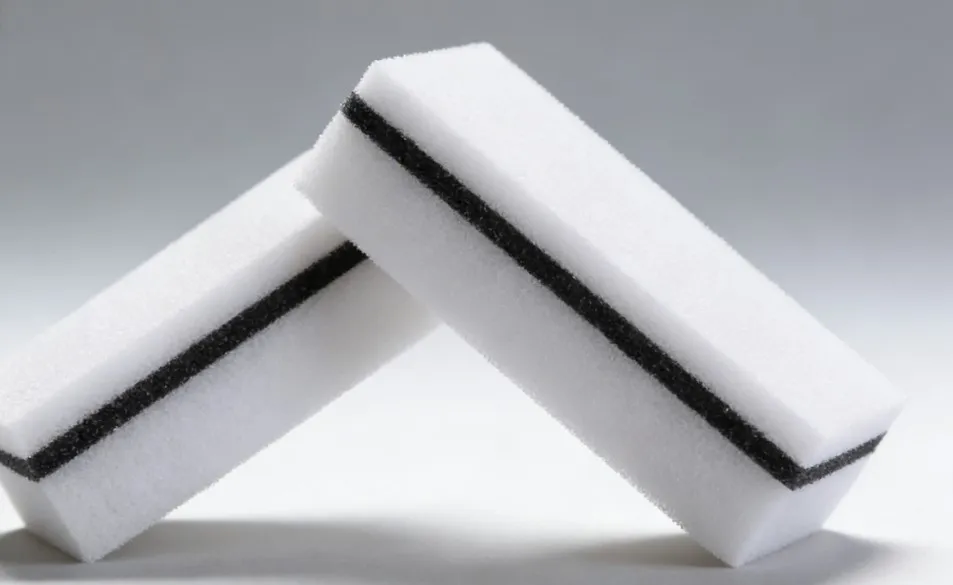
It can annoy users greatly when a newly purchased cleaning sponge falls apart into white particles after mere minutes of application. Such disintegration does not necessarily point to a defective item. Instead, it frequently arises from basic physical laws and the way one manages the substance. Melamine foam represents a special kind of material. It consists basically of a lattice of firm resin fibers that operate similar to minute abrasive sheets for removing dirt. Nevertheless, these fibers prove extremely slim and fragile. To derive maximum benefit from one's equipment, a distinct approach is required compared to typical kitchen sponges. If spending on inferior single-use products has grown tiresome, exploring options from FoamTech is advisable. These specialists in nano-materials possess long years of production experience. Regardless of whether the requirement involves dense packed foam or dedicated industrial scrubbing sheets, they have built a strong name for endurance in worldwide trade. One may learn more regarding their tailored services or explore their company history to understand their role as a reliable collaborator for business-to-business purchasers internationally.
Exploring the Cellular Structure of Melamine Foam
The key to the operation of these erasers resides in their tiny build. In distinction from flexible cellulose types, melamine foam forms an open-cell setup crafted from quite rigid resin. This resin approaches the hardness of glass. As such, it removes marks by scraping, all without the need for chemical substances.
Open-Cell Structure and Friction Mechanics
The foam contains chiefly air, and its porosity commonly goes beyond 95 percent. As the sponge travels over a plane, its slender threads latch onto soil bits. This action produces notable frictional effects, which aid greatly in decontamination, yet it places heavy burden on the fine plastic framework within the foam. Consequently, while effective for removal tasks, this process demands careful handling to avoid early breakdown.
Material Brittleness during High-Pressure Contact
The resin's notable hardness means it misses the bendability seen in rubber. If one applies too much downward force, the threads fail to flex and instead fracture. This outcome causes the familiar falling apart that spoils the sponge prior to task completion. Awareness of this trait helps in preventing such issues during use.
Micro-Abrasive Action on Stubborn Stains
Consider the sponge comparable to a pencil eraser. It intends to erode gradually during its function. The aim centers on ensuring uniform wearing instead of breaking into big sections via incorrect methods. This balanced degradation sustains the tool's purpose effectively over time.
Why Your Current Scrubbing Habits Cause Premature Shredding
Many folks tackle a hard mark with the belief that stronger effort yields better results. Regarding melamine foam, however, this mindset leads swiftly to holding mere powder. Some practices essentially cut into the foam from within, hastening its ruin.
Excessive Downward Pressure on Delicate Surfaces
Strong pressing fails to improve the small abrasives' efficiency. Rather, it flattens the internal spaces. When the form collapses, the separate fibers lack support and thus separate. This chain of events highlights the importance of lighter touch for maintaining the material's wholeness.
Dry Scrubbing without Sufficient Water Lubrication
Water functions both as a smoother and a transporter for raised grime. Lacking proper wetness, frictional forces rise sharply until the foam's threads pull free due to the object's surface pull. Hence, sufficient liquid not only eases the process but also protects the structure from rapid harm.
Repeated Use on Highly Porous or Rough Textures
Employing these sponges on coarse timber, dull stone, or gritty finishes turns into a futile effort. The uneven surface behaves like a shredder, tearing the foam almost instantly. Therefore, confining use to even planes such as ceramic tiles, glass, or smooth synthetics proves wiser. This choice preserves the tool for suitable contexts.
Rapid Back-and-Forth Motion against Sharp Edges
Should one snag a metal border or keen plastic rim during fast wiping, the foam incurs slices. These small incisions then spread across the sponge, resulting in its division. Recognizing this risk promotes slower, more controlled actions to safeguard integrity.
Expert Techniques to Extend the Life of Your Sponge
Simple changes can greatly prolong the duration of one's cleaning devices. Trained cleaners extend the service of these sponges across several days by heeding basic principles.
Gentle Circular Motion for Even Surface Wear
Rather than straight-line rubbing with firm push, opt for soft round movements. This method divides the frictional load over wider foam regions and avoids concentrating strain at one spot. In turn, it fosters lasting performance without sudden failure.
Proper Rinsing and Squeezing without Wringing
Avoid twisting a melamine sponge as with a cloth. Such rotation damages the inner links. Position it between level hands and press mildly to expel extra fluid. This practice keeps the bonds intact for ongoing applications.
Optimal Water Saturation for Structural Support
Keep the sponge moist rather than soaked or arid. A properly moistened one shows greater pliancy and resists cracking under force. Moreover, it allows grime to enter the voids with less resistance, enhancing overall results.
Choosing the Right Density for Specific Cleaning Tasks
Magic erasers vary considerably in quality. Foam density gets gauged in kilograms per cubic meter, and that figure sets the limit of strain the sponge endures before giving out.
Standard Density for Light Household Dusting
Basic 8kg/m³ or 12kg/m³ types work well for clearing a mark from a pale wall. They cost little yet break easily. In tougher situations, however, one depletes an entire set within hours. This makes them apt only for mild domestic chores.
High-Density Compressed Foam for Industrial Grime
Heat treatment packs denser content into equal volumes for compressed foam. A 24kg/m³ or greater type offers superior strength and fights against rips, suiting expert uses better. Its resilience handles demanding conditions reliably.
Composite Materials for Enhanced Tensile Strength
Certain versions include extra layers to limit excessive bending. This mixed method lets users harness melamine's decontamination strength minus the frailty of plain blocks. It thus provides a more dependable option for varied needs.
Advanced Product Solutions to Prevent Material Disintegration
Should methods alone fall short, reinforced items warrant consideration. Current production yields sponge variants that manage stress independently.
Tri-Layer Sandwich Melamine Sponge for Structural Integrity
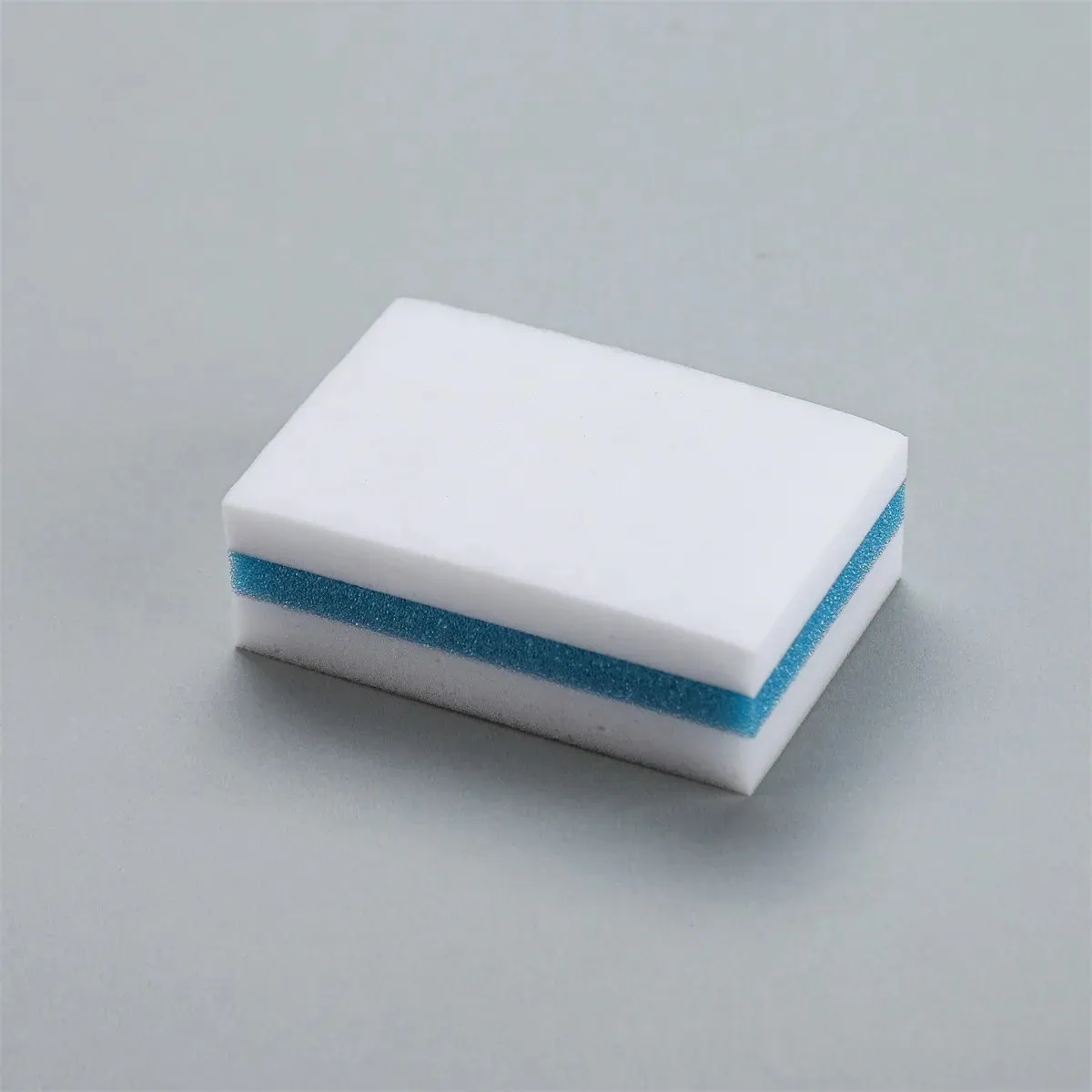
The Tri-Layer “Sandwich” Melamine Sponge transforms durability standards. Its inner polyurethane layer supplies a supple backbone, stopping the melamine from breaking under applied load. This design ensures steady operation in intensive scenarios.
Embossed Melamine Sponge with Non-Woven Fabric for Scouring
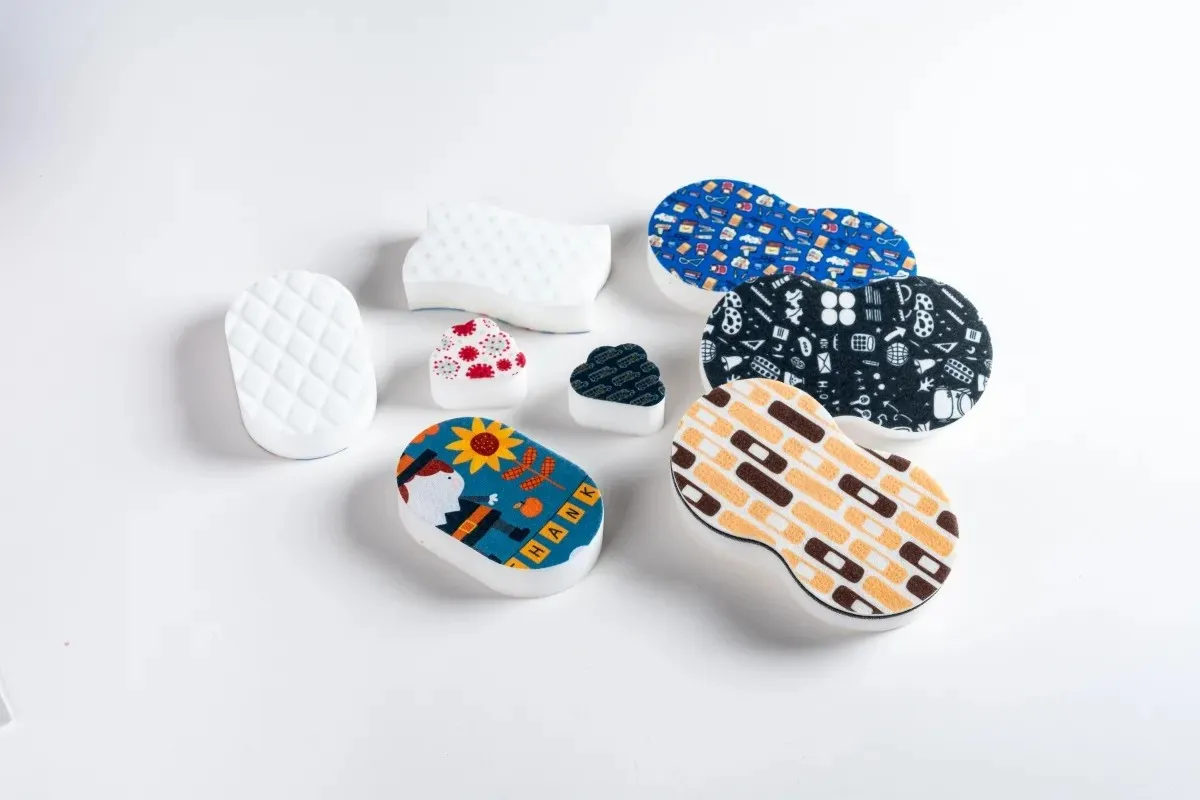
For planes demanding extra abrasion, the Embossed Melamine Sponge with Non-Woven Fabric incorporates a rough layer. It shields the melamine from harsh dirt contact, permitting the cloth to bear the main effort as the foam finishes the polish. Such integration boosts efficacy on challenging terrains.
Integrated Scrubbing Layers to Reduce Foam Flexing
Incorporating a support sheet spreads finger pressure evenly. Lacking it, digits form focal spots that erode the foam. A firm support holds the scrubbing face level and productive. This adjustment minimizes deformation risks.
Why FoamTech Leads the Innovation in Melamine Cleaning Technology
Picking a provider goes beyond cost; it concerns material knowledge. The FoamTech group grasps open-cell physics more thoroughly than many. They allocate ample resources to research and development, gaining over a hundred patents to boost product endurance and security.
Decade of Expertise in Open-Cell Foam Manufacturing
Drawing on extensive background, they perfect the vapor and pressing techniques for sponges that resist early collapse against marks. Their substances serve vital fields like aviation, where adequacy falls short of requirements. This proficiency drives consistent innovation.
Custom OEM and ODM Solutions for Global B2B Partners
They go further than ready-made goods. Collaboration with labels yields precise forms, densities, and blended builds. This adaptability explains their broad global reach.
Rigorous Quality Control for Consistent Material Density
Uneven batches, with some strong and others weak, pose the greatest drawback. Their ISO 9001 approved plants verify that each sponge achieves the stated density and void dimensions. This uniformity guarantees dependable outcomes.
FAQ
Q1: Can I use soap with a melamine sponge?
A: You can, but it is rarely necessary. The sponge works through physical abrasion. Adding soap can sometimes make the foam too slippery, reducing its ability to "grab" the stain, and some chemicals might even degrade the resin faster. Overall, reliance on its natural action proves most effective.
Q2: Why did my sponge turn yellow after use?
A: This usually happens when the sponge absorbs oils or certain chemicals from the surface you are cleaning. It can also happen if it sits in direct sunlight. It doesn't mean it is broken, but it might be less effective if the pores are clogged with grease. Cleaning it promptly can mitigate this effect.
Q3: Is melamine foam safe for all surfaces?
A: No. Because it is abrasive, you should avoid it on high-gloss finishes, car paint, or non-stick pans. It will leave tiny scratches that dull the shine over time. Always test a small, hidden area first. This step avoids unintended damage.
Q4: How do I know when to throw the sponge away?
A: Once it has thinned out to the point where you are touching the surface with your fingers, or if it has shredded into pieces too small to hold, it is time for a new one. Using tiny scraps can lead to uneven cleaning. Replacing it timely ensures better results.
Q5: Does cutting the sponge into smaller pieces help?
A: Yes, actually. Many professionals cut one large block into four or six smaller pieces. This gives you more fresh "edges" to work with and ensures you aren't wasting a whole large sponge on a tiny spot. It maximizes utility efficiently.
It can annoy users greatly when a newly purchased cleaning sponge falls apart into white particles after mere minutes of application. Such disintegration does not necessarily point to a defective item. Instead, it frequently arises from basic physical laws and the way one manages the substance. Melamine foam represents a special kind of material. It consists basically of a lattice of firm resin fibers that operate similar to minute abrasive sheets for removing dirt. Nevertheless, these fibers prove extremely slim and fragile. To derive maximum benefit from one's equipment, a distinct approach is required compared to typical kitchen sponges. If spending on inferior single-use products has grown tiresome, exploring options from FoamTech is advisable. These specialists in nano-materials possess long years of production experience. Regardless of whether the requirement involves dense packed foam or dedicated industrial scrubbing sheets, they have built a strong name for endurance in worldwide trade. One may learn more regarding their tailored services or explore their company history to understand their role as a reliable collaborator for business-to-business purchasers internationally.
Exploring the Cellular Structure of Melamine Foam
The key to the operation of these erasers resides in their tiny build. In distinction from flexible cellulose types, melamine foam forms an open-cell setup crafted from quite rigid resin. This resin approaches the hardness of glass. As such, it removes marks by scraping, all without the need for chemical substances.
Open-Cell Structure and Friction Mechanics
The foam contains chiefly air, and its porosity commonly goes beyond 95 percent. As the sponge travels over a plane, its slender threads latch onto soil bits. This action produces notable frictional effects, which aid greatly in decontamination, yet it places heavy burden on the fine plastic framework within the foam. Consequently, while effective for removal tasks, this process demands careful handling to avoid early breakdown.
Material Brittleness during High-Pressure Contact
The resin's notable hardness means it misses the bendability seen in rubber. If one applies too much downward force, the threads fail to flex and instead fracture. This outcome causes the familiar falling apart that spoils the sponge prior to task completion. Awareness of this trait helps in preventing such issues during use.
Micro-Abrasive Action on Stubborn Stains
Consider the sponge comparable to a pencil eraser. It intends to erode gradually during its function. The aim centers on ensuring uniform wearing instead of breaking into big sections via incorrect methods. This balanced degradation sustains the tool's purpose effectively over time.
Why Your Current Scrubbing Habits Cause Premature Shredding
Many folks tackle a hard mark with the belief that stronger effort yields better results. Regarding melamine foam, however, this mindset leads swiftly to holding mere powder. Some practices essentially cut into the foam from within, hastening its ruin.
Excessive Downward Pressure on Delicate Surfaces
Strong pressing fails to improve the small abrasives' efficiency. Rather, it flattens the internal spaces. When the form collapses, the separate fibers lack support and thus separate. This chain of events highlights the importance of lighter touch for maintaining the material's wholeness.
Dry Scrubbing without Sufficient Water Lubrication
Water functions both as a smoother and a transporter for raised grime. Lacking proper wetness, frictional forces rise sharply until the foam's threads pull free due to the object's surface pull. Hence, sufficient liquid not only eases the process but also protects the structure from rapid harm.
Repeated Use on Highly Porous or Rough Textures
Employing these sponges on coarse timber, dull stone, or gritty finishes turns into a futile effort. The uneven surface behaves like a shredder, tearing the foam almost instantly. Therefore, confining use to even planes such as ceramic tiles, glass, or smooth synthetics proves wiser. This choice preserves the tool for suitable contexts.
Rapid Back-and-Forth Motion against Sharp Edges
Should one snag a metal border or keen plastic rim during fast wiping, the foam incurs slices. These small incisions then spread across the sponge, resulting in its division. Recognizing this risk promotes slower, more controlled actions to safeguard integrity.
Expert Techniques to Extend the Life of Your Sponge
Simple changes can greatly prolong the duration of one's cleaning devices. Trained cleaners extend the service of these sponges across several days by heeding basic principles.
Gentle Circular Motion for Even Surface Wear
Rather than straight-line rubbing with firm push, opt for soft round movements. This method divides the frictional load over wider foam regions and avoids concentrating strain at one spot. In turn, it fosters lasting performance without sudden failure.
Proper Rinsing and Squeezing without Wringing
Avoid twisting a melamine sponge as with a cloth. Such rotation damages the inner links. Position it between level hands and press mildly to expel extra fluid. This practice keeps the bonds intact for ongoing applications.
Optimal Water Saturation for Structural Support
Keep the sponge moist rather than soaked or arid. A properly moistened one shows greater pliancy and resists cracking under force. Moreover, it allows grime to enter the voids with less resistance, enhancing overall results.
Choosing the Right Density for Specific Cleaning Tasks
Magic erasers vary considerably in quality. Foam density gets gauged in kilograms per cubic meter, and that figure sets the limit of strain the sponge endures before giving out.
Standard Density for Light Household Dusting
Basic 8kg/m³ or 12kg/m³ types work well for clearing a mark from a pale wall. They cost little yet break easily. In tougher situations, however, one depletes an entire set within hours. This makes them apt only for mild domestic chores.
High-Density Compressed Foam for Industrial Grime
Heat treatment packs denser content into equal volumes for compressed foam. A 24kg/m³ or greater type offers superior strength and fights against rips, suiting expert uses better. Its resilience handles demanding conditions reliably.
Composite Materials for Enhanced Tensile Strength
Certain versions include extra layers to limit excessive bending. This mixed method lets users harness melamine's decontamination strength minus the frailty of plain blocks. It thus provides a more dependable option for varied needs.
Advanced Product Solutions to Prevent Material Disintegration
Should methods alone fall short, reinforced items warrant consideration. Current production yields sponge variants that manage stress independently.
Tri-Layer Sandwich Melamine Sponge for Structural Integrity
The Tri-Layer “Sandwich” Melamine Sponge transforms durability standards. Its inner polyurethane layer supplies a supple backbone, stopping the melamine from breaking under applied load. This design ensures steady operation in intensive scenarios.
Embossed Melamine Sponge with Non-Woven Fabric for Scouring
For planes demanding extra abrasion, the Embossed Melamine Sponge with Non-Woven Fabric incorporates a rough layer. It shields the melamine from harsh dirt contact, permitting the cloth to bear the main effort as the foam finishes the polish. Such integration boosts efficacy on challenging terrains.
Integrated Scrubbing Layers to Reduce Foam Flexing
Incorporating a support sheet spreads finger pressure evenly. Lacking it, digits form focal spots that erode the foam. A firm support holds the scrubbing face level and productive. This adjustment minimizes deformation risks.
Why FoamTech Leads the Innovation in Melamine Cleaning Technology
Picking a provider goes beyond cost; it concerns material knowledge. The FoamTech group grasps open-cell physics more thoroughly than many. They allocate ample resources to research and development, gaining over a hundred patents to boost product endurance and security.
Decade of Expertise in Open-Cell Foam Manufacturing
Drawing on extensive background, they perfect the vapor and pressing techniques for sponges that resist early collapse against marks. Their substances serve vital fields like aviation, where adequacy falls short of requirements. This proficiency drives consistent innovation.
Custom OEM and ODM Solutions for Global B2B Partners
They go further than ready-made goods. Collaboration with labels yields precise forms, densities, and blended builds. This adaptability explains their broad global reach.
Rigorous Quality Control for Consistent Material Density
Uneven batches, with some strong and others weak, pose the greatest drawback. Their ISO 9001 approved plants verify that each sponge achieves the stated density and void dimensions. This uniformity guarantees dependable outcomes.
FAQ
Q1: Can I use soap with a melamine sponge?
A: You can, but it is rarely necessary. The sponge works through physical abrasion. Adding soap can sometimes make the foam too slippery, reducing its ability to "grab" the stain, and some chemicals might even degrade the resin faster. Overall, reliance on its natural action proves most effective.
Q2: Why did my sponge turn yellow after use?
A: This usually happens when the sponge absorbs oils or certain chemicals from the surface you are cleaning. It can also happen if it sits in direct sunlight. It doesn't mean it is broken, but it might be less effective if the pores are clogged with grease. Cleaning it promptly can mitigate this effect.
Q3: Is melamine foam safe for all surfaces?
A: No. Because it is abrasive, you should avoid it on high-gloss finishes, car paint, or non-stick pans. It will leave tiny scratches that dull the shine over time. Always test a small, hidden area first. This step avoids unintended damage.
Q4: How do I know when to throw the sponge away?
A: Once it has thinned out to the point where you are touching the surface with your fingers, or if it has shredded into pieces too small to hold, it is time for a new one. Using tiny scraps can lead to uneven cleaning. Replacing it timely ensures better results.
Q5: Does cutting the sponge into smaller pieces help?
A: Yes, actually. Many professionals cut one large block into four or six smaller pieces. This gives you more fresh "edges" to work with and ensures you aren't wasting a whole large sponge on a tiny spot. It maximizes utility efficiently.
Related Recommendations


Family owned company, globalleader in development andmanufacturing of home careproducts for private label andcontract manufacturing
Copyright © 2026 FoamTech (Zhejiang) New Materials Co., Ltd.