Will High-quality Magic Eraser Sponges Damage Cookware
2025-11-27
High-quality magic eraser sponges transform cookware cleaning. You face baked-on grease, stubborn stains, and burnt residues daily. These sponges tackle them with water alone. No scrubbing pads. No toxic cleaners. Their secret lies in melamine foam, a nano-engineered material that acts like ultra-fine sandpaper yet feels soft when wet. Concerns about scratches or damage arise naturally. Proper technique eliminates risks. As a melamine foam authority, FoamTech delivers proven solutions. This innovative company, rooted in China since 2014, masters production from raw resin to finished sponges. With over 55 invention patents and certifications like ISO9001, ISO14001, and National Green Factory status, they supply global markets. Their products reach homes, industries, and high-tech sectors like rail transit.
Introduction to Magic Eraser Sponges for Cookware
Magic eraser sponges enter your kitchen as game-changers. You activate them simply by adding water. Their open-cell structure grabs dirt physically. No chemical reactions occur. This suits modern cookware from stainless steel to ceramic coatings. High porosity, up to 99 percent, enables adsorption of particles as small as 0.1 microns. Density stays low, between 8 and 16 kg/m³, ensuring lightweight handling. Flame retardancy reaches UL94 V-0 level. Environmental compliance includes RoHS and REACH standards. You clean effectively without worry when guidelines follow.
How Do Magic Eraser Sponges Work on Cookware?
These sponges operate on physical principles. Wet them, and the material softens. Hardness drops from Shore A45 dry to A28 soaked. This change allows gentle yet powerful stain removal. Nano-scale pores act as micro-hooks. They lift grime without dissolving it. Efficiency rises 300 percent over traditional sponges. Tests by TÜV labs confirm a friction coefficient of just 0.15 on painted surfaces. You wipe once, and stains vanish. Rinse the sponge mid-use to maintain performance. Cut sections for precision on pot edges or pan handles.
Melamine Foam Structure Explained
Melamine foam builds a three-dimensional network during foaming. Vacuum technology ensures 98 percent pore uniformity. Each cell measures 5 to 20 microns. Open pores dominate, creating vast surface area for dirt capture. Skeletal density tests show 2.41 g/cm³ on average. Volume porosity hits 99.4 percent in samples. Closed cells remain under 0.6 percent. This design adsorbs without retaining moisture long-term. You feel the difference immediately upon wetting.
Physical Cleaning Mechanism
Physical abrasion drives cleaning. Edges of open cells scrape contaminants. Water activates softening for safe contact. No detergents required. Adsorption pulls particles into the foam matrix. Rinse releases trapped dirt easily. Tensile strength exceeds 130 kPa. Elongation at break reaches 15 percent minimum. You control pressure to match surface delicacy. Circular motions distribute force evenly. Results appear crisp and streak-free.
Compatibility with Cookware Materials
Smooth stainless steel welcomes these sponges. Ceramic non-stick layers stay intact with light touch. Avoid heavily textured cast iron unless sealed. Glass lids clean effortlessly. Test hidden areas first. Wet sanding smooths minor imperfections beforehand if needed. Compatibility extends to aluminum with anodized finishes. Steer clear of untreated soft metals. High-quality foam prevents micro-abrasion on compatible surfaces.
What Risks Exist When Using Them on Cookware?
Risks stem from misuse, not the material itself. Dry scrubbing causes wear. Excessive pressure damages coatings. Heat exposure degrades foam. Awareness prevents problems. High-quality sponges incorporate reinforcements for safety.
Potential scratches occur on glossy non-stick if force applies heavily. Residue worries fade with thorough rinsing. Chemical interactions remain minimal since no additives involve.
Potential Surface Scratches
Forceful dry use mimics sandpaper. Wet properly, and softness protects. Embossed designs add cushioning layers. Friction tests prove low impact. You avoid marks by limiting pressure to feather-light touches. Delicate coatings like PTFE require extra care. Always circle gently.
Residue Concerns
Melamine particles may flake if overused. Rinse cookware under running water. Physical removal ensures no chemical leftovers. Foam rinses clean in seconds. Store dry to prevent mold. You notice no traces post-wash.
Heat and Chemical Interactions
Operating range spans -240°C to 220°C long-term. Cool pans before cleaning. Avoid bleach, which weakens structure. Acidic cleaners unnecessary. Vinegar soaks monthly extend life without harm. Thermal conductivity stays low at 0.033 W/(m·K). You maintain integrity easily.
How to Use Magic Eraser Sponges Safely on Cookware?
Safety starts with preparation. Gather clean water, scissors, and a soft cloth. Cut sponges to fit contours. Wet fully. Squeeze gently. Wipe in controlled patterns. Rinse surfaces immediately. Dry with microfiber to prevent water spots.
Consistency builds confidence. Test small areas. Adjust based on results. Reuse sections until they crumble.
Proper Wetting Techniques
Submerge completely for 10 seconds. Excess water drips off after light squeeze. Activation completes. Hardness reduces instantly. You feel the plush texture ready for action. Rewet as needed during sessions.
Gentle Application Methods
Apply minimal pressure. Think polishing, not scouring. Small circles cover evenly. Cut quarters for detailed work on rims. Rinse sponge every few wipes. This refreshes cleaning power. You finish faster with less effort.
Post-Cleaning Care Steps
Flush cookware thoroughly. Pat dry or air-dry upright. Inspect for shine. Store sponges in dry spots away from heat. Monthly vinegar dips sterilize without damage. You preserve both tools and pans.
Which High-quality Options Prevent Damage to Cookware?
Enhanced variants offer superior protection. Compressed densities increase durability. Layered composites combine gentleness with toughness. Custom sizes fit any pot.
Embossed Melamine Sponge Benefits
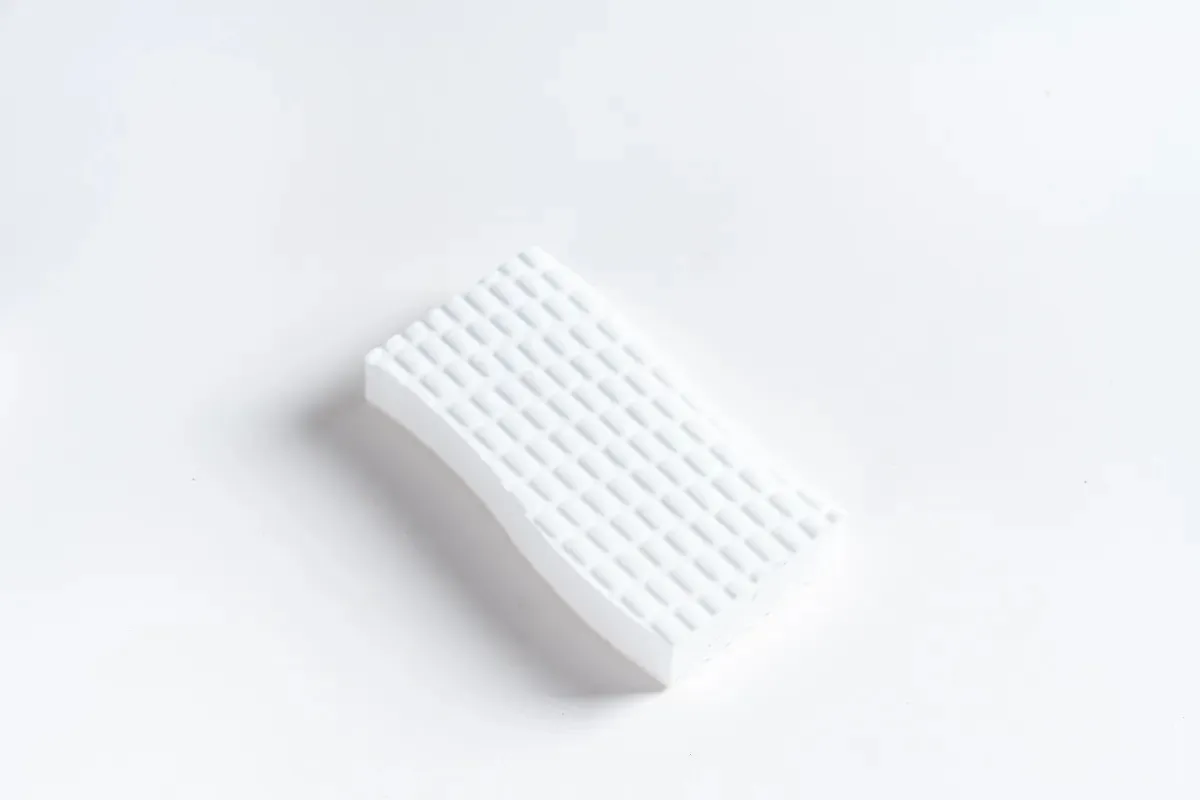
Tri-layer embossing reinforces structure. Density at 12 kg/m³ lasts longer. Handles heavy grease on stainless. Embossed patterns grip stains better. Tensile strength holds during vigorous yet safe use. Discover the versatile Embossed Melamine Sponge for kitchen reliability.
Dual Layer Kitchen PU Sponge Features
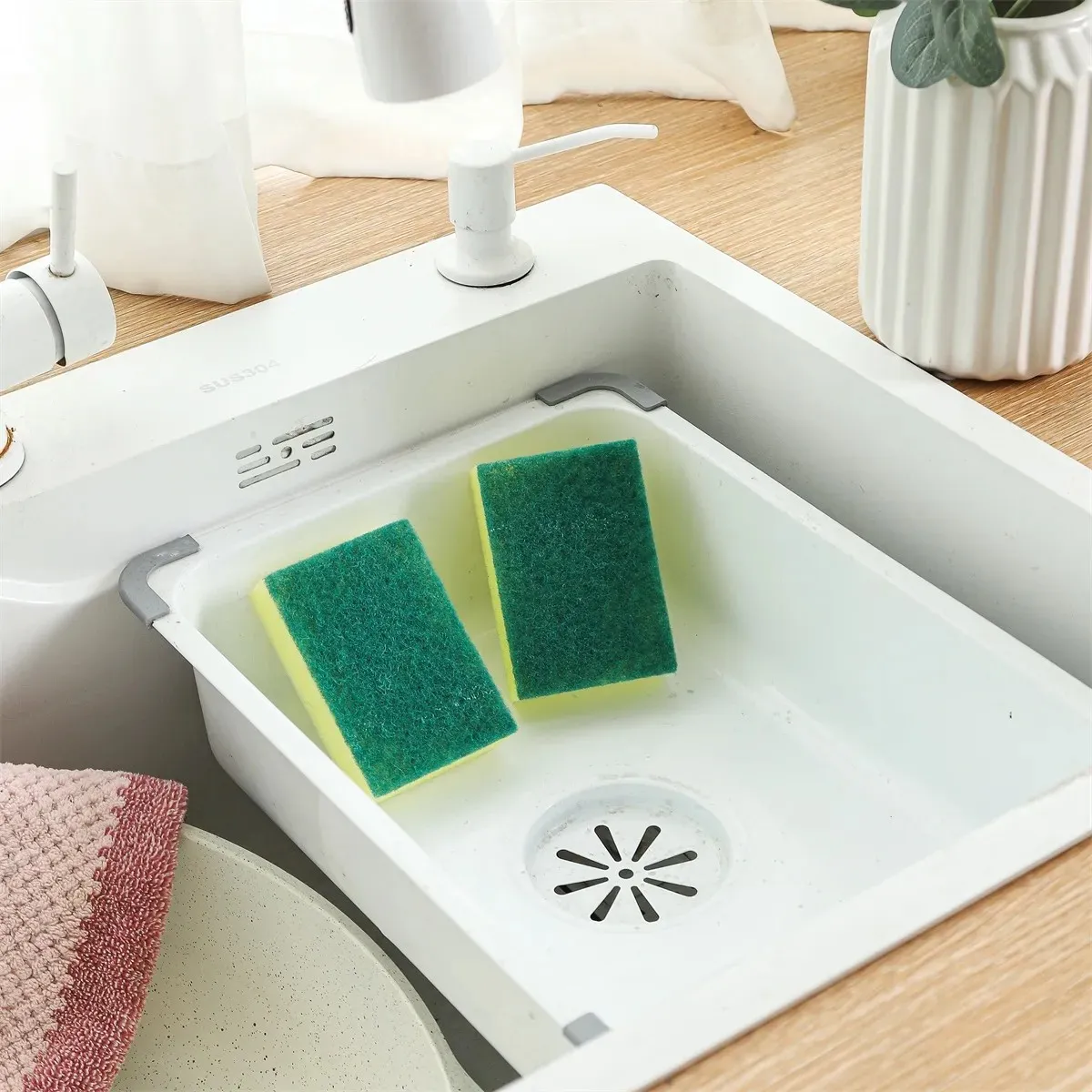
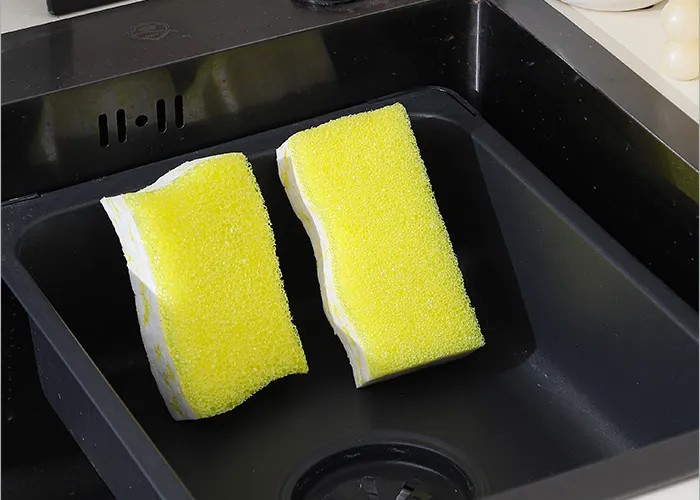
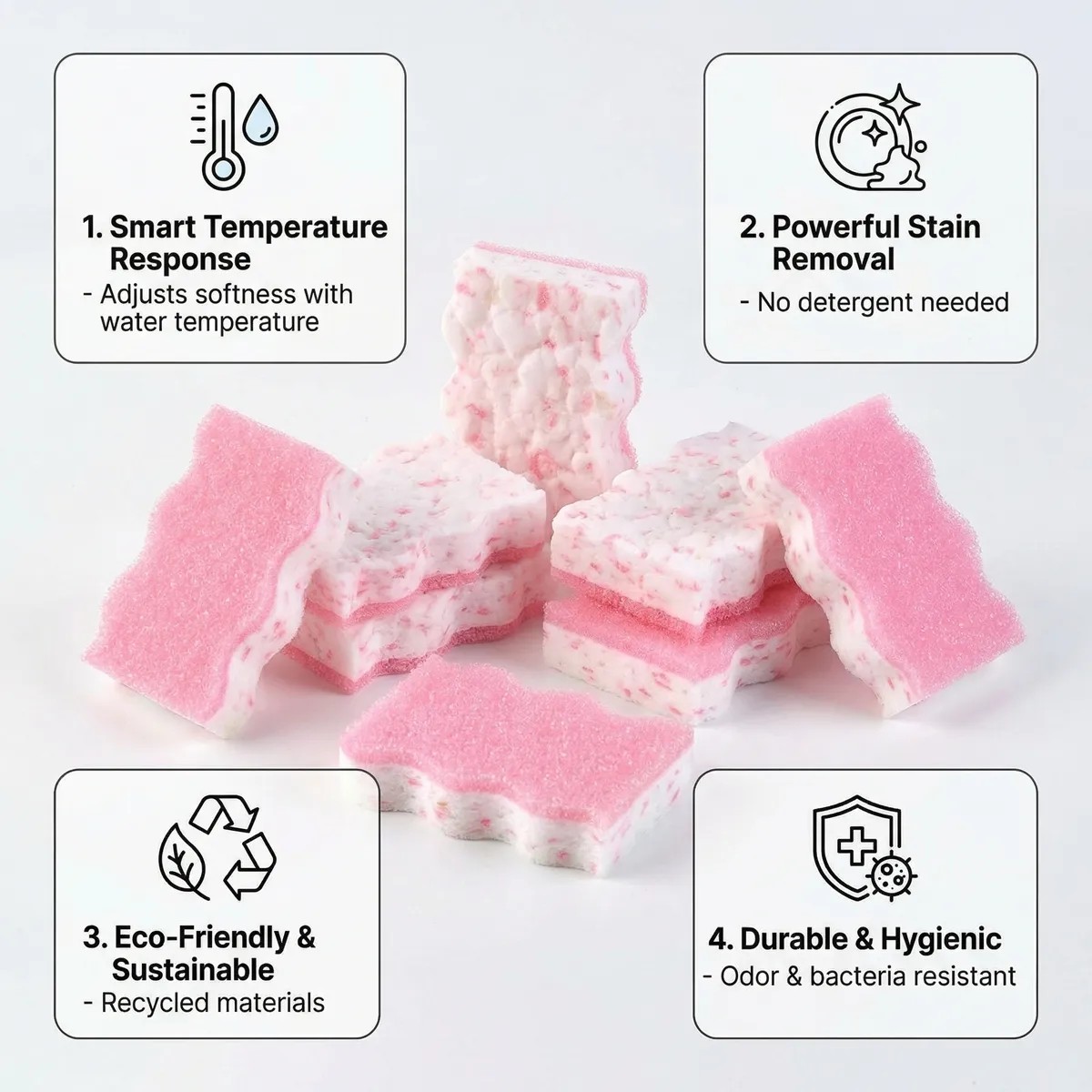
Melamine pairs with polyurethane cushion. One side erases, other absorbs. Scouring pad variants tackle burnt bits. Dual action cuts time. PU prevents direct abrasion on delicate layers. You switch sides seamlessly. Cushioning PU or non-woven layers buffer contact. Try the Dual Layer Kitchen PU Sponge with Scouring Pad for protected power. Dual functionality handles varied tasks without switching tools.
Embossed Melamine Sponge with Non-Woven Fabric Advantages
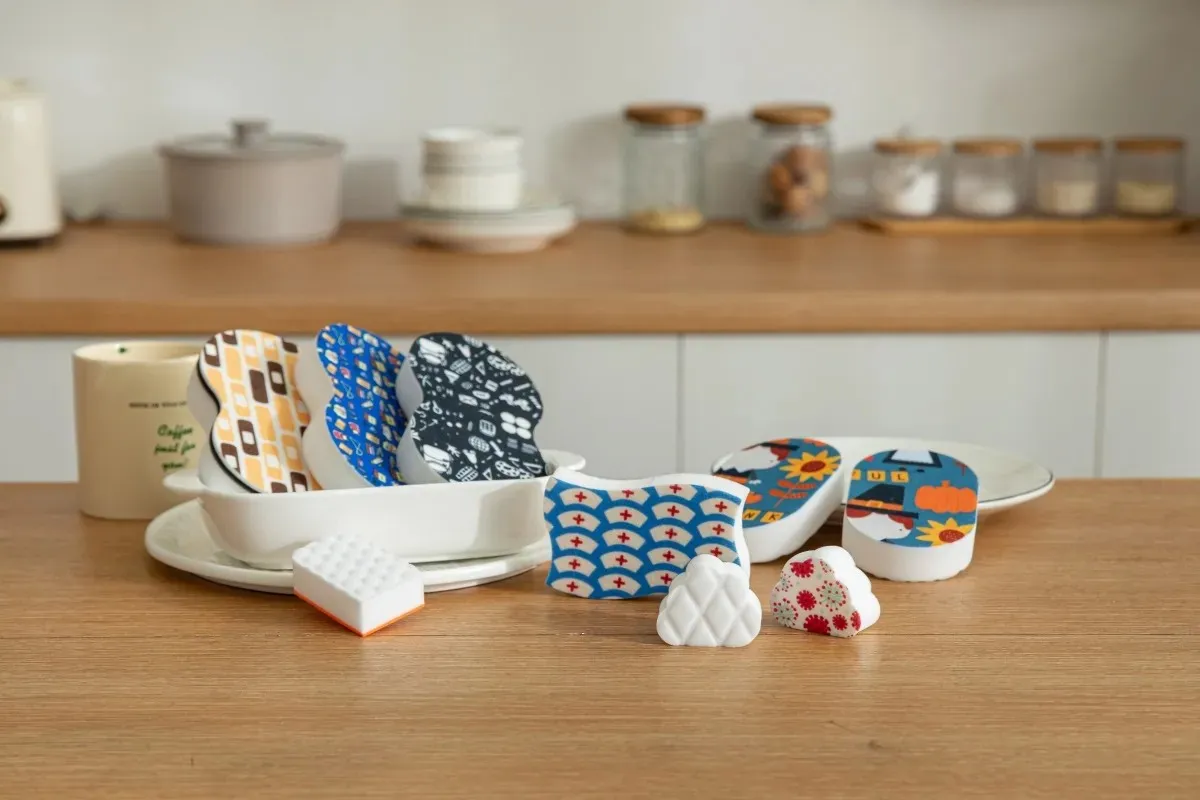
Non-woven fabric polishes to a gleam. Embossing adds texture for grip. Customizable dimensions suit large stockpots. Fabric layer buffs without scratching. Longevity doubles standard versions. Explore the Embossed Melamine Sponge with Non-Woven Fabric for premium results.
Advantages of FoamTech Company
Innovation defines this leader. Over 100 patent applications since 2015 cover foaming advancements. R&D centers pioneer hydrophobic modifications. Contact angles reach 152 degrees for lotus-effect cleaning.
Quality underpins every product. National Green Factory designation reflects commitment. BSCI audits rate highly in social responsibility.
Innovative Patent Portfolio
Patents include plasma surface treatments raising energy to 52 mN/m. Compressed sponges endure more cycles. Antibacterial zinc oxide doping meets GB/T 20944.3 standards. You benefit from cutting-edge tech.
Strict Quality Certifications
ISO9001 ensures process control. ISO14001 manages environmental impact. ISO45001 prioritizes safety. SVHC compliance guarantees no harmful substances. Flame retardancy passes UL94 V-0 without droplets. You trust certified excellence.
Comprehensive Customer Support
OEM packaging personalizes brands. Global logistics deliver promptly. Technical guidance solves unique challenges. Custom densities from 8 to 64 kg/m³ available. You receive end-to-end assistance.
FAQ
Q1: Do magic eraser sponges scratch non-stick pans?
A: No scratches occur with wet, gentle use on smooth non-stick. Softened hardness at Shore A28 and low 0.15 friction coefficient protect coatings. Test hidden spots first.
Q2: How often should you replace the sponge for cookware cleaning?
A: Replace upon visible crumbling, typically after 5 to 10 pots depending on stain severity and pressure. High-density 12 kg/m³ versions like embossed last longer.
Q3: Can these sponges clean hot cookware right after cooking?
A: Cool surfaces first for safety. Material handles up to 220°C continuously but performs best at room temperature. Avoid thermal shock.
Q4: Will any melamine residue stay on pots after wiping?
A: Thorough rinsing removes all particles. Physical mechanism captures dirt in pores, released during sponge rinse. No chemical traces remain.
High-quality magic eraser sponges transform cookware cleaning. You face baked-on grease, stubborn stains, and burnt residues daily. These sponges tackle them with water alone. No scrubbing pads. No toxic cleaners. Their secret lies in melamine foam, a nano-engineered material that acts like ultra-fine sandpaper yet feels soft when wet. Concerns about scratches or damage arise naturally. Proper technique eliminates risks. As a melamine foam authority, FoamTech delivers proven solutions. This innovative company, rooted in China since 2014, masters production from raw resin to finished sponges. With over 55 invention patents and certifications like ISO9001, ISO14001, and National Green Factory status, they supply global markets. Their products reach homes, industries, and high-tech sectors like rail transit.
Introduction to Magic Eraser Sponges for Cookware
Magic eraser sponges enter your kitchen as game-changers. You activate them simply by adding water. Their open-cell structure grabs dirt physically. No chemical reactions occur. This suits modern cookware from stainless steel to ceramic coatings. High porosity, up to 99 percent, enables adsorption of particles as small as 0.1 microns. Density stays low, between 8 and 16 kg/m³, ensuring lightweight handling. Flame retardancy reaches UL94 V-0 level. Environmental compliance includes RoHS and REACH standards. You clean effectively without worry when guidelines follow.
How Do Magic Eraser Sponges Work on Cookware?
These sponges operate on physical principles. Wet them, and the material softens. Hardness drops from Shore A45 dry to A28 soaked. This change allows gentle yet powerful stain removal. Nano-scale pores act as micro-hooks. They lift grime without dissolving it. Efficiency rises 300 percent over traditional sponges. Tests by TÜV labs confirm a friction coefficient of just 0.15 on painted surfaces. You wipe once, and stains vanish. Rinse the sponge mid-use to maintain performance. Cut sections for precision on pot edges or pan handles.
Melamine Foam Structure Explained
Melamine foam builds a three-dimensional network during foaming. Vacuum technology ensures 98 percent pore uniformity. Each cell measures 5 to 20 microns. Open pores dominate, creating vast surface area for dirt capture. Skeletal density tests show 2.41 g/cm³ on average. Volume porosity hits 99.4 percent in samples. Closed cells remain under 0.6 percent. This design adsorbs without retaining moisture long-term. You feel the difference immediately upon wetting.
Physical Cleaning Mechanism
Physical abrasion drives cleaning. Edges of open cells scrape contaminants. Water activates softening for safe contact. No detergents required. Adsorption pulls particles into the foam matrix. Rinse releases trapped dirt easily. Tensile strength exceeds 130 kPa. Elongation at break reaches 15 percent minimum. You control pressure to match surface delicacy. Circular motions distribute force evenly. Results appear crisp and streak-free.
Compatibility with Cookware Materials
Smooth stainless steel welcomes these sponges. Ceramic non-stick layers stay intact with light touch. Avoid heavily textured cast iron unless sealed. Glass lids clean effortlessly. Test hidden areas first. Wet sanding smooths minor imperfections beforehand if needed. Compatibility extends to aluminum with anodized finishes. Steer clear of untreated soft metals. High-quality foam prevents micro-abrasion on compatible surfaces.
What Risks Exist When Using Them on Cookware?
Risks stem from misuse, not the material itself. Dry scrubbing causes wear. Excessive pressure damages coatings. Heat exposure degrades foam. Awareness prevents problems. High-quality sponges incorporate reinforcements for safety.
Potential scratches occur on glossy non-stick if force applies heavily. Residue worries fade with thorough rinsing. Chemical interactions remain minimal since no additives involve.
Potential Surface Scratches
Forceful dry use mimics sandpaper. Wet properly, and softness protects. Embossed designs add cushioning layers. Friction tests prove low impact. You avoid marks by limiting pressure to feather-light touches. Delicate coatings like PTFE require extra care. Always circle gently.
Residue Concerns
Melamine particles may flake if overused. Rinse cookware under running water. Physical removal ensures no chemical leftovers. Foam rinses clean in seconds. Store dry to prevent mold. You notice no traces post-wash.
Heat and Chemical Interactions
Operating range spans -240°C to 220°C long-term. Cool pans before cleaning. Avoid bleach, which weakens structure. Acidic cleaners unnecessary. Vinegar soaks monthly extend life without harm. Thermal conductivity stays low at 0.033 W/(m·K). You maintain integrity easily.
How to Use Magic Eraser Sponges Safely on Cookware?
Safety starts with preparation. Gather clean water, scissors, and a soft cloth. Cut sponges to fit contours. Wet fully. Squeeze gently. Wipe in controlled patterns. Rinse surfaces immediately. Dry with microfiber to prevent water spots.
Consistency builds confidence. Test small areas. Adjust based on results. Reuse sections until they crumble.
Proper Wetting Techniques
Submerge completely for 10 seconds. Excess water drips off after light squeeze. Activation completes. Hardness reduces instantly. You feel the plush texture ready for action. Rewet as needed during sessions.
Gentle Application Methods
Apply minimal pressure. Think polishing, not scouring. Small circles cover evenly. Cut quarters for detailed work on rims. Rinse sponge every few wipes. This refreshes cleaning power. You finish faster with less effort.
Post-Cleaning Care Steps
Flush cookware thoroughly. Pat dry or air-dry upright. Inspect for shine. Store sponges in dry spots away from heat. Monthly vinegar dips sterilize without damage. You preserve both tools and pans.
Which High-quality Options Prevent Damage to Cookware?
Enhanced variants offer superior protection. Compressed densities increase durability. Layered composites combine gentleness with toughness. Custom sizes fit any pot.
Embossed Melamine Sponge Benefits
Tri-layer embossing reinforces structure. Density at 12 kg/m³ lasts longer. Handles heavy grease on stainless. Embossed patterns grip stains better. Tensile strength holds during vigorous yet safe use. Discover the versatile Embossed Melamine Sponge for kitchen reliability.
Dual Layer Kitchen PU Sponge Features
Melamine pairs with polyurethane cushion. One side erases, other absorbs. Scouring pad variants tackle burnt bits. Dual action cuts time. PU prevents direct abrasion on delicate layers. You switch sides seamlessly. Cushioning PU or non-woven layers buffer contact. Try the Dual Layer Kitchen PU Sponge with Scouring Pad for protected power. Dual functionality handles varied tasks without switching tools.
Embossed Melamine Sponge with Non-Woven Fabric Advantages
Non-woven fabric polishes to a gleam. Embossing adds texture for grip. Customizable dimensions suit large stockpots. Fabric layer buffs without scratching. Longevity doubles standard versions. Explore the Embossed Melamine Sponge with Non-Woven Fabric for premium results.
Advantages of FoamTech Company
Innovation defines this leader. Over 100 patent applications since 2015 cover foaming advancements. R&D centers pioneer hydrophobic modifications. Contact angles reach 152 degrees for lotus-effect cleaning.
Quality underpins every product. National Green Factory designation reflects commitment. BSCI audits rate highly in social responsibility.
Innovative Patent Portfolio
Patents include plasma surface treatments raising energy to 52 mN/m. Compressed sponges endure more cycles. Antibacterial zinc oxide doping meets GB/T 20944.3 standards. You benefit from cutting-edge tech.
Strict Quality Certifications
ISO9001 ensures process control. ISO14001 manages environmental impact. ISO45001 prioritizes safety. SVHC compliance guarantees no harmful substances. Flame retardancy passes UL94 V-0 without droplets. You trust certified excellence.
Comprehensive Customer Support
OEM packaging personalizes brands. Global logistics deliver promptly. Technical guidance solves unique challenges. Custom densities from 8 to 64 kg/m³ available. You receive end-to-end assistance.
FAQ
Q1: Do magic eraser sponges scratch non-stick pans?
A: No scratches occur with wet, gentle use on smooth non-stick. Softened hardness at Shore A28 and low 0.15 friction coefficient protect coatings. Test hidden spots first.
Q2: How often should you replace the sponge for cookware cleaning?
A: Replace upon visible crumbling, typically after 5 to 10 pots depending on stain severity and pressure. High-density 12 kg/m³ versions like embossed last longer.
Q3: Can these sponges clean hot cookware right after cooking?
A: Cool surfaces first for safety. Material handles up to 220°C continuously but performs best at room temperature. Avoid thermal shock.
Q4: Will any melamine residue stay on pots after wiping?
A: Thorough rinsing removes all particles. Physical mechanism captures dirt in pores, released during sponge rinse. No chemical traces remain.
Related Recommendations

Family owned company, globalleader in development andmanufacturing of home careproducts for private label andcontract manufacturing
Copyright © 2026 FoamTech (Zhejiang) New Materials Co., Ltd.