Is Melamine the Only Secret Behind the Power of a Magic Eraser Sponge?
2026-05-06
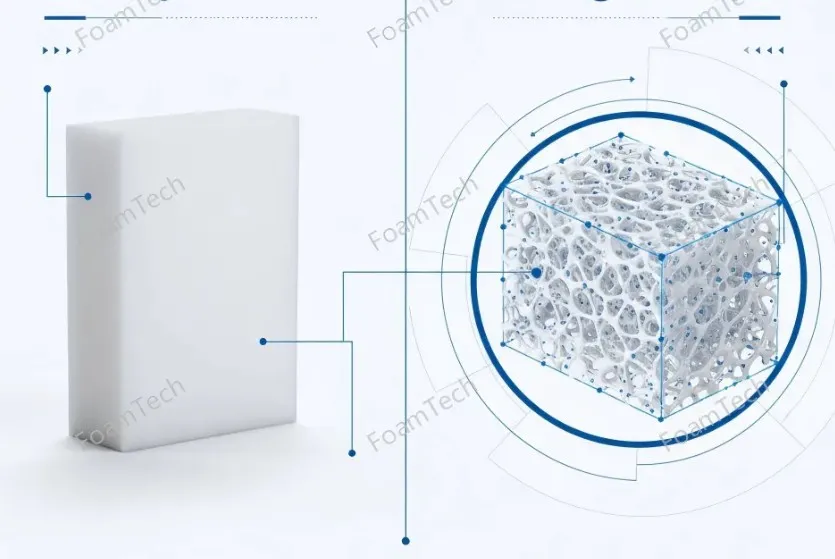
Many folks believe a magic eraser is merely a chunk of white foam that cleans effectively. In truth, plenty of material science fits into that compact piece. If you seek reliable cleaning supplies, consider FoamTech. They operate as a tech-focused company in Zhengzhou that focuses on creating and making melamine foam. With years of know-how and several patents, they support sectors from aviation to everyday home cleaning. Whether you require a basic sponge or a targeted industrial option, their services handle aspects from OEM to worldwide shipping. You can also reach them for tailored samples to check the standard firsthand.
Understanding the Physical Structure of Melamine Foam
These sponges succeed because of their makeup, not added substances. The effectiveness stems from the foam's own build. When melamine resin hardens into foam, it forms a special tiny setup that functions like very fine sandpaper.
Open-Cell Molecular Network
The foam features an open-cell design where cell walls mostly vanish, which leaves a narrow, three-dimensional skeleton. This setup yields high porosity, frequently over 95%, so air and water pass through the material with ease while the scrubbing side stays firm. As a result, it balances flow and strength for better cleaning.
Micro-Abrasive Cleaning Mechanism
Every fiber in the foam approaches the hardness of glass. At a close view, these fibers appear slender and pointed. When you apply the moist sponge to a surface, those small threads dip into the tiniest cracks of the base to pull up dirt. Therefore, this action ensures thorough removal without extra effort.
Interconnected Strands for Deep Scrubbing
Since the fibers link together, they create a net that captures dirt once it breaks free. This explains why the sponge appears to fade or erode during use. It essentially gives up its own form to hold the soil. In this manner, the design supports ongoing deep clean results.
Why Not All Magic Eraser Sponges Are the Same
You may spot low-cost sponges that disintegrate after a single try, whereas top-grade ones endure far longer. The variation often ties to density and production methods. A sponge at 8kg/m³ density behaves quite differently from one squeezed to 16kg/m³ or more.
Material Density and Durability Factors
Greater density provides more scrubbing fibers per volume unit. If density drops too low, the sponge misses the firmness needed for intense rubbing, which causes quick fallout. Experts often select densities from 40-60kg/m³ for tough industrial work. Thus, matching density to the task improves overall reliability.
Manufacturing Standards for Professional Results
Control of quality plays a key role in the foaming stage. Elements such as even cell size and no big gaps decide if the sponge scrubs uniformly. Regular production guarantees that each piece works consistently without marks. For that reason, steady methods yield dependable outcomes in practice.
Compressed vs Non-Compressed Technology
Compressed foam undergoes pressing with heat to boost density and sturdiness. This method renders the foam far more able to resist rips. It suits rough areas that would typically tear a regular soft sponge. Consequently, it extends usability in demanding settings.
Discover the Versatility of Foamy Melamine Sponge Sheet
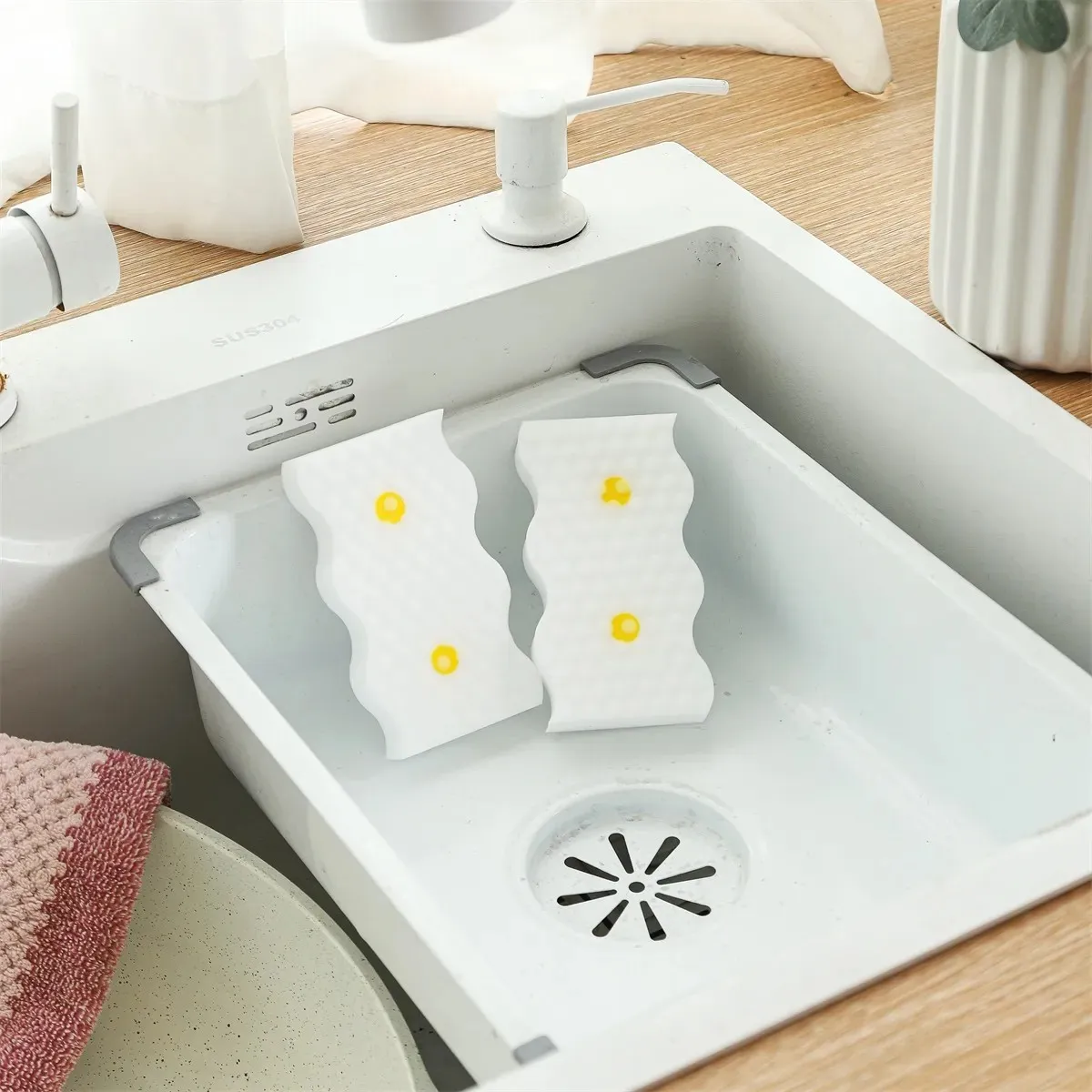
A solid block sometimes feels cumbersome for certain tasks. Here, the Foamy Melamine Sponge Sheet proves handy. Its slim form offers improved feel and bendability, which standard block erasers often lack.
Flexible Cleaning for Curved Surfaces
Slim sheets bend around tubes, grips, or curved edges without issue. You avoid concerns of the foam splitting when shaping it for narrow spots. It acts similar to a cloth yet delivers melamine's strength. As such, it handles tricky angles effectively.
Customizable Sizes for Industrial Use
You can trim these sheets using ordinary scissors to match any tool or grip size. In plant upkeep or custom kits, the flat sheet style stores and moves easier than large blocks. Therefore, it fits operational needs in busy environments.
Innovative Solution for High-Efficiency Tasks
Due to their thinness, the sheets dry quicker than bulky pieces, which curbs mold risks. They suit fast wipes where melamine's scraping power matters, but waste reduction counts too. In addition, this format supports efficient, low-mess routines.
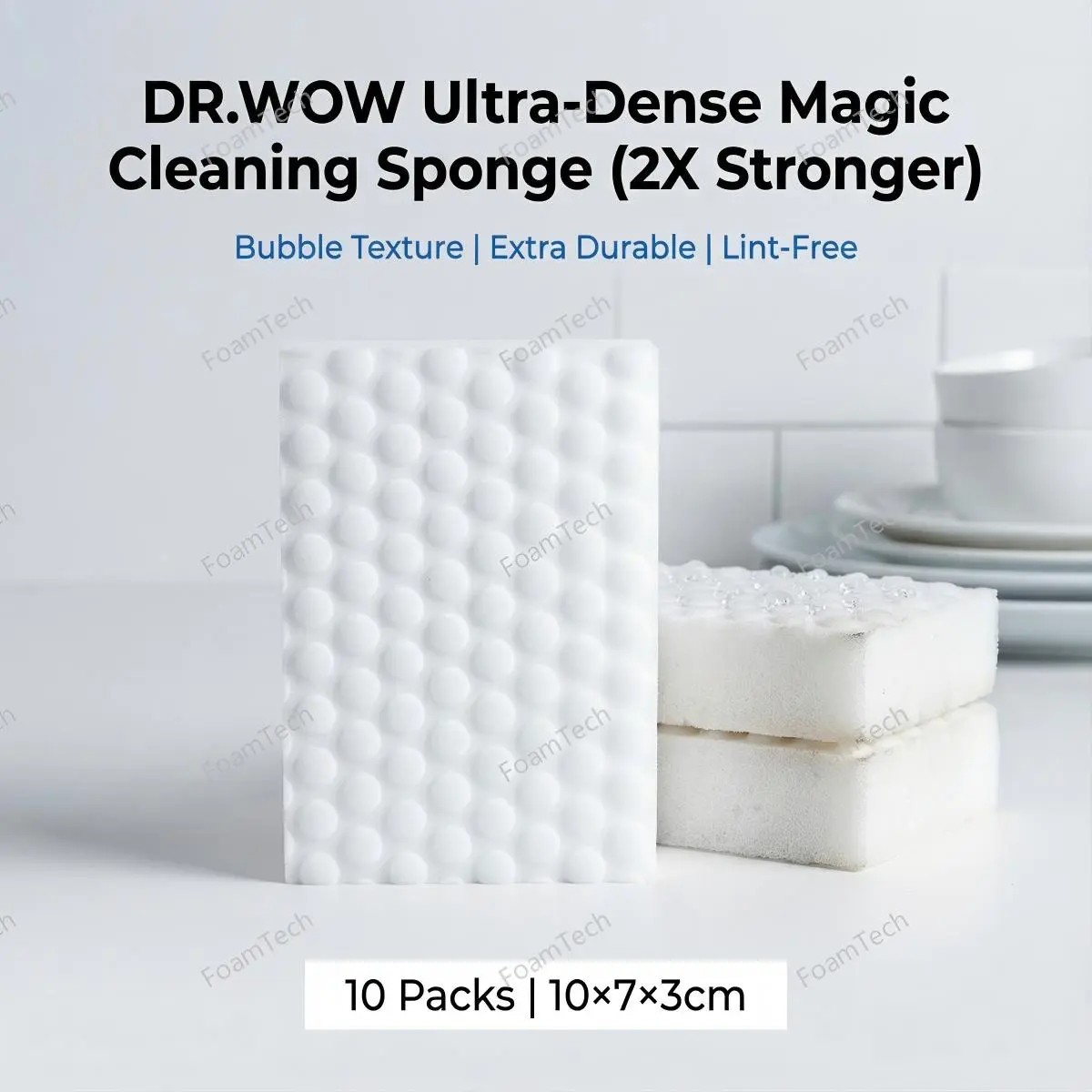
Enhance Cleaning Performance with Embossed Melamine Sponge
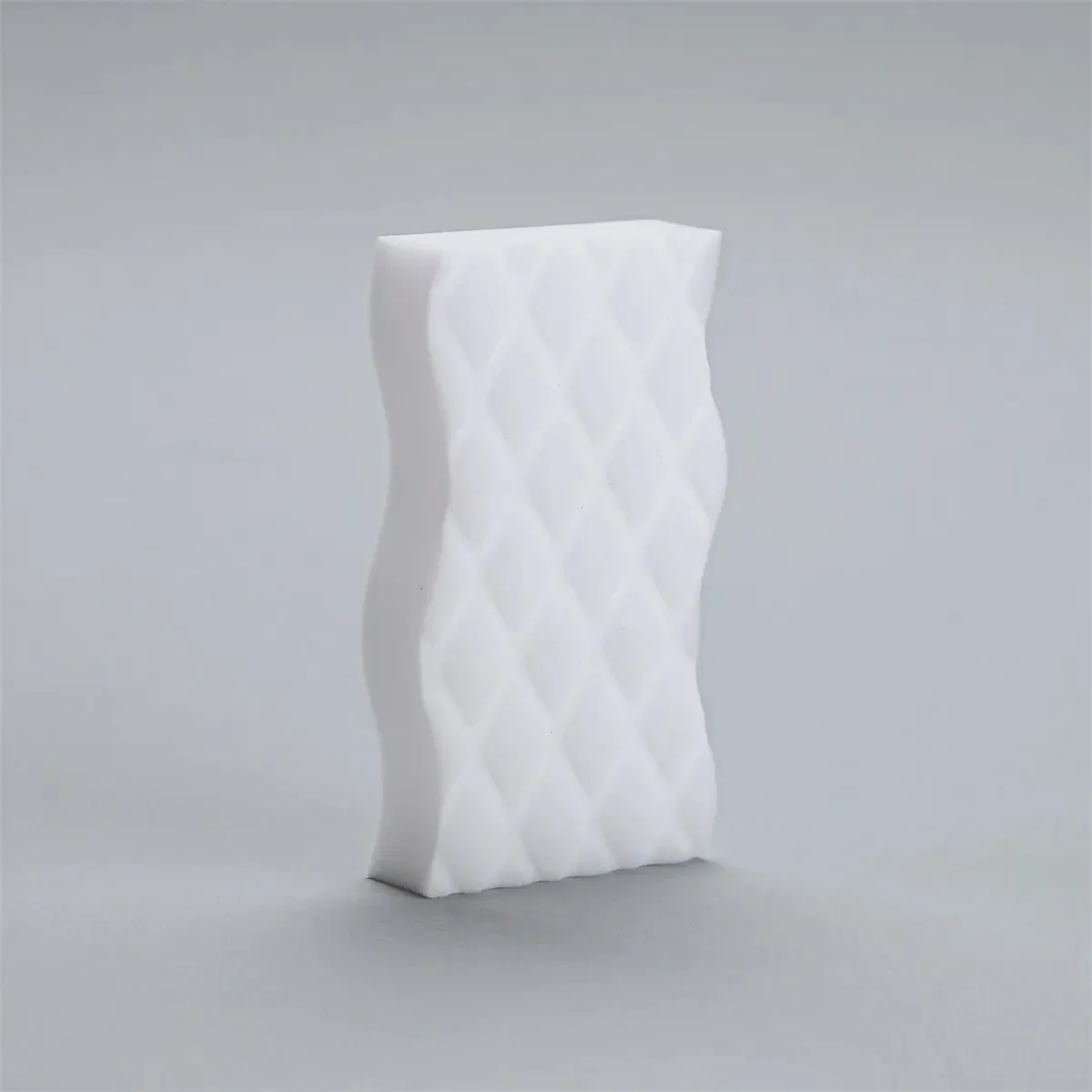
If a sponge has ever slipped from your grasp when sudsy, an Embossed Melamine Sponge solves that. The textured surface goes beyond appearance; it aids the cleaning function directly
Structural Integrity for Heavy Scrubbing
The embossing step strengthens the foam's outer part. Pressing designs into it makes the surface tighter and better at withstanding the rub that often breaks melamine. This reinforcement holds up under pressure. Hence, it sustains performance during extended sessions.
Friction Optimization through Embossed Patterns
The dips in the embossed design direct away extra water and freed dirt. This keeps the raised sections touching the mark directly, so you clean quicker with reduced strain. As a result, the pattern boosts contact and speed in tasks.
Superior Lifespan for Professional Cleaning Crews
Team cleaners favor embossed types since they hold up better in tough conditions. The extra hold aids control even with gloves, and the tough texture cuts down on replacements in long work periods. Therefore, it saves time and costs for groups.
How to Clean Stainless Steel Sinks without Surface Damage
Stainless steel holds up well, but it can appear shabby with tea spots, mineral buildup, or oil layers. Folks often grab steel wool or strong bleach, yet these might harm the shine or create pits eventually.
Risk of Harsh Chemical Cleaners
Such cleaners may deposit a residue or alter the metal's color if not cleared fully. Bleach poses special threats to stainless steel. Melamine foam offers a method based solely on mechanics, which skips these substance effects. Thus, it preserves the material's condition over time.
Scratch-Free Results with Melamine Foam
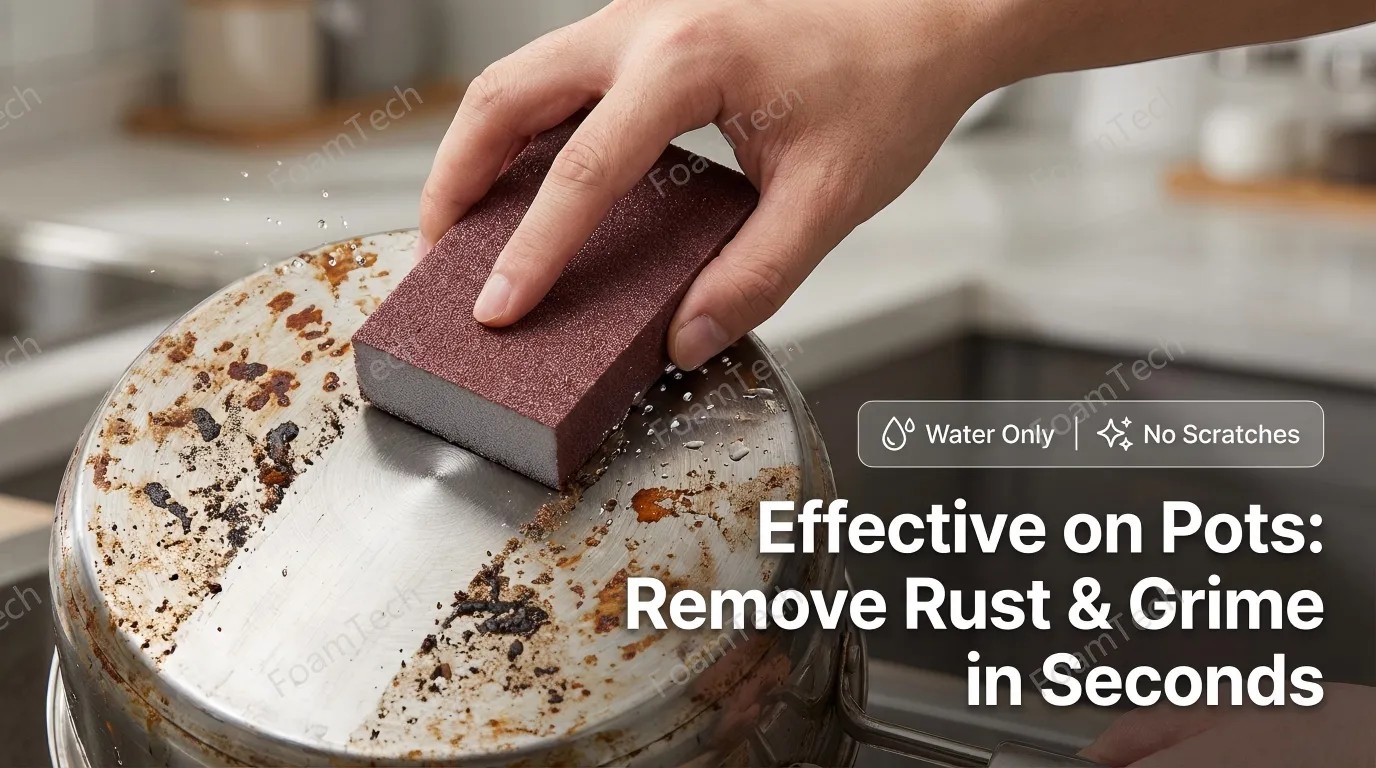
The foam's tiny fibers clear surface soil without the deep cuts a metal pad would leave. It resembles high-grade sandpaper aimed only at the mess. This gentle approach restores without harm. In consequence, the finish stays smooth and intact.
Step-by-Step Restoration for Dull Finishes
Wet the sponge, remove excess liquid, and stroke lightly along the metal's lines. The shine returns as the foam removes oxidation and deposits that dull the sink. Following these steps ensures a polished look. Moreover, it avoids common errors in upkeep.
Common Pain Points Solved by Melamine Sponges
Various cleaning troubles feel lasting until the proper item appears. From home renovators to vehicle polishers, users turn to these sponges for fixes that basic soap and water ignore.
Elimination of Permanent Scuff Marks
Shoe bottoms, furniture bases, and bags frequently mark floors and walls with dark streaks. A brief pass with a wet melamine sponge often erases these in moments, sparing the need to recoat. This quick fix saves effort. Additionally, it keeps surfaces looking fresh.
Removal of Stubborn Grease without Residue
Kitchen fats harden into a tacky, yellowish coat on cabinets or hoods. Melamine foam slices through this fat physically, yielding a crisp clean without the slick leftover from certain removers. As such, it leaves no trace behind. This makes follow-up tasks simpler.
Cost-Effective Maintenance for Large Facilities
In places like schools or clinics, bulk buys of these prove cheaper than many targeted formulas. A single sponge type manages desk marks, sink spots, and ledge dirt. Therefore, it streamlines inventory. In turn, it cuts expenses for broad upkeep.
Why Choose FoamTech for Your Cleaning Solutions
Picking a provider involves more than the cheapest rate. You want a collaborator who understands the material deeply. FoamTech earned its standing through emphasis on foam making's technical aspects.
Advanced Manufacturing Technology
The plant employs modern gear to secure even density and cell form. When you specify a foam grade, you receive precisely that each time. This precision builds confidence in orders. Hence, it supports consistent quality delivery.
Comprehensive OEM and ODM Support
For particular forms, branded textures, or special packs, they manage it all. They partner with labels to craft items that shine in stores or excel in set industries. Such collaboration fosters unique solutions. As a result, products meet exact market demands.
Strict Quality Control Protocols
Each lot faces checks to match eco and safety norms. They carry approvals like ISO 9001 and cleared BSCI reviews, confirming fair and skilled output. This oversight ensures reliability. Therefore, clients trust the end results fully.
Expert Global Logistics and Service
Transporting light yet space-taking foam presents challenges, but they manage international sends smoothly. Their staff assists from specs to post-purchase aid. This full coverage eases operations. In addition, it strengthens worldwide ties.
FAQ
Q1: Does a magic eraser sponge contain toxic chemicals?
A: No, the cleaning power comes from the physical structure of the melamine foam, not added chemicals. However, you should always rinse surfaces that come into contact with food after cleaning.
Q2: Why does my sponge break into small pieces so quickly?
A: This usually happens if the foam density is too low or if you are using it on a very rough, porous surface. Using a compressed or embossed version can help the sponge last longer.
Q3: Can I use melamine foam on my car's paint?
A: You should be very careful. Because it is a micro-abrasive, it can dull the clear coat if you rub too hard. It is great for wheels or plastic trim, but test a small, hidden area first if you plan to use it on the body.
Q4: Do I need to use soap with the sponge?
A: Usually, no. Water is enough to "lubricate" the foam so it can slide and grab dirt. Adding soap can actually fill the open cells and make the sponge less effective.
Q5: How should I store the sponge after use?
A: Rinse it out and squeeze it gently (do not wring it like a towel, or it will tear). Let it air dry in a well-ventilated spot to prevent any odor or mold from developing.
Many folks believe a magic eraser is merely a chunk of white foam that cleans effectively. In truth, plenty of material science fits into that compact piece. If you seek reliable cleaning supplies, consider FoamTech. They operate as a tech-focused company in Zhengzhou that focuses on creating and making melamine foam. With years of know-how and several patents, they support sectors from aviation to everyday home cleaning. Whether you require a basic sponge or a targeted industrial option, their services handle aspects from OEM to worldwide shipping. You can also reach them for tailored samples to check the standard firsthand.
Understanding the Physical Structure of Melamine Foam
These sponges succeed because of their makeup, not added substances. The effectiveness stems from the foam's own build. When melamine resin hardens into foam, it forms a special tiny setup that functions like very fine sandpaper.
Open-Cell Molecular Network
The foam features an open-cell design where cell walls mostly vanish, which leaves a narrow, three-dimensional skeleton. This setup yields high porosity, frequently over 95%, so air and water pass through the material with ease while the scrubbing side stays firm. As a result, it balances flow and strength for better cleaning.
Micro-Abrasive Cleaning Mechanism
Every fiber in the foam approaches the hardness of glass. At a close view, these fibers appear slender and pointed. When you apply the moist sponge to a surface, those small threads dip into the tiniest cracks of the base to pull up dirt. Therefore, this action ensures thorough removal without extra effort.
Interconnected Strands for Deep Scrubbing
Since the fibers link together, they create a net that captures dirt once it breaks free. This explains why the sponge appears to fade or erode during use. It essentially gives up its own form to hold the soil. In this manner, the design supports ongoing deep clean results.
Why Not All Magic Eraser Sponges Are the Same
You may spot low-cost sponges that disintegrate after a single try, whereas top-grade ones endure far longer. The variation often ties to density and production methods. A sponge at 8kg/m³ density behaves quite differently from one squeezed to 16kg/m³ or more.
Material Density and Durability Factors
Greater density provides more scrubbing fibers per volume unit. If density drops too low, the sponge misses the firmness needed for intense rubbing, which causes quick fallout. Experts often select densities from 40-60kg/m³ for tough industrial work. Thus, matching density to the task improves overall reliability.
Manufacturing Standards for Professional Results
Control of quality plays a key role in the foaming stage. Elements such as even cell size and no big gaps decide if the sponge scrubs uniformly. Regular production guarantees that each piece works consistently without marks. For that reason, steady methods yield dependable outcomes in practice.
Compressed vs Non-Compressed Technology
Compressed foam undergoes pressing with heat to boost density and sturdiness. This method renders the foam far more able to resist rips. It suits rough areas that would typically tear a regular soft sponge. Consequently, it extends usability in demanding settings.
Discover the Versatility of Foamy Melamine Sponge Sheet
A solid block sometimes feels cumbersome for certain tasks. Here, the Foamy Melamine Sponge Sheet proves handy. Its slim form offers improved feel and bendability, which standard block erasers often lack.
Flexible Cleaning for Curved Surfaces
Slim sheets bend around tubes, grips, or curved edges without issue. You avoid concerns of the foam splitting when shaping it for narrow spots. It acts similar to a cloth yet delivers melamine's strength. As such, it handles tricky angles effectively.
Customizable Sizes for Industrial Use
You can trim these sheets using ordinary scissors to match any tool or grip size. In plant upkeep or custom kits, the flat sheet style stores and moves easier than large blocks. Therefore, it fits operational needs in busy environments.
Innovative Solution for High-Efficiency Tasks
Due to their thinness, the sheets dry quicker than bulky pieces, which curbs mold risks. They suit fast wipes where melamine's scraping power matters, but waste reduction counts too. In addition, this format supports efficient, low-mess routines.
Enhance Cleaning Performance with Embossed Melamine Sponge
If a sponge has ever slipped from your grasp when sudsy, an Embossed Melamine Sponge solves that. The textured surface goes beyond appearance; it aids the cleaning function directly
Structural Integrity for Heavy Scrubbing
The embossing step strengthens the foam's outer part. Pressing designs into it makes the surface tighter and better at withstanding the rub that often breaks melamine. This reinforcement holds up under pressure. Hence, it sustains performance during extended sessions.
Friction Optimization through Embossed Patterns
The dips in the embossed design direct away extra water and freed dirt. This keeps the raised sections touching the mark directly, so you clean quicker with reduced strain. As a result, the pattern boosts contact and speed in tasks.
Superior Lifespan for Professional Cleaning Crews
Team cleaners favor embossed types since they hold up better in tough conditions. The extra hold aids control even with gloves, and the tough texture cuts down on replacements in long work periods. Therefore, it saves time and costs for groups.
How to Clean Stainless Steel Sinks without Surface Damage
Stainless steel holds up well, but it can appear shabby with tea spots, mineral buildup, or oil layers. Folks often grab steel wool or strong bleach, yet these might harm the shine or create pits eventually.
Risk of Harsh Chemical Cleaners
Such cleaners may deposit a residue or alter the metal's color if not cleared fully. Bleach poses special threats to stainless steel. Melamine foam offers a method based solely on mechanics, which skips these substance effects. Thus, it preserves the material's condition over time.
Scratch-Free Results with Melamine Foam
The foam's tiny fibers clear surface soil without the deep cuts a metal pad would leave. It resembles high-grade sandpaper aimed only at the mess. This gentle approach restores without harm. In consequence, the finish stays smooth and intact.
Step-by-Step Restoration for Dull Finishes
Wet the sponge, remove excess liquid, and stroke lightly along the metal's lines. The shine returns as the foam removes oxidation and deposits that dull the sink. Following these steps ensures a polished look. Moreover, it avoids common errors in upkeep.
Common Pain Points Solved by Melamine Sponges
Various cleaning troubles feel lasting until the proper item appears. From home renovators to vehicle polishers, users turn to these sponges for fixes that basic soap and water ignore.
Elimination of Permanent Scuff Marks
Shoe bottoms, furniture bases, and bags frequently mark floors and walls with dark streaks. A brief pass with a wet melamine sponge often erases these in moments, sparing the need to recoat. This quick fix saves effort. Additionally, it keeps surfaces looking fresh.
Removal of Stubborn Grease without Residue
Kitchen fats harden into a tacky, yellowish coat on cabinets or hoods. Melamine foam slices through this fat physically, yielding a crisp clean without the slick leftover from certain removers. As such, it leaves no trace behind. This makes follow-up tasks simpler.
Cost-Effective Maintenance for Large Facilities
In places like schools or clinics, bulk buys of these prove cheaper than many targeted formulas. A single sponge type manages desk marks, sink spots, and ledge dirt. Therefore, it streamlines inventory. In turn, it cuts expenses for broad upkeep.
Why Choose FoamTech for Your Cleaning Solutions
Picking a provider involves more than the cheapest rate. You want a collaborator who understands the material deeply. FoamTech earned its standing through emphasis on foam making's technical aspects.
Advanced Manufacturing Technology
The plant employs modern gear to secure even density and cell form. When you specify a foam grade, you receive precisely that each time. This precision builds confidence in orders. Hence, it supports consistent quality delivery.
Comprehensive OEM and ODM Support
For particular forms, branded textures, or special packs, they manage it all. They partner with labels to craft items that shine in stores or excel in set industries. Such collaboration fosters unique solutions. As a result, products meet exact market demands.
Strict Quality Control Protocols
Each lot faces checks to match eco and safety norms. They carry approvals like ISO 9001 and cleared BSCI reviews, confirming fair and skilled output. This oversight ensures reliability. Therefore, clients trust the end results fully.
Expert Global Logistics and Service
Transporting light yet space-taking foam presents challenges, but they manage international sends smoothly. Their staff assists from specs to post-purchase aid. This full coverage eases operations. In addition, it strengthens worldwide ties.
FAQ
Q1: Does a magic eraser sponge contain toxic chemicals?
A: No, the cleaning power comes from the physical structure of the melamine foam, not added chemicals. However, you should always rinse surfaces that come into contact with food after cleaning.
Q2: Why does my sponge break into small pieces so quickly?
A: This usually happens if the foam density is too low or if you are using it on a very rough, porous surface. Using a compressed or embossed version can help the sponge last longer.
Q3: Can I use melamine foam on my car's paint?
A: You should be very careful. Because it is a micro-abrasive, it can dull the clear coat if you rub too hard. It is great for wheels or plastic trim, but test a small, hidden area first if you plan to use it on the body.
Q4: Do I need to use soap with the sponge?
A: Usually, no. Water is enough to "lubricate" the foam so it can slide and grab dirt. Adding soap can actually fill the open cells and make the sponge less effective.
Q5: How should I store the sponge after use?
A: Rinse it out and squeeze it gently (do not wring it like a towel, or it will tear). Let it air dry in a well-ventilated spot to prevent any odor or mold from developing.
Related Recommendations

Family owned company, globalleader in development andmanufacturing of home careproducts for private label andcontract manufacturing
Copyright © 2026 FoamTech (Zhejiang) New Materials Co., Ltd.