5 Tips To Maximize Magic Eraser Efficiency On Car Exterior And Interior
2026-06-25
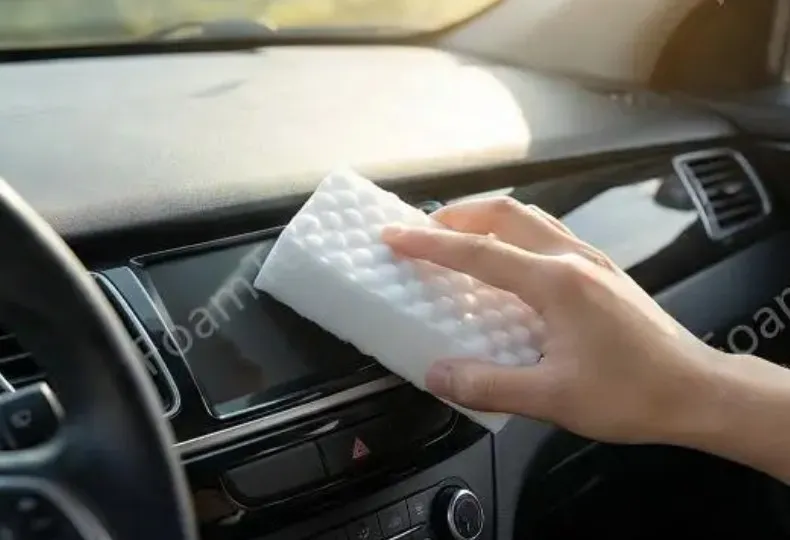
Car cleaning buyers care about two things first: visible results and surface safety. A magic eraser can remove scuffs, hand marks, dust buildup, shoe stains, and light grime with water alone, but the way it is used matters. Too much pressure wastes the sponge and may leave dull marks on delicate surfaces. Too much water makes it weak in the hand. The right method is simple: wet it, squeeze it, wipe in one direction, rinse it, and replace the piece once it starts breaking down.
Tip 1: Start With Water, Not Strong Chemicals
The magic eraser is a physical cleaning tool. Because of its fine open-cell structure, the dirt on surfaces is picked up by the eraser instead of being left behind with heavy detergent. So the eraser is ideal for cleaning plastic, glass, metal, and other hardware as well as furniture, kitchen appliances, and other office items and for cleaning the interior of cars. For the car care detailer, car wash, and retail magic eraser cleaning kits, the advantage is that there are fewer chemical residues left in the car’s interior.
Wet the Sponge Fully, Then Squeeze It Well
Do not use it dry on car surfaces. A dry sponge feels firmer and can be too harsh for gloss trim, painted panels, or coated plastic. Soak it fully, then squeeze out extra water until it is damp, not dripping.
A simple working rule:
1. Soak the sponge in clean water.
2. Squeeze it gently.
3. Wipe the target area in one direction.
4. Rinse the sponge often.
5. Let the cleaned surface dry before judging the result.
This is especially useful for door sills, plastic kick panels, cup holder edges, rubber floor mat marks, and light marks around trunk loading areas. These areas get dirty fast, but they do not always need a strong cleaner.
For B2B buyers building a car care sponge line, FoamTech offers melamine foam products designed for cleaning with water alone, with product types covering normal density, compressed sponge, high density sheets, floor pads, and OEM packaging options.
Tip 2: Match Sponge Density to the Cleaning Job
Not every sponge should be used the same way. Normal density sponge is good for daily cleaning and light dirt. Compressed or high density sponge is better when the user needs longer service life, more stable grip, and less tearing during repeated use. This matters for car wash teams, detailing shops, and wholesalers selling to high-frequency users.
Use High Density Sponge for Repeated Car Cleaning
The 2x Hot-Pressed, Polka Dot, Rectangular High Density Sponges are made for professional grade cleaning. The product page highlights hot-pressed technology, 2x density compared with standard sponges, stronger tear resistance, and longer use life. That fits B2B buyers who do not want customers complaining that the sponge breaks too quickly after a few wipes.
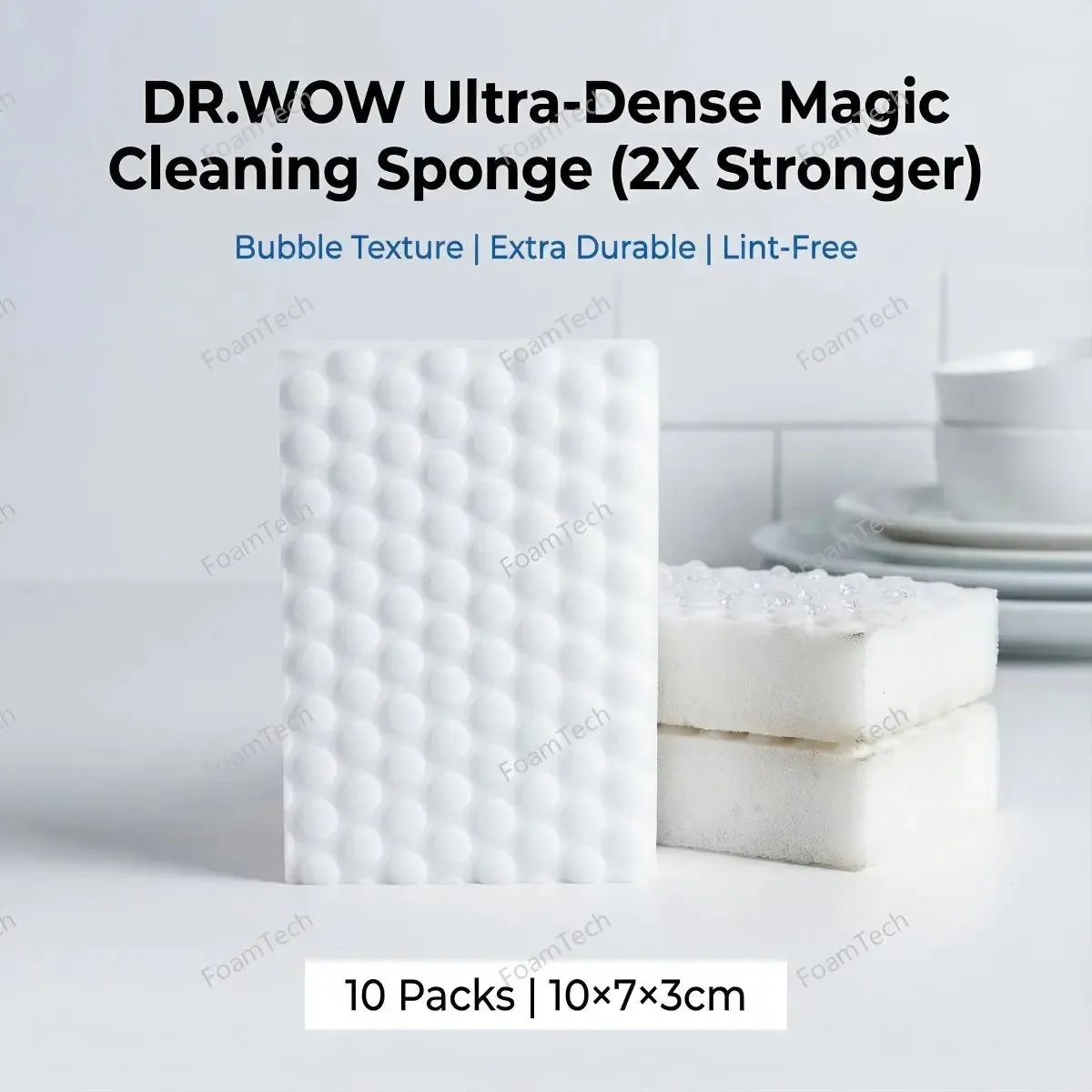
For car exterior use, high density does not mean “scrub harder.” It means better shape holding and better control. Use it on:
l Bug residue after softening with water
l Door handle grime
l Light scuffs near side skirts
l Plastic bumper marks
l Wheel trim stains, but not on delicate coated wheels without testing first
A small note from real detailing work: black piano trim and soft clear coat are easy to mark. Test first. If a surface is glossy, painted, coated, or expensive to repair, use a hidden spot and light pressure. That one habit prevents most after-sales complaints.
Tip 3: Cut the Sponge Into Smaller Working Pieces
One full-size sponge is not always the best choice. A smaller piece gives better control around air vents, seat rails, door pockets, emblems, buttons, and tight corners. It also lowers waste. When one edge gets dirty or starts crumbling, the user can replace that piece instead of throwing away the whole sponge.
Cut by Surface, Not by Habit
Magic eraser material can be cut freely, which is useful for car cleaning kits. For example:
l A narrow strip works well around cup holders and gear shift panels.
l A small square is enough for shoe marks on door panels.
l A larger piece is better for plastic cargo trim and rubber floor mats.
l A thin piece can help clean around badges and narrow exterior gaps.
For distributors, this creates more product options: 2-pack retail cards, 10-piece workshop packs, 21-piece value packs, or custom mixed kits for interior and exterior cleaning. FoamTech’s catalog includes different sizes, densities, and packaging formats, including individual packs, display boxes, OPP packaging, cardboard sleeves, and bulk boxes. If your market sells private label cleaning tools, the custom service page is worth using as a reference for packaging and sample planning.
Tip 4: Wipe in One Direction and Control Pressure
Random circular rubbing often makes cleaning less even. It can also grind loose dust across the surface. A cleaner method is to wipe in one direction with light pressure, check the result, rinse the sponge, then repeat only where needed. It sounds basic, but many users damage surfaces because they treat a magic eraser like a heavy scouring pad. It is not.
Use Short Passes on Exterior Areas
On car exterior surfaces, rinse away sand and grit before using the sponge. Dirt particles can scratch faster than the sponge itself. Use the sponge after the area is already wet and loose dirt is removed. For bug marks, rubber transfer, or mild road film, use short passes rather than long hard strokes.
On interior areas, the method changes a little:
l For textured plastic, use light strokes and rinse often.
l For vinyl, avoid staying in one spot too long.\
l For leather-like surfaces, clean gently and apply leather care afterward if needed.
l For screens, instrument clusters, and glossy trim, skip the magic eraser unless the material supplier says it is safe.
The knowledge base notes that melamine sponge can be used on car interiors and leatherware, but leather should receive maintenance after cleaning. That is a practical detail. Cleaning is only half the job; after-care protects the finish and reduces the chance of dryness or dullness.
Tip 5: Sell the Right Usage Method, Not Just the Sponge
For wholesalers and brand owners, the product itself is only part of the value. Clear user instructions reduce misuse, bad reviews, and returns. A simple instruction card can do more than a long sales claim. Car cleaning customers want to know what to clean, what to avoid, and how to make one sponge last longer.
Add Simple Instructions to Retail Packaging
For a car cleaning sponge pack, the back label can say:
l Wet before use.
l Squeeze out extra water.
l Test on a hidden area first.
l Wipe gently in one direction.
l Rinse during use.
l Do not use on hot surfaces.
l Avoid delicate glossy screens and soft coated trim.
l Replace when the sponge starts to break apart.
This kind of copy is not fancy, but it works. It also helps retailers sell the item as a safer, more professional cleaning tool rather than a cheap disposable sponge.
The 2x Hot-Pressed, Polka Dot, Rectangular High Density Sponges can be positioned for commercial cleaning and high-frequency use because of its hot-pressed 2x density and stronger durability. For car care distributors, that gives the product a clearer selling angle: longer use life, better hand control, and better value for repeated cleaning tasks.
FoamTech was established in 2014 and focuses on melamine foam production and R&D. The company has 55 invention patents, ISO/IATF16949 automotive industry quality system certification, AS9100D aviation standard certification, ISO system certification, BSCI certification, and SGS inspection reports. These points are useful for buyers who need more than a generic sponge supplier. Product consistency, test documents, and factory-direct support matter when the order is not just a few cartons.
For buyers preparing a custom car cleaning line, it is better to ask for samples first, test them on common car surfaces, then confirm size, density, packaging, and label wording. FoamTech states that sample orders are accepted, free samples within 20 pieces can be sent, and retail packaging can be provided based on buyer design and material requirements. For order discussion, the contact page gives direct inquiry access.
FAQ
Q1: Can a magic eraser be used on car paint?
A: A mild soap sponge can remove very light marks and should be used with extreme caution. Always wet the sponge first and use minimal pressure. Test the area first on a hidden part of the paint finish. Avoid using any hard rubbing on soft paint, very new paint, ceramic coating or a highly glossed black trim area.
Q2: Is high density sponge better for car cleaning?
A: High density sponge is usually better for repeated cleaning because it holds shape better and resists tearing. The 2x Hot-Pressed, Polka Dot, Rectangular High Density Sponges are more suitable for professional or high-frequency use than basic low-density sponges.
Q3: Do users need detergent with a magic eraser?
A: Normally not. The Melamine sponge is designed to remove marks with just water. For very stubborn grease or oil marks a mild detergent can be used first and then the Melamine sponge can be used to remove the mark.
Q4: How can users make one sponge last longer?
A: When you use it, cut it to right size, press it gently, wash it often, dry it after use. Don’t twist it too hard. If it is used for long time, it will crack into small pieces, please replace it.
Q5: What should distributors check before ordering car cleaning sponges in bulk?
A: Check density, size, packaging options, sample support, surface test results, and supplier certifications. For private label orders, confirm logo design, package material, instruction copy, MOQ, sample time, and delivery schedule before mass production.
Car cleaning buyers care about two things first: visible results and surface safety. A magic eraser can remove scuffs, hand marks, dust buildup, shoe stains, and light grime with water alone, but the way it is used matters. Too much pressure wastes the sponge and may leave dull marks on delicate surfaces. Too much water makes it weak in the hand. The right method is simple: wet it, squeeze it, wipe in one direction, rinse it, and replace the piece once it starts breaking down.
Tip 1: Start With Water, Not Strong Chemicals
The magic eraser is a physical cleaning tool. Because of its fine open-cell structure, the dirt on surfaces is picked up by the eraser instead of being left behind with heavy detergent. So the eraser is ideal for cleaning plastic, glass, metal, and other hardware as well as furniture, kitchen appliances, and other office items and for cleaning the interior of cars. For the car care detailer, car wash, and retail magic eraser cleaning kits, the advantage is that there are fewer chemical residues left in the car’s interior.
Wet the Sponge Fully, Then Squeeze It Well
Do not use it dry on car surfaces. A dry sponge feels firmer and can be too harsh for gloss trim, painted panels, or coated plastic. Soak it fully, then squeeze out extra water until it is damp, not dripping.
A simple working rule:
1. Soak the sponge in clean water.
2. Squeeze it gently.
3. Wipe the target area in one direction.
4. Rinse the sponge often.
5. Let the cleaned surface dry before judging the result.
This is especially useful for door sills, plastic kick panels, cup holder edges, rubber floor mat marks, and light marks around trunk loading areas. These areas get dirty fast, but they do not always need a strong cleaner.
For B2B buyers building a car care sponge line, FoamTech offers melamine foam products designed for cleaning with water alone, with product types covering normal density, compressed sponge, high density sheets, floor pads, and OEM packaging options.
Tip 2: Match Sponge Density to the Cleaning Job
Not every sponge should be used the same way. Normal density sponge is good for daily cleaning and light dirt. Compressed or high density sponge is better when the user needs longer service life, more stable grip, and less tearing during repeated use. This matters for car wash teams, detailing shops, and wholesalers selling to high-frequency users.
Use High Density Sponge for Repeated Car Cleaning
The 2x Hot-Pressed, Polka Dot, Rectangular High Density Sponges are made for professional grade cleaning. The product page highlights hot-pressed technology, 2x density compared with standard sponges, stronger tear resistance, and longer use life. That fits B2B buyers who do not want customers complaining that the sponge breaks too quickly after a few wipes.
For car exterior use, high density does not mean “scrub harder.” It means better shape holding and better control. Use it on:
l Bug residue after softening with water
l Door handle grime
l Light scuffs near side skirts
l Plastic bumper marks
l Wheel trim stains, but not on delicate coated wheels without testing first
A small note from real detailing work: black piano trim and soft clear coat are easy to mark. Test first. If a surface is glossy, painted, coated, or expensive to repair, use a hidden spot and light pressure. That one habit prevents most after-sales complaints.
Tip 3: Cut the Sponge Into Smaller Working Pieces
One full-size sponge is not always the best choice. A smaller piece gives better control around air vents, seat rails, door pockets, emblems, buttons, and tight corners. It also lowers waste. When one edge gets dirty or starts crumbling, the user can replace that piece instead of throwing away the whole sponge.
Cut by Surface, Not by Habit
Magic eraser material can be cut freely, which is useful for car cleaning kits. For example:
l A narrow strip works well around cup holders and gear shift panels.
l A small square is enough for shoe marks on door panels.
l A larger piece is better for plastic cargo trim and rubber floor mats.
l A thin piece can help clean around badges and narrow exterior gaps.
For distributors, this creates more product options: 2-pack retail cards, 10-piece workshop packs, 21-piece value packs, or custom mixed kits for interior and exterior cleaning. FoamTech’s catalog includes different sizes, densities, and packaging formats, including individual packs, display boxes, OPP packaging, cardboard sleeves, and bulk boxes. If your market sells private label cleaning tools, the custom service page is worth using as a reference for packaging and sample planning.
Tip 4: Wipe in One Direction and Control Pressure
Random circular rubbing often makes cleaning less even. It can also grind loose dust across the surface. A cleaner method is to wipe in one direction with light pressure, check the result, rinse the sponge, then repeat only where needed. It sounds basic, but many users damage surfaces because they treat a magic eraser like a heavy scouring pad. It is not.
Use Short Passes on Exterior Areas
On car exterior surfaces, rinse away sand and grit before using the sponge. Dirt particles can scratch faster than the sponge itself. Use the sponge after the area is already wet and loose dirt is removed. For bug marks, rubber transfer, or mild road film, use short passes rather than long hard strokes.
On interior areas, the method changes a little:
l For textured plastic, use light strokes and rinse often.
l For vinyl, avoid staying in one spot too long.\
l For leather-like surfaces, clean gently and apply leather care afterward if needed.
l For screens, instrument clusters, and glossy trim, skip the magic eraser unless the material supplier says it is safe.
The knowledge base notes that melamine sponge can be used on car interiors and leatherware, but leather should receive maintenance after cleaning. That is a practical detail. Cleaning is only half the job; after-care protects the finish and reduces the chance of dryness or dullness.
Tip 5: Sell the Right Usage Method, Not Just the Sponge
For wholesalers and brand owners, the product itself is only part of the value. Clear user instructions reduce misuse, bad reviews, and returns. A simple instruction card can do more than a long sales claim. Car cleaning customers want to know what to clean, what to avoid, and how to make one sponge last longer.
Add Simple Instructions to Retail Packaging
For a car cleaning sponge pack, the back label can say:
l Wet before use.
l Squeeze out extra water.
l Test on a hidden area first.
l Wipe gently in one direction.
l Rinse during use.
l Do not use on hot surfaces.
l Avoid delicate glossy screens and soft coated trim.
l Replace when the sponge starts to break apart.
This kind of copy is not fancy, but it works. It also helps retailers sell the item as a safer, more professional cleaning tool rather than a cheap disposable sponge.
The 2x Hot-Pressed, Polka Dot, Rectangular High Density Sponges can be positioned for commercial cleaning and high-frequency use because of its hot-pressed 2x density and stronger durability. For car care distributors, that gives the product a clearer selling angle: longer use life, better hand control, and better value for repeated cleaning tasks.
FoamTech was established in 2014 and focuses on melamine foam production and R&D. The company has 55 invention patents, ISO/IATF16949 automotive industry quality system certification, AS9100D aviation standard certification, ISO system certification, BSCI certification, and SGS inspection reports. These points are useful for buyers who need more than a generic sponge supplier. Product consistency, test documents, and factory-direct support matter when the order is not just a few cartons.
For buyers preparing a custom car cleaning line, it is better to ask for samples first, test them on common car surfaces, then confirm size, density, packaging, and label wording. FoamTech states that sample orders are accepted, free samples within 20 pieces can be sent, and retail packaging can be provided based on buyer design and material requirements. For order discussion, the contact page gives direct inquiry access.
FAQ
Q1: Can a magic eraser be used on car paint?
A: A mild soap sponge can remove very light marks and should be used with extreme caution. Always wet the sponge first and use minimal pressure. Test the area first on a hidden part of the paint finish. Avoid using any hard rubbing on soft paint, very new paint, ceramic coating or a highly glossed black trim area.
Q2: Is high density sponge better for car cleaning?
A: High density sponge is usually better for repeated cleaning because it holds shape better and resists tearing. The 2x Hot-Pressed, Polka Dot, Rectangular High Density Sponges are more suitable for professional or high-frequency use than basic low-density sponges.
Q3: Do users need detergent with a magic eraser?
A: Normally not. The Melamine sponge is designed to remove marks with just water. For very stubborn grease or oil marks a mild detergent can be used first and then the Melamine sponge can be used to remove the mark.
Q4: How can users make one sponge last longer?
A: When you use it, cut it to right size, press it gently, wash it often, dry it after use. Don’t twist it too hard. If it is used for long time, it will crack into small pieces, please replace it.
Q5: What should distributors check before ordering car cleaning sponges in bulk?
A: Check density, size, packaging options, sample support, surface test results, and supplier certifications. For private label orders, confirm logo design, package material, instruction copy, MOQ, sample time, and delivery schedule before mass production.
Related Recommendations


Family owned company, globalleader in development andmanufacturing of home careproducts for private label andcontract manufacturing
Copyright © 2026 FoamTech (Zhejiang) New Materials Co., Ltd.