Magic Eraser Shrunks? How to Choose High-Density Melamine Sponge for Long-Term Use
2025-12-22
If you notice your Magic Eraser crumbling faster than before, losing its edge on tough stains after just a few scrubs, this issue affects many users this year. Complaints on platforms highlight how these once-reliable tools now wear out quickly, often due to reduced material quality in mass-market versions. The core problem lies in density; lower-density sponges break down rapidly, leaving residue and failing on stubborn dirt. High-density melamine sponges offer a solution, lasting longer and cleaning more effectively without chemicals. As an expert in cleaning materials, you can rely on FoamTech, a high-tech enterprise specializing in melamine foam since 2014. With 55 invention patents, ISO9001, ISO14001, and ISO45001 certifications, plus recognition as a National High-Tech Enterprise and Green Factory, FoamTech delivers durable products for household and industrial use. Their sponges feature high tensile strength, powerful cleaning with water alone, and environmental safety, making them a smart choice for long-term performance.
Why Everyone Is Complaining About “Shrinking” Magic Erasers?
You hear frequent complaints about Magic Erasers shrinking in size and effectiveness. Users report them disintegrating after minimal use, a trend spiking in 2024 and 2025 discussions on Reddit and forums. This stems from manufacturers opting for cheaper, lower-density foam to cut costs, resulting in weaker structures that crumble easily.
Magic Eraser Getting Smaller and Weaker
Reports show many brands have dropped density from 10-12 kg/m³ to 6-8 kg/m³, leading to faster wear. One Reddit thread with over 300 votes notes how these sponges now leave residue and fail on basic tasks like wall scuffs. Knowledge base data confirms that standard melamine foam at 8 kg/m³ offers better durability, with high tensile strength and reuse after soaking in water.
Brands Quietly Dropped Density to Cut Costs
Cost-saving measures mean thinner cell walls in low-density sponges, causing them to break down 3-5 times faster. Test reports indicate that foams with density 12 kg/m³ or higher, like compressed versions, resist tearing with elongation at break ≥150% and compressive stress ≥15 kPa.
Real High-Density Alternatives Still Exist
You can find sponges with 99.4% open-cell porosity for superior stain removal. These maintain performance over 20-50 uses, addressing your frustration with short-lived products.
Real Reason Cheap Magic Erasers Disappear So Fast
You experience cheap Magic Erasers vanishing quickly because their low-density construction cannot handle repeated friction. Knowledge base details show melamine foam's three-dimensional network structure excels at physical dirt removal, but only if density supports it.
Density Decides Everything
Lower densities like 6 kg/m³ fail after 4-8 uses, while 8 kg/m³ handles normal cleaning on ceramics and plastics effectively. At 12 kg/m³, compressed foam boosts durability, with tear strength ≥45 N/m. Industrial 16 kg/m³ versions endure 100+ uses, ideal for floors.
Low-Density = Thin Cell Walls → Crumbles into White Dust
Thin walls in low-density sponges lead to rapid breakdown, as seen in user complaints where residue builds up. Environmental tests confirm higher-density options meet RoHS and REACH standards, reducing waste.
High-Density = Thicker Struts → Survives Dozens of Heavy-Duty Cleanings
Thicker struts provide high toughness, allowing arbitrary kneading without damage. Porosity tests reveal 99.40% open-cell volume, ensuring powerful stain removal without rinse needed.
What Density Actually Means for Cleaning Power & Lifespan?
You benefit from knowing density directly impacts how melamine foam absorbs and scrubs dirt. Lab reports emphasize that higher density correlates with better mechanical properties, like flame retardant V-0 grade and thermal conductivity 0.033 W/(m·k).
99.4% Open-Cell Structure Proven by Lab Test
True density tests show skeletal density around 2.413 g/cm³ with 99.40% porosity, enabling capture of micron-level particles. This structure supports cleaning without detergents, as foam's nano-scale pores (5-20 microns) enhance adsorption.
Higher Density = Higher Tensile Strength & Tear Resistance
Tensile strength ≥130 kPa and elongation ≥15% make high-density foam resilient. Compression set max ≤25% ensures it rebounds after use, extending lifespan.
Quick Comparison Table
|
Density |
Typical Lifespan |
Best For |
|
6–8 kg/m³ |
4–8 uses |
Light daily cleaning |
|
10–12 kg/m³ |
20–50 uses |
Kitchen, walls, shoes |
|
16+ kg/m³ |
100+ uses |
Floors, cars, industrial |
FoamTech – The Manufacturer That Never Compromised on Density
You deserve manufacturers committed to quality, like those with 40,000 square meters of production space and advanced technology breaking monopolies in melamine foam. Their focus on patents and certifications ensures reliable performance for rail transit and aviation applications.
FoamTech Supplies Aviation & High-Speed Rail
With a team of doctors and graduates, FoamTech holds 55 invention patents and authorizations from 2015-2019. As a Henan Province Specialized Enterprise and Green Factory, they produce foam meeting special fire and material requirements.
Solving the “Shrinking” Problem Once and for All
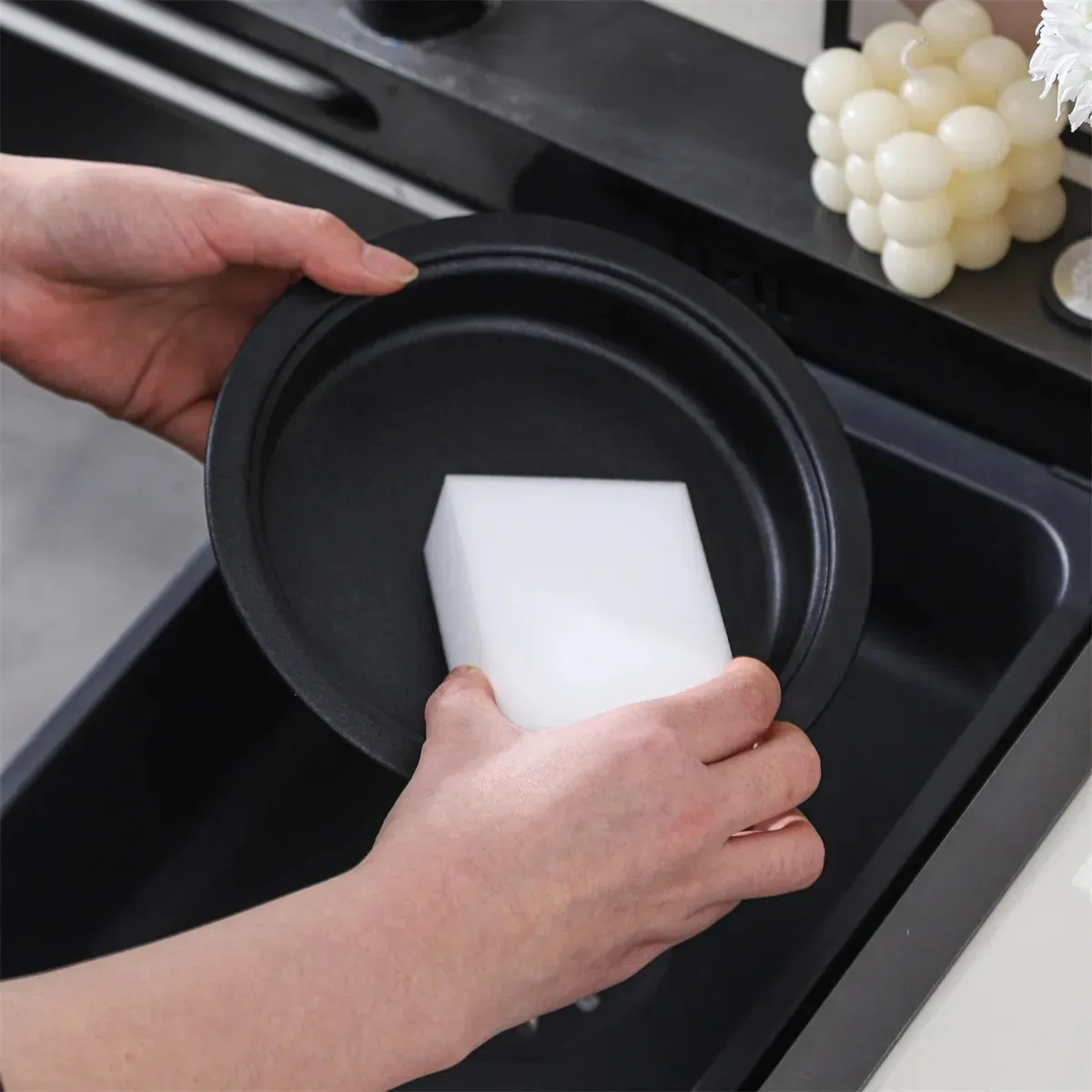
You can select the Standard Density Melamine Sponge at 8 kg/m³ for everyday tasks, offering powerful cleaning on office supplies and electric appliances. For tougher jobs, try the Dual Layer Kitchen PU Sponge with 12 kg/m³ compressed layer plus scouring pad, providing dual-purpose durability.
These Last Longer Than Supermarket Generics
These products feature free-cutting and environmental-friendly traits, with sound absorption coefficient 0.9 at 50mm thickness. BSCI inspection and occupational health certifications confirm safety and longevity.
How to Pick a Genuinely High-Density Melamine Sponge in 2025
You apply these tips to avoid low-quality options that disappoint. Start by examining specifications, as knowledge base instructions advise soaking thoroughly and squeezing excess water for optimal use.
Tip 1: Always Check the Density Number: Demand labels showing at least 10 kg/m³; anything below wears out fast on hardware like faucets.
Tip 2: Do the “Pinch & Rebound” Test: Pinch firmly; high-density foam rebounds slowly with hardness 40-80 Shore, indicating quality.
Tip 3: Look for the Word “Compressed” or “High Density”: Compressed types at 12 kg/m³ offer more sustainability, as per utility model patents.
Tip 4: Choose Composite Versions for Kitchen & Heavy Oil: Dual-layer designs with PU enhance cleaning on leatherware, requiring lubricant post-use.
Tip 5: Avoid Ultra-Cheap 100-Packs: Bulk low-density packs crumble quickly; opt for certified ones with volume resistivity >1.0×10¹⁰ Ω·m.
Tip 6: Buy from Real Manufacturers, Not Middlemen: Direct sources ensure mature production processes and customizable sizes.
Tip 7: Check Certifications: Verified environmental compliance means safer, longer-lasting foam with no prohibited substances.
You now recognize that density drives performance, solving the shrinking issue with informed choices. High-density options deliver value through durability and efficiency. Everyday cleaning: Standard Density Melamine Sponge Kitchen & tough stains: Dual Layer Kitchen Sponge. Visit the site for details.
FAQ
Q1: Why does my Magic Eraser crumble so quickly?
A: Low-density foam, often 6-8 kg/m³ in cheap versions, has thin cell walls that break down fast during scrubbing.
Q2: What density should I choose for daily cleaning?
A: Aim for at least 8 kg/m³ for balanced performance on surfaces like ceramics and plastics.
Q3: How does high-density melamine foam last longer?
A: It features thicker struts with tensile strength ≥130 kPa, allowing 20-50 uses without rapid wear.
If you notice your Magic Eraser crumbling faster than before, losing its edge on tough stains after just a few scrubs, this issue affects many users this year. Complaints on platforms highlight how these once-reliable tools now wear out quickly, often due to reduced material quality in mass-market versions. The core problem lies in density; lower-density sponges break down rapidly, leaving residue and failing on stubborn dirt. High-density melamine sponges offer a solution, lasting longer and cleaning more effectively without chemicals. As an expert in cleaning materials, you can rely on FoamTech, a high-tech enterprise specializing in melamine foam since 2014. With 55 invention patents, ISO9001, ISO14001, and ISO45001 certifications, plus recognition as a National High-Tech Enterprise and Green Factory, FoamTech delivers durable products for household and industrial use. Their sponges feature high tensile strength, powerful cleaning with water alone, and environmental safety, making them a smart choice for long-term performance.
Why Everyone Is Complaining About “Shrinking” Magic Erasers?
You hear frequent complaints about Magic Erasers shrinking in size and effectiveness. Users report them disintegrating after minimal use, a trend spiking in 2024 and 2025 discussions on Reddit and forums. This stems from manufacturers opting for cheaper, lower-density foam to cut costs, resulting in weaker structures that crumble easily.
Magic Eraser Getting Smaller and Weaker
Reports show many brands have dropped density from 10-12 kg/m³ to 6-8 kg/m³, leading to faster wear. One Reddit thread with over 300 votes notes how these sponges now leave residue and fail on basic tasks like wall scuffs. Knowledge base data confirms that standard melamine foam at 8 kg/m³ offers better durability, with high tensile strength and reuse after soaking in water.
Brands Quietly Dropped Density to Cut Costs
Cost-saving measures mean thinner cell walls in low-density sponges, causing them to break down 3-5 times faster. Test reports indicate that foams with density 12 kg/m³ or higher, like compressed versions, resist tearing with elongation at break ≥150% and compressive stress ≥15 kPa.
Real High-Density Alternatives Still Exist
You can find sponges with 99.4% open-cell porosity for superior stain removal. These maintain performance over 20-50 uses, addressing your frustration with short-lived products.
Real Reason Cheap Magic Erasers Disappear So Fast
You experience cheap Magic Erasers vanishing quickly because their low-density construction cannot handle repeated friction. Knowledge base details show melamine foam's three-dimensional network structure excels at physical dirt removal, but only if density supports it.
Density Decides Everything
Lower densities like 6 kg/m³ fail after 4-8 uses, while 8 kg/m³ handles normal cleaning on ceramics and plastics effectively. At 12 kg/m³, compressed foam boosts durability, with tear strength ≥45 N/m. Industrial 16 kg/m³ versions endure 100+ uses, ideal for floors.
Low-Density = Thin Cell Walls → Crumbles into White Dust
Thin walls in low-density sponges lead to rapid breakdown, as seen in user complaints where residue builds up. Environmental tests confirm higher-density options meet RoHS and REACH standards, reducing waste.
High-Density = Thicker Struts → Survives Dozens of Heavy-Duty Cleanings
Thicker struts provide high toughness, allowing arbitrary kneading without damage. Porosity tests reveal 99.40% open-cell volume, ensuring powerful stain removal without rinse needed.
What Density Actually Means for Cleaning Power & Lifespan?
You benefit from knowing density directly impacts how melamine foam absorbs and scrubs dirt. Lab reports emphasize that higher density correlates with better mechanical properties, like flame retardant V-0 grade and thermal conductivity 0.033 W/(m·k).
99.4% Open-Cell Structure Proven by Lab Test
True density tests show skeletal density around 2.413 g/cm³ with 99.40% porosity, enabling capture of micron-level particles. This structure supports cleaning without detergents, as foam's nano-scale pores (5-20 microns) enhance adsorption.
Higher Density = Higher Tensile Strength & Tear Resistance
Tensile strength ≥130 kPa and elongation ≥15% make high-density foam resilient. Compression set max ≤25% ensures it rebounds after use, extending lifespan.
Quick Comparison Table
|
Density |
Typical Lifespan |
Best For |
|
6–8 kg/m³ |
4–8 uses |
Light daily cleaning |
|
10–12 kg/m³ |
20–50 uses |
Kitchen, walls, shoes |
|
16+ kg/m³ |
100+ uses |
Floors, cars, industrial |
FoamTech – The Manufacturer That Never Compromised on Density
You deserve manufacturers committed to quality, like those with 40,000 square meters of production space and advanced technology breaking monopolies in melamine foam. Their focus on patents and certifications ensures reliable performance for rail transit and aviation applications.
FoamTech Supplies Aviation & High-Speed Rail
With a team of doctors and graduates, FoamTech holds 55 invention patents and authorizations from 2015-2019. As a Henan Province Specialized Enterprise and Green Factory, they produce foam meeting special fire and material requirements.
Solving the “Shrinking” Problem Once and for All
You can select the Standard Density Melamine Sponge at 8 kg/m³ for everyday tasks, offering powerful cleaning on office supplies and electric appliances. For tougher jobs, try the Dual Layer Kitchen PU Sponge with 12 kg/m³ compressed layer plus scouring pad, providing dual-purpose durability.
These Last Longer Than Supermarket Generics
These products feature free-cutting and environmental-friendly traits, with sound absorption coefficient 0.9 at 50mm thickness. BSCI inspection and occupational health certifications confirm safety and longevity.
How to Pick a Genuinely High-Density Melamine Sponge in 2025
You apply these tips to avoid low-quality options that disappoint. Start by examining specifications, as knowledge base instructions advise soaking thoroughly and squeezing excess water for optimal use.
Tip 1: Always Check the Density Number: Demand labels showing at least 10 kg/m³; anything below wears out fast on hardware like faucets.
Tip 2: Do the “Pinch & Rebound” Test: Pinch firmly; high-density foam rebounds slowly with hardness 40-80 Shore, indicating quality.
Tip 3: Look for the Word “Compressed” or “High Density”: Compressed types at 12 kg/m³ offer more sustainability, as per utility model patents.
Tip 4: Choose Composite Versions for Kitchen & Heavy Oil: Dual-layer designs with PU enhance cleaning on leatherware, requiring lubricant post-use.
Tip 5: Avoid Ultra-Cheap 100-Packs: Bulk low-density packs crumble quickly; opt for certified ones with volume resistivity >1.0×10¹⁰ Ω·m.
Tip 6: Buy from Real Manufacturers, Not Middlemen: Direct sources ensure mature production processes and customizable sizes.
Tip 7: Check Certifications: Verified environmental compliance means safer, longer-lasting foam with no prohibited substances.
You now recognize that density drives performance, solving the shrinking issue with informed choices. High-density options deliver value through durability and efficiency. Everyday cleaning: Standard Density Melamine Sponge Kitchen & tough stains: Dual Layer Kitchen Sponge. Visit the site for details.
FAQ
Q1: Why does my Magic Eraser crumble so quickly?
A: Low-density foam, often 6-8 kg/m³ in cheap versions, has thin cell walls that break down fast during scrubbing.
Q2: What density should I choose for daily cleaning?
A: Aim for at least 8 kg/m³ for balanced performance on surfaces like ceramics and plastics.
Q3: How does high-density melamine foam last longer?
A: It features thicker struts with tensile strength ≥130 kPa, allowing 20-50 uses without rapid wear.
Related Recommendations


Family owned company, globalleader in development andmanufacturing of home careproducts for private label andcontract manufacturing
Copyright © 2026 FoamTech (Zhejiang) New Materials Co., Ltd.